This article is part of our Comparing Classical Ayurvedic Massage Oils: The Complete Selection Guide guide series.
Last Updated: February 9, 2026 | Reading Time: 40 minutes
A complete guide to understanding and choosing between three classical Ayurvedic oils. Learn the key differences, traditional uses, modern rituals, and which oil suits your specific preferences, constitution, and wellness goals.
Walking into an Ayurvedic wellness shop or browsing online, you encounter dozens of traditional oils with Sanskrit names, each with its own distinctive character. Among the most respected classical Ayurvedic oil formulations are three oils that appear repeatedly: Mahanarayana Thailam, Dhanwantharam Thailam, and Ksheerabala Thailam.
While all three are sesame oil-based Ayurvedic preparations used for massage and wellness, they are traditionally valued for different rituals, contain vastly different numbers of ingredients, and are associated with different aspects of self-care.
The Four Thailams: Quick Overview
| Aspect |
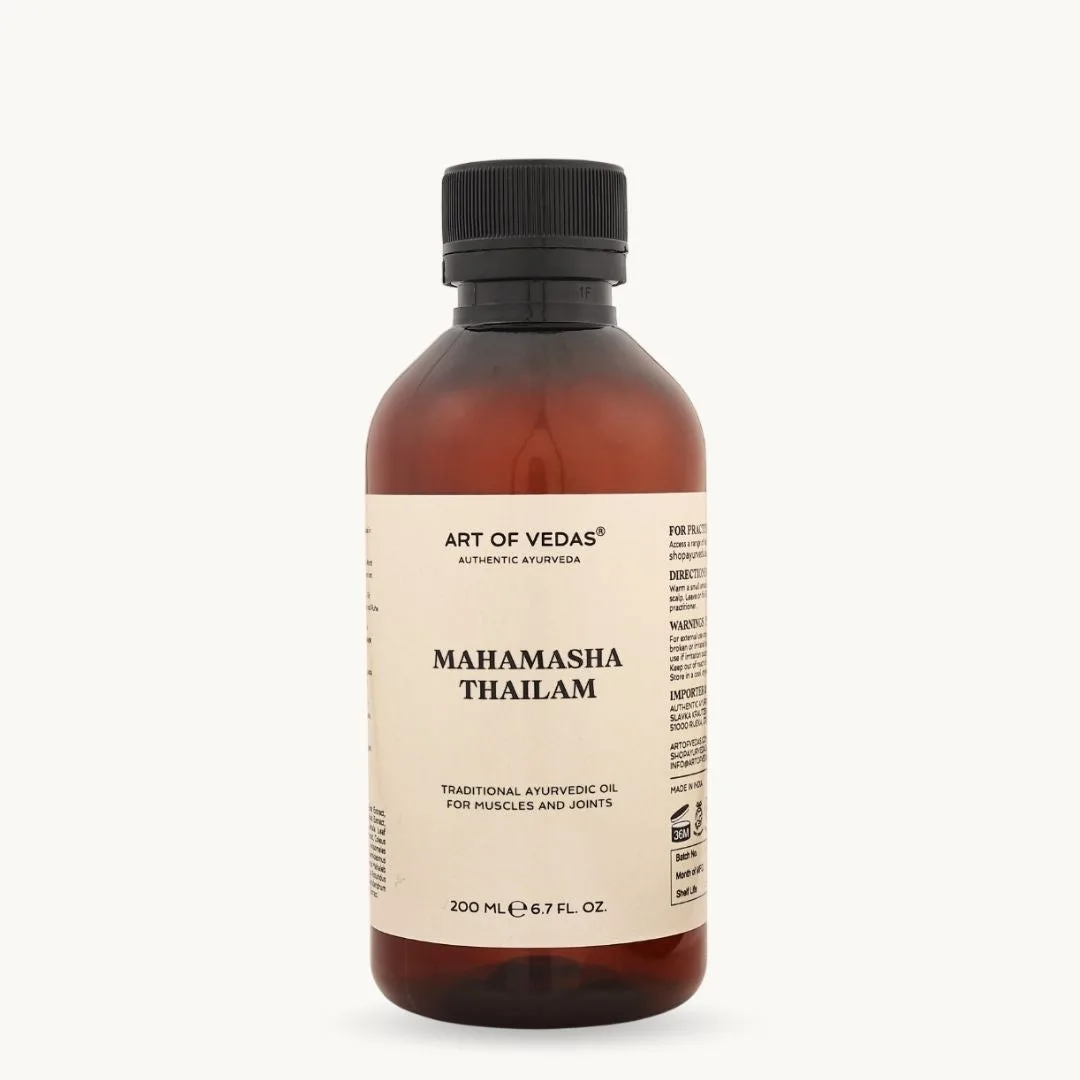
Mahamasha |
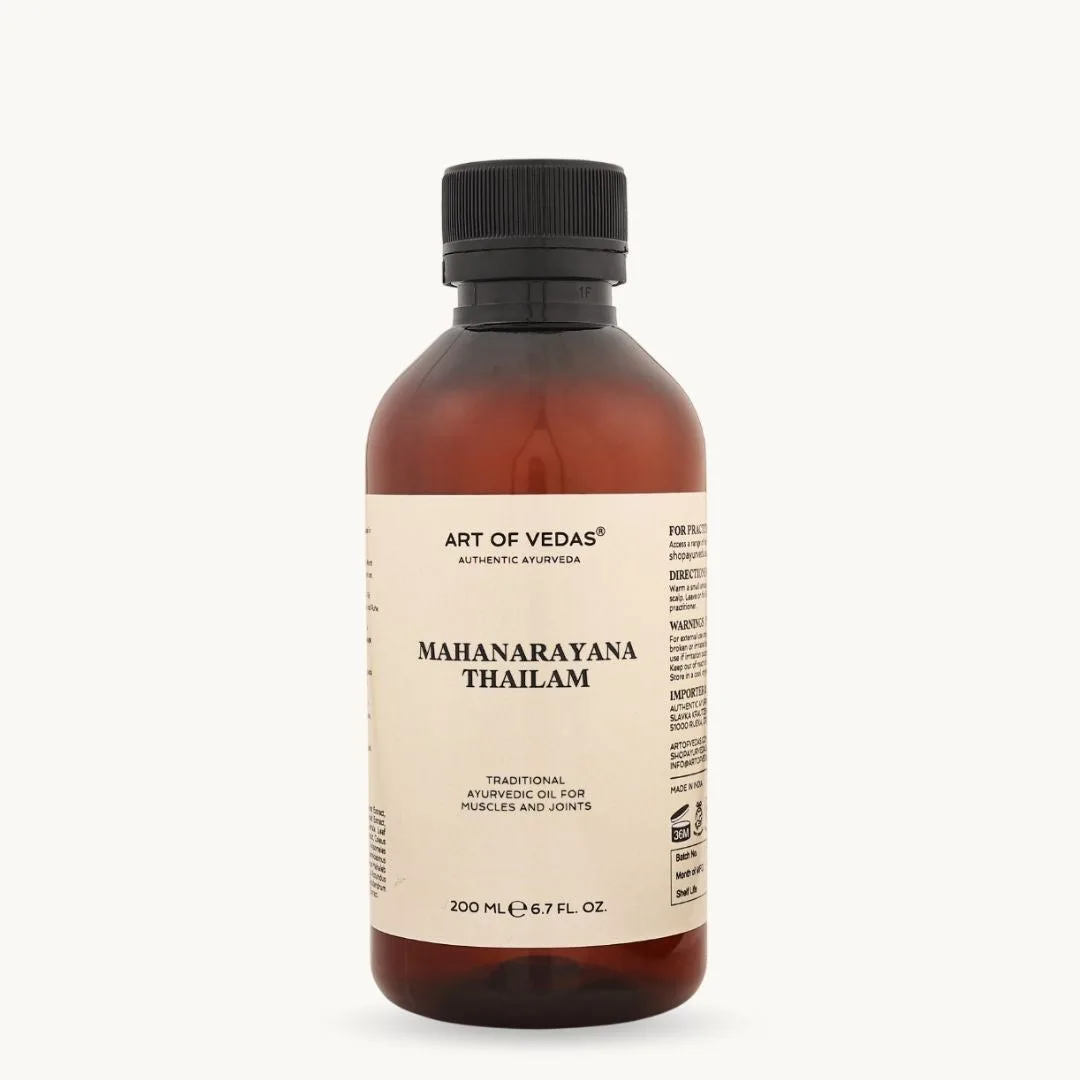
Mahanarayana |
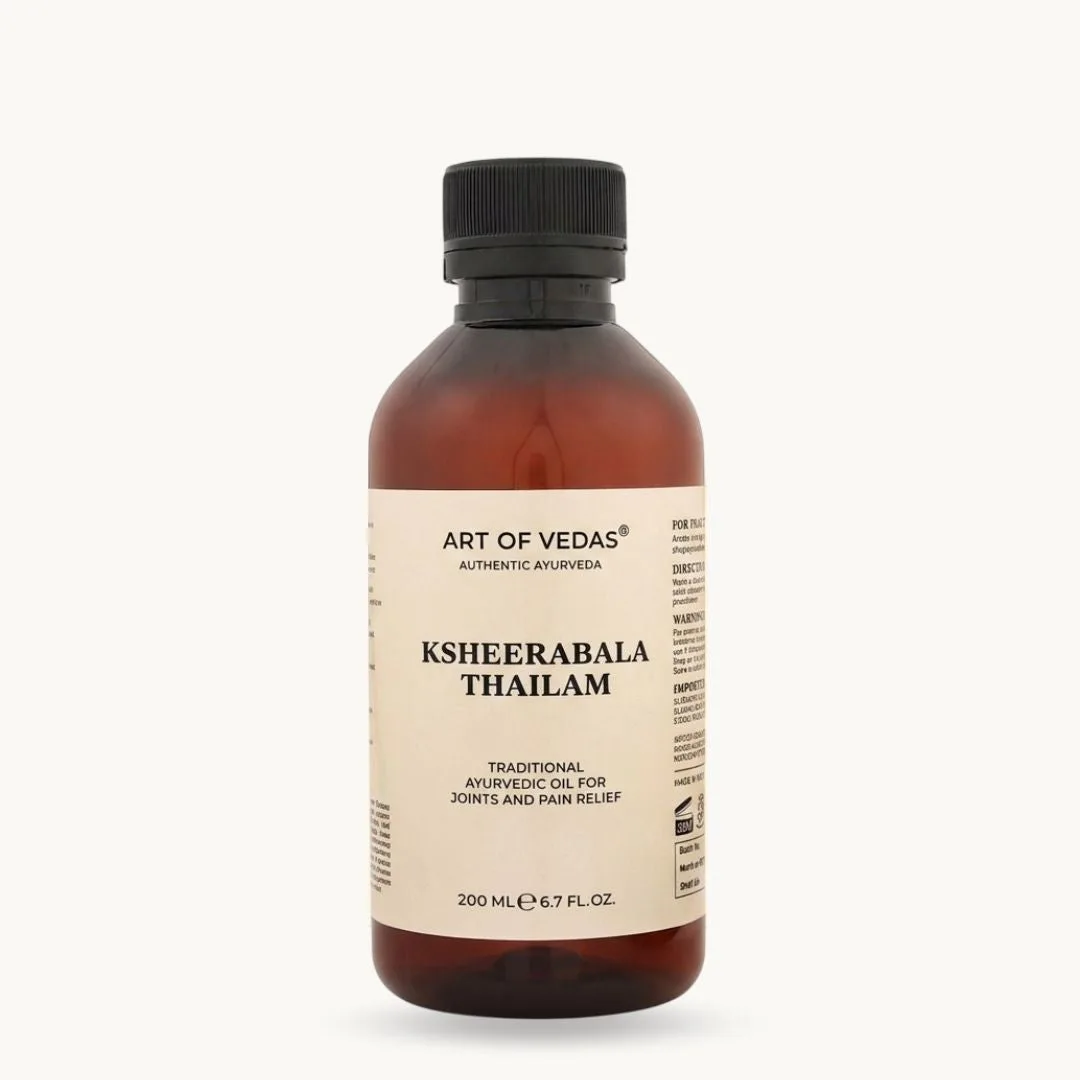
Ksheerabala |
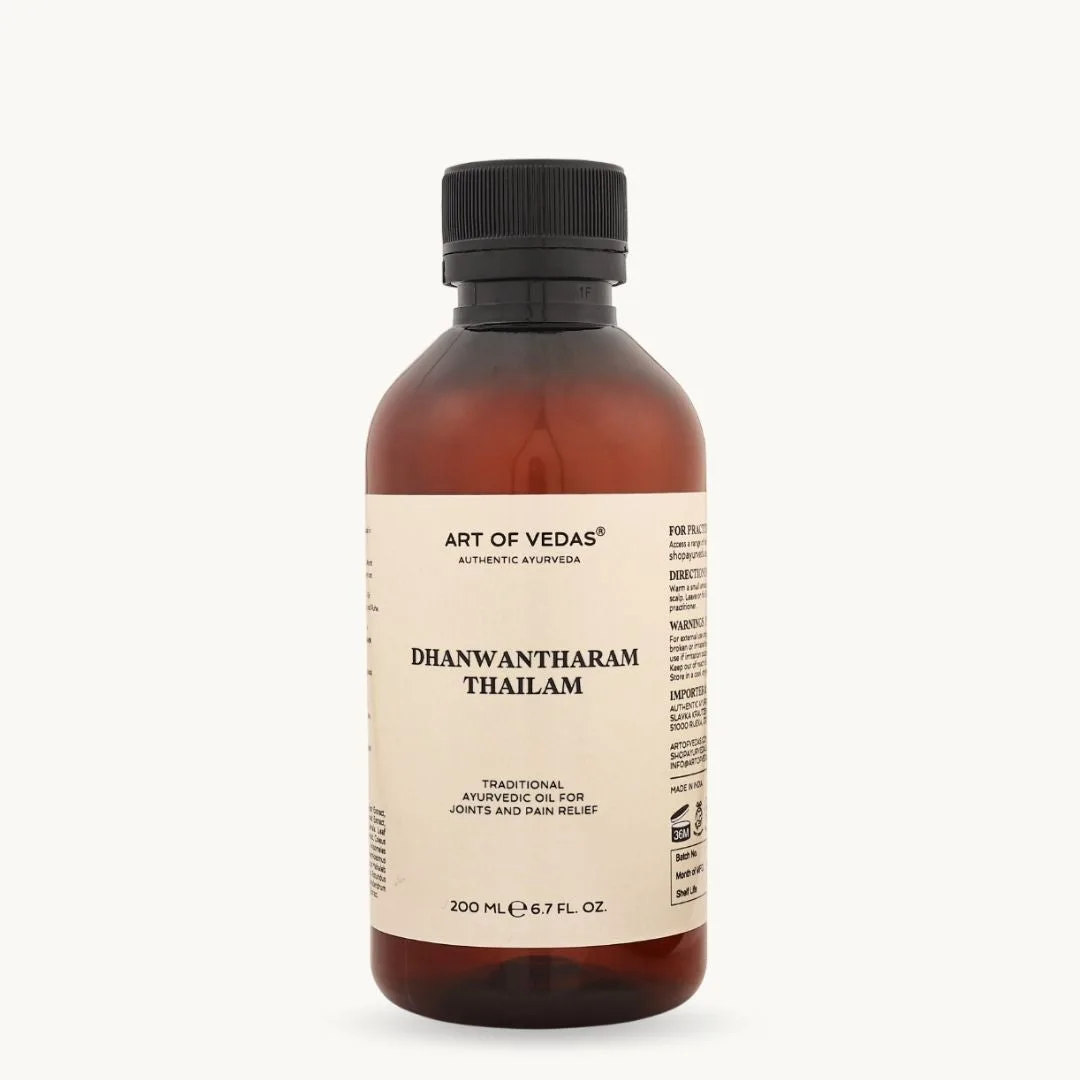
Dhanwantharam |
| Primary Use |
Nerve nourishment |
Joint and bone support |
Sleep, calming |
Postnatal care, rejuvenation |
| Energy |
Warming, heavy |
Warming, penetrating |
Cooling, calming |
Balanced |
| Dosha Effect |
Strong Vata pacification |
Vata and Kapha |
Vata and Pitta |
Tridoshic |
Mahamasha Thailam: The Nerve Nourisher
Documented in the Sahasrayogam, with Black gram (Masha) as star ingredient. In classical Ayurvedic texts it is traditionally associated with contexts described as Gridhrasi, Kampavata, Pakshaghata, and Majjagata Vata.
Mahanarayana Thailam: The Joint Specialist
Complex formulation with 26-37 ingredients. In classical Ayurvedic texts it is traditionally associated with contexts described as Sandhivata, Gridhrasi, Katigraha, and active lifestyles.
Ksheerabala Thailam: The Calming Nerve Soother
Remarkably simple: Bala + Milk + Sesame oil. In classical Ayurvedic texts it is traditionally associated with contexts described as Anidra, Unmada, and gentle nerve comfort. The "101 times" cooking creates extraordinary potency yet gentleness.
Dhanwantharam Thailam: The Complete Rejuvenator
28 to 58 ingredients. Classical Sutika Paricharya (postnatal care) oil. Also traditionally valued for Rasayana, Balya, and seasons of recovery and renewal.
Which Oil for Which Ritual?
Numbness and tingling comfort: Mahamasha | Joint comfort: Mahanarayana | Restful sleep ritual: Ksheerabala | Postnatal care: Dhanwantharam | Lower-body comfort: Mahanarayana or Mahamasha | General vitality: Dhanwantharam
Which Oil for Your Dosha?
Vata: All four oils suit Vata. Choose by primary preference. Pitta: Ksheerabala first, Dhanwantharam second. Use heating oils cautiously. Kapha: Use oils sparingly; Mahanarayana in small amounts works best.
Conclusion
Choose Mahamasha for nerve nourishment. Choose Mahanarayana for joint comfort. Choose Ksheerabala for sleep and calming rituals. Choose Dhanwantharam for postnatal care and rejuvenation.
Shop our complete Thailam collection
Disclaimer: This information is for educational purposes based on classical Ayurvedic texts. It is not medical advice. Consult qualified healthcare practitioners for medical concerns.