This article is part of our AYURVEDIC SKINCARE FOR BEGINNERS guide series.
In the classical Ayurvedic framework, the skin is not merely a surface to be treated - it is a living tissue (Tvacha) governed by Bhrajaka Pitta, the sub-Dosha that metabolises everything applied topically, and influenced by the overall balance of all three Doshas. Your skin's behaviour - whether it tends toward dryness, oiliness, sensitivity, or congestion - is a direct expression of your constitutional pattern, and the most effective skincare approach is one that addresses the underlying Dosha rather than chasing symptoms product by product.
This is the fundamental difference between the Ayurvedic approach and the modern multi-step skincare routine: rather than layering corrective products on top of each other, the classical approach works with the body's natural tendencies, supporting what is deficient and reducing what is excessive.
Understanding Your Skin Through the Doshas
Vata Skin
Vata skin reflects Vata's qualities: dry, thin, cool, and delicate. Fine-pored, it ages quickly when under-nourished. Vata skin craves moisture and oil - it drinks oil like parched earth drinks water. In cold, dry, or windy conditions (autumn and winter), Vata skin becomes rough, flaky, and tight. Lines and fine wrinkles appear early, particularly around the eyes and mouth.
The Vata skincare priority: Nourish and protect. Every step should add moisture, warmth, and a protective barrier against environmental dryness.
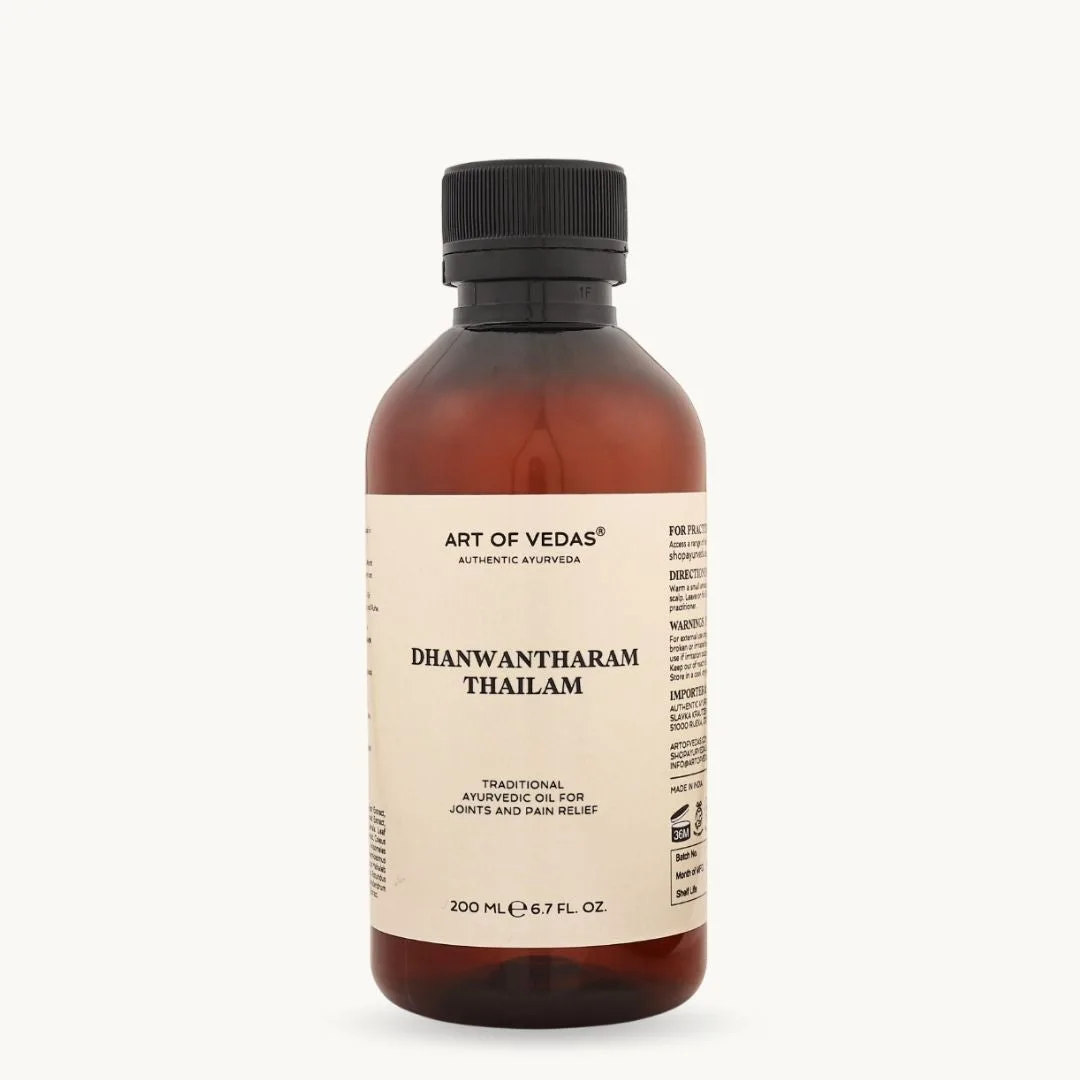
Classical routine: Warm oil - sesame-based for its penetrating, warming quality - applied generously to the face and body as part of daily Abhyanga. Cleanse with oil or milk-based preparations rather than foaming cleansers that strip the skin's natural lipid layer. Classical Vata facial oils include Dhanwantharam and Bala-based Thailams that nourish deeply.
Pitta Skin
Pitta skin reflects Pitta's fire: warm, slightly oily, sensitive, and reactive. Medium-thickness with a natural warm glow, Pitta skin is prone to redness, inflammation, sensitivity to heat and sun, broken capillaries, and the reactive patterns that modern dermatology calls "sensitive skin." It ages moderately, with redness and pigmentation as the primary concerns rather than dryness.
The Pitta skincare priority: Cool, calm, and protect. Every step should reduce heat, minimise inflammation, and shield from UV and environmental irritants.
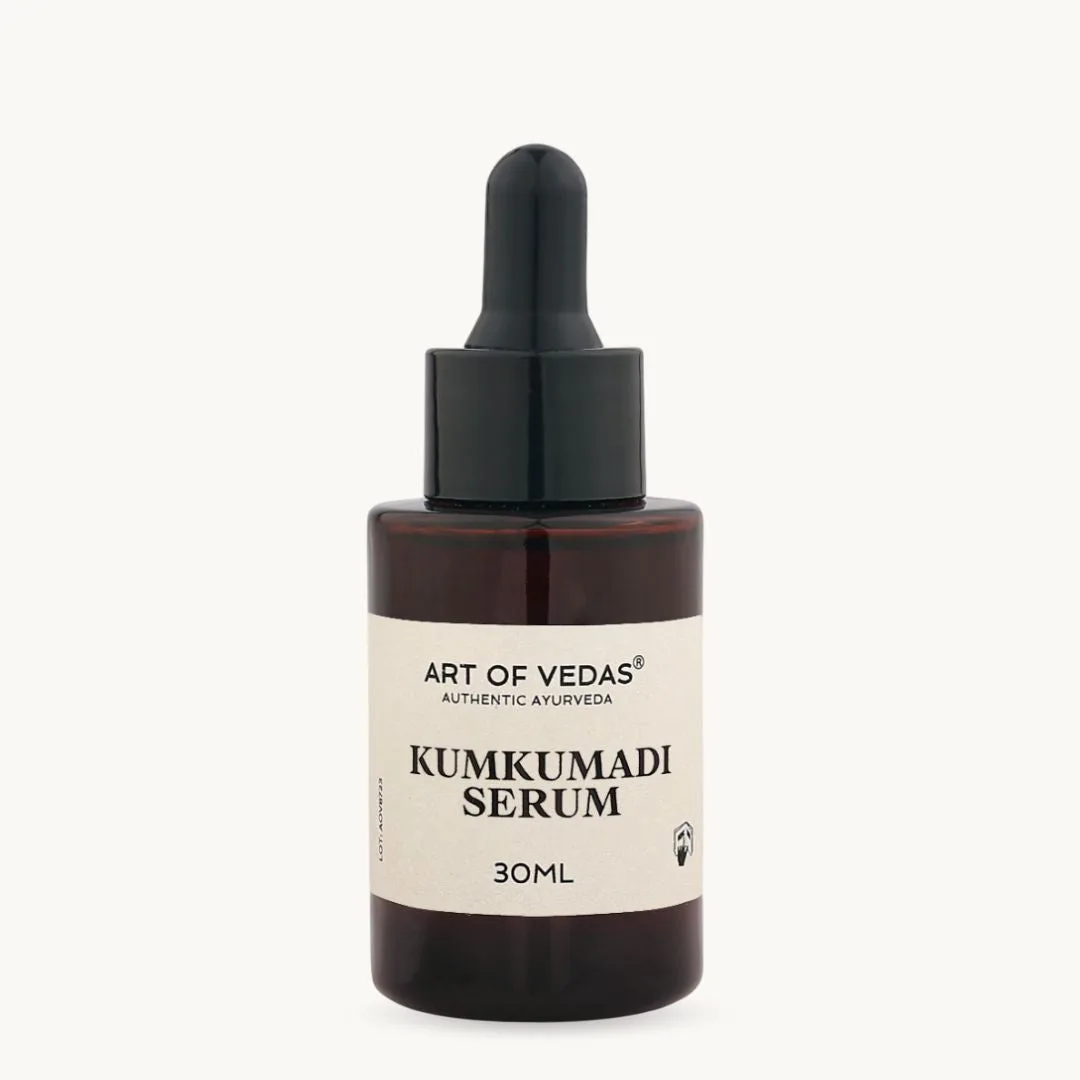
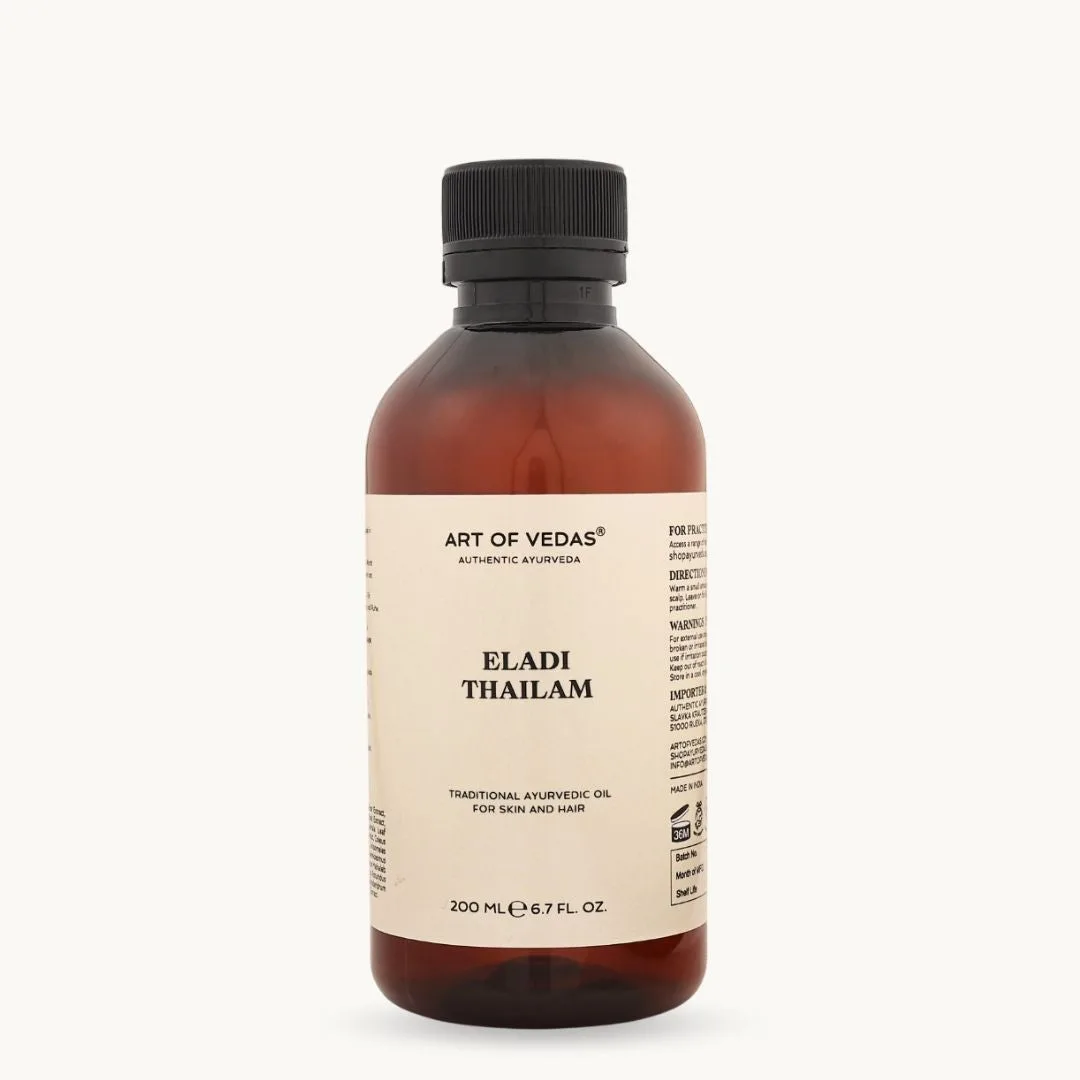
Classical routine: Cooling oils - coconut, or herbed formulations with Chandana (sandalwood), Manjistha, and Sariva. Eladi Thailam is a classical Pitta-friendly formulation. Avoid harsh exfoliants, hot water on the face, and products containing alcohol or strong acids. The Kumkumadi serum with its saffron base has been traditionally used for Pitta-type skin concerns including uneven tone and complexion brightness.
Kapha Skin
Kapha skin reflects Kapha's earth and water: thick, oily, cool, well-hydrated, and slow to age. Kapha skin is naturally the most resilient - large pores, generous natural lubrication, and a tendency to maintain its youthful quality longer than the other types. The challenges are congestion, excessive oiliness, enlarged pores, and a dull or heavy appearance when Kapha accumulates.
The Kapha skincare priority: Stimulate, clarify, and lighten. Kapha skin needs less oil and more stimulation - gentle exfoliation, warming herbs, and practices that promote circulation and prevent stagnation.
Classical routine: Lighter oils - mustard or sunflower - or herbal ubtan (gram flour paste) cleansing that gently exfoliates while absorbing excess oil. Kansa wand massage is particularly beneficial for Kapha skin - the bronze metal's traditional properties combined with stimulating massage promote circulation and lymphatic movement. Dry brushing (Garshana) of the body before any oil application prevents adding more oil to already-lubricated tissue.