This article is part of our Abhyanga Oil: How to Choose the Right Ayurvedic Oil for Your Dosha guide series.
Twenty-two oils. Each with its own classical name, classical indication, dosha affinity and application context. If you are new to Ayurvedic Thailams, this variety can feel overwhelming. If you are already using one and wondering whether it is the right one for you, this guide will help you confirm or refine that choice.
Here is the complete framework for navigating the classical Ayurvedic Thailams - not as a catalogue, but as a decision map.
Why There Are So Many Oils
Classical Ayurveda does not have one massage oil. It has hundreds of classical Thailam formulations described across its texts - each one a medicated sesame oil preparation processed with specific herbs, over defined periods, with specific classical indications.
The reason for this variety is the Ayurvedic understanding of specificity: a warming, heavy oil appropriate for Vata imbalance in the joints will not be appropriate for a Pitta skin condition. An oil designed for neurological support works through different channels than one designed for musculoskeletal recovery. The classical system is precise about this - matching the oil to the individual's constitution and the application context is as important as using oil at all.
The good news: you do not need to understand all of them. You need to understand the key distinctions that determine which category is right for you.
The Primary Distinction: What Are You Using It For?
Before considering your constitution, establish the primary application context.
Full-Body Abhyanga (whole-body daily self-massage)
This is the most important and most versatile use of classical Ayurvedic oils. The Abhyanga protocol involves applying warm oil over the entire body before bathing, working from the scalp and face downward to the feet.
For full-body Abhyanga, you want an oil that is:
- Safe for application over the entire body
- Appropriate for your constitution (Dosha)
- Pleasant enough to use daily
The primary classical oils for full-body Abhyanga are covered in the next section.
Complete Abhyanga guide with technique
Local Application (specific area, specific concern)
Some classical Thailams are formulated for specific body areas or specific classical indications. These may be used in addition to a full-body oil, applied to a targeted area.
Examples: A specific oil for the joints, applied to the knees after a general Abhyanga. A specific hair oil applied to the scalp and hair, separate from the body oil. A facial oil used for the face while a different oil is used for the body.
Facial Care
Facial application is a distinct context in classical practice. The facial skin is thinner and more sensitive; the marma points of the face require specific oils that are lighter and more refined.
Hair and Scalp (Shiro Abhyanga)
Scalp oiling is its own practice, separate from body Abhyanga. The scalp has distinct channels and classical indications that call for specific formulations, often lighter than body oils.
The Primary Framework: Choosing by Dosha
Once you know your application context, your Dosha type is the primary guide to oil selection.
Not sure of your Dosha type? Take our free Ayurvedic assessment here.
Vata Types: Warming, Nourishing, Grounding Oils
Vata Prakriti is characterised by light, dry, cold, mobile qualities. The appropriate oil directly counters these: heavy, warm, unctuous (oily and penetrating), grounding.
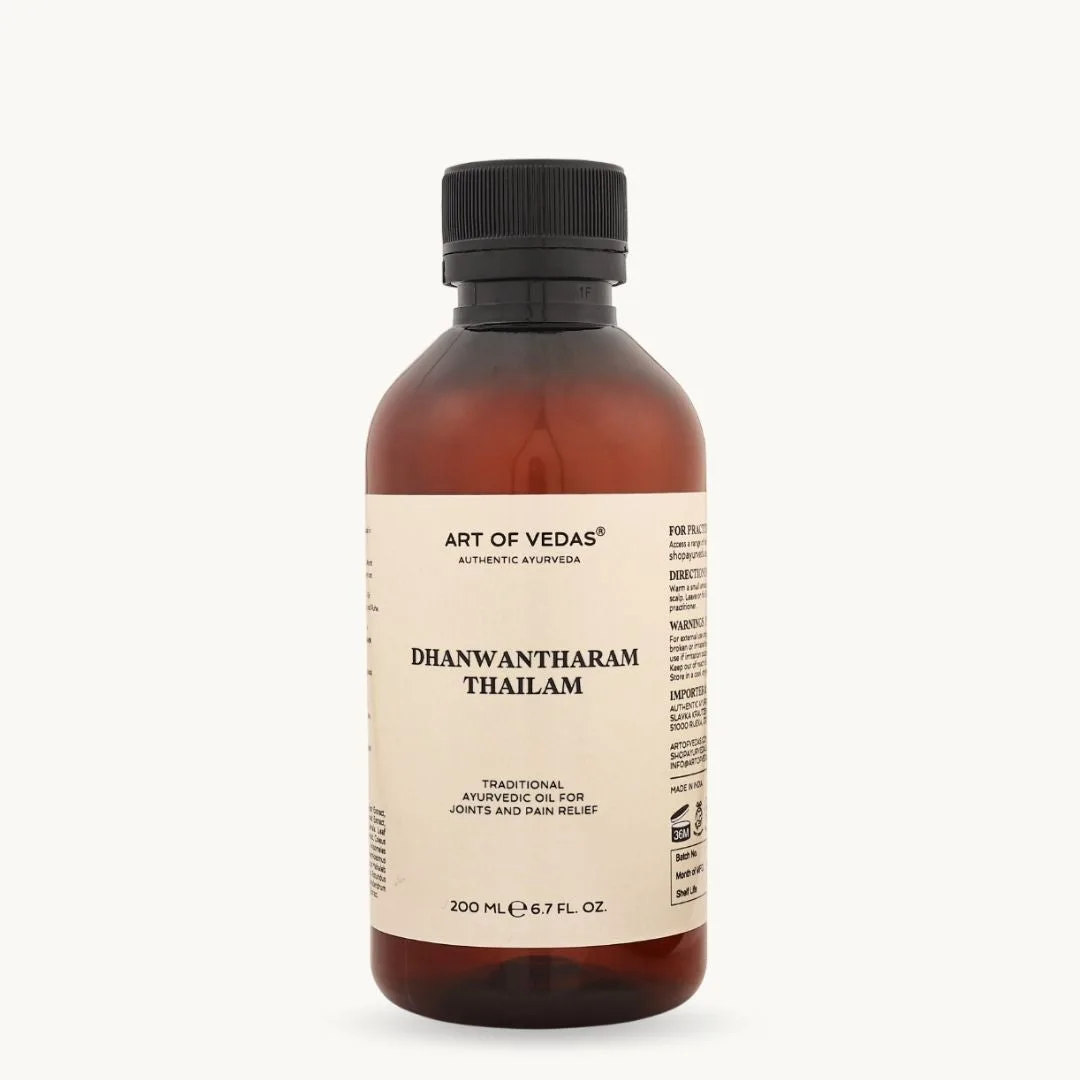
Primary recommendation for Vata - Dhanwantharam Thailam: The most classically referenced Vata-pacifying oil for full-body Abhyanga. Dhanwantharam is a compound preparation - sesame oil base processed with a wide range of classical Vata-pacifying herbs. It is warming without being aggravating, deeply nourishing for the joints and nervous system channels, and appropriate for daily full-body use. Classical texts reference it specifically for Vata conditions affecting the musculoskeletal and nervous systems.
Complete Dhanwantharam Thailam guide
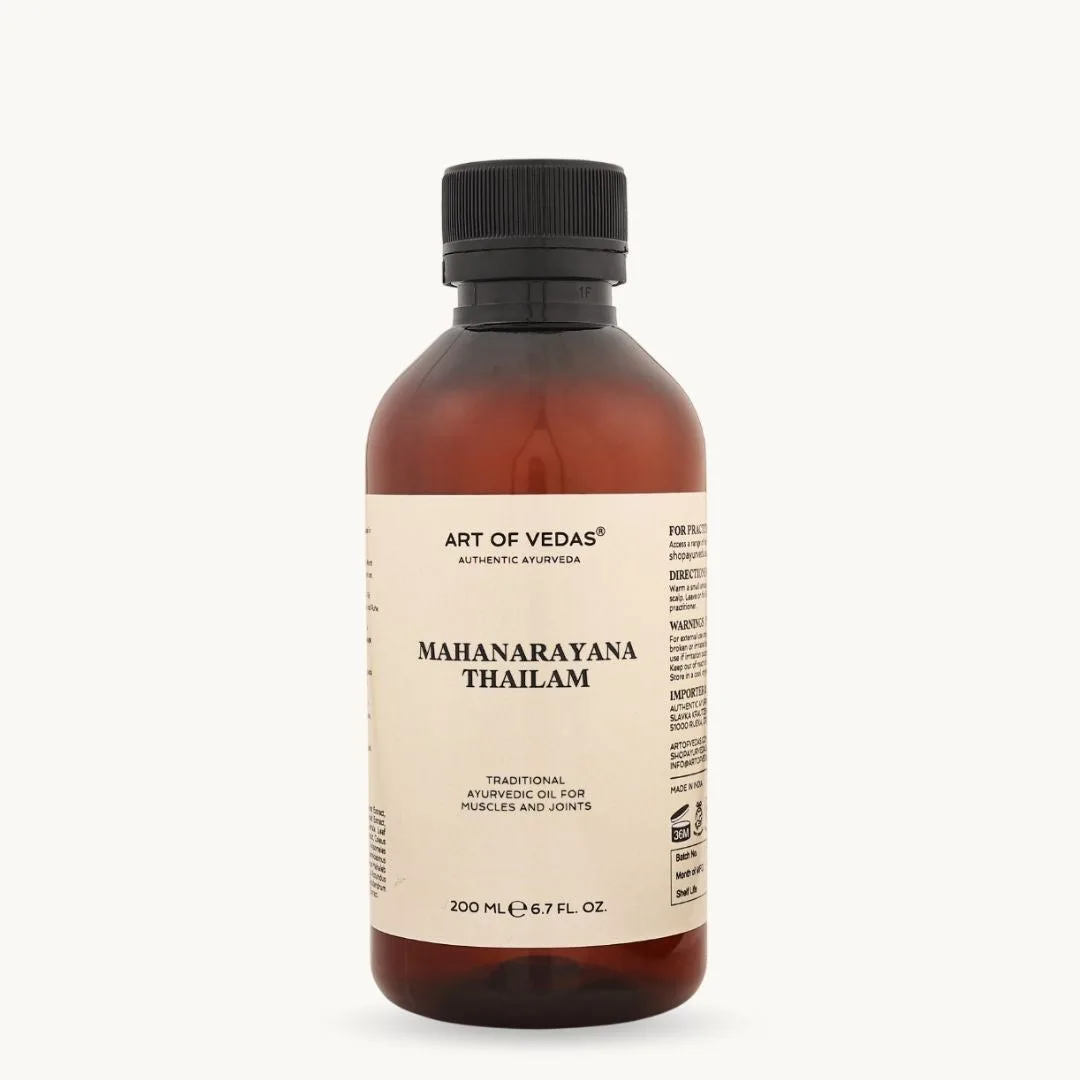
For Vata with emphasis on joints and muscles - Mahanarayana Thailam: A more specifically targeted oil, classically referenced for the joints, muscles and connective tissues. Mahanarayana is a classical compound preparation with a broader herb base than Dhanwantharam, specifically emphasising support for the musculoskeletal system and Vata in the joints. Appropriate for full-body Abhyanga and for more targeted local application.
Complete Mahanarayana Thailam guide
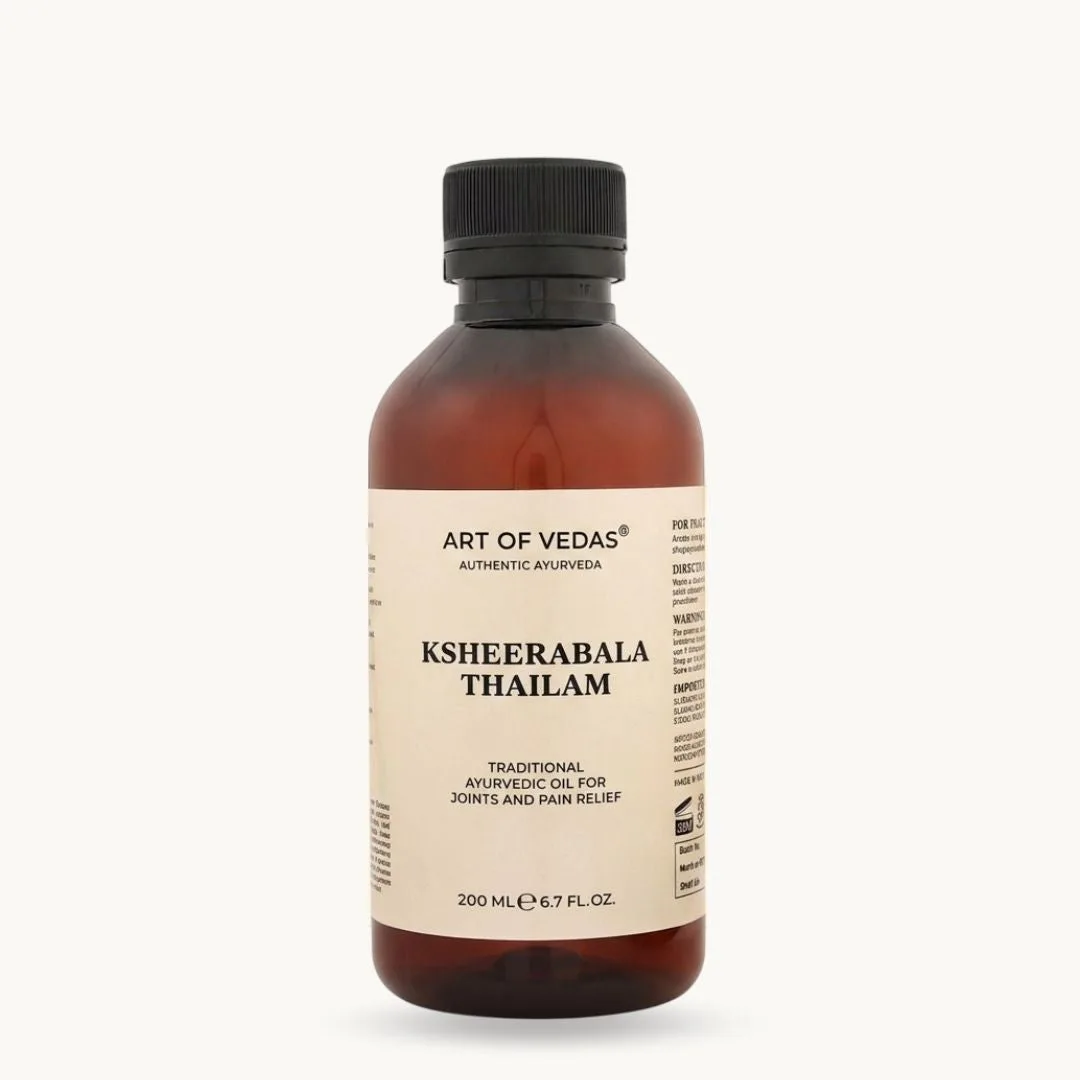
Also for Vata - Ksheerabala Thailam: A milk-processed oil (Ksheera Paka preparation) - Bala (Sida cordifolia) herb cooked in both sesame oil and milk simultaneously. The milk vehicle adds additional nourishing properties. Classically referenced for nervous system and musculoskeletal Vata support, and one of the most gentle of the primary Vata oils - appropriate for more sensitive Vata types.
Vata + dry or maturing skin - choose a warming oil with deeper penetration. Vata skin tends to be thin, dry and prone to premature ageing. The daily Abhyanga practice with appropriate warm oil is the classical primary intervention for Vata skin maintenance. Consistency matters more than which specific oil you choose within the Vata-appropriate range.
Pitta Types: Cooling, Lighter, Soothing Oils
Pitta Prakriti is characterised by hot, sharp, oily and mobile qualities. The appropriate oil counters excess heat without adding further oiliness.
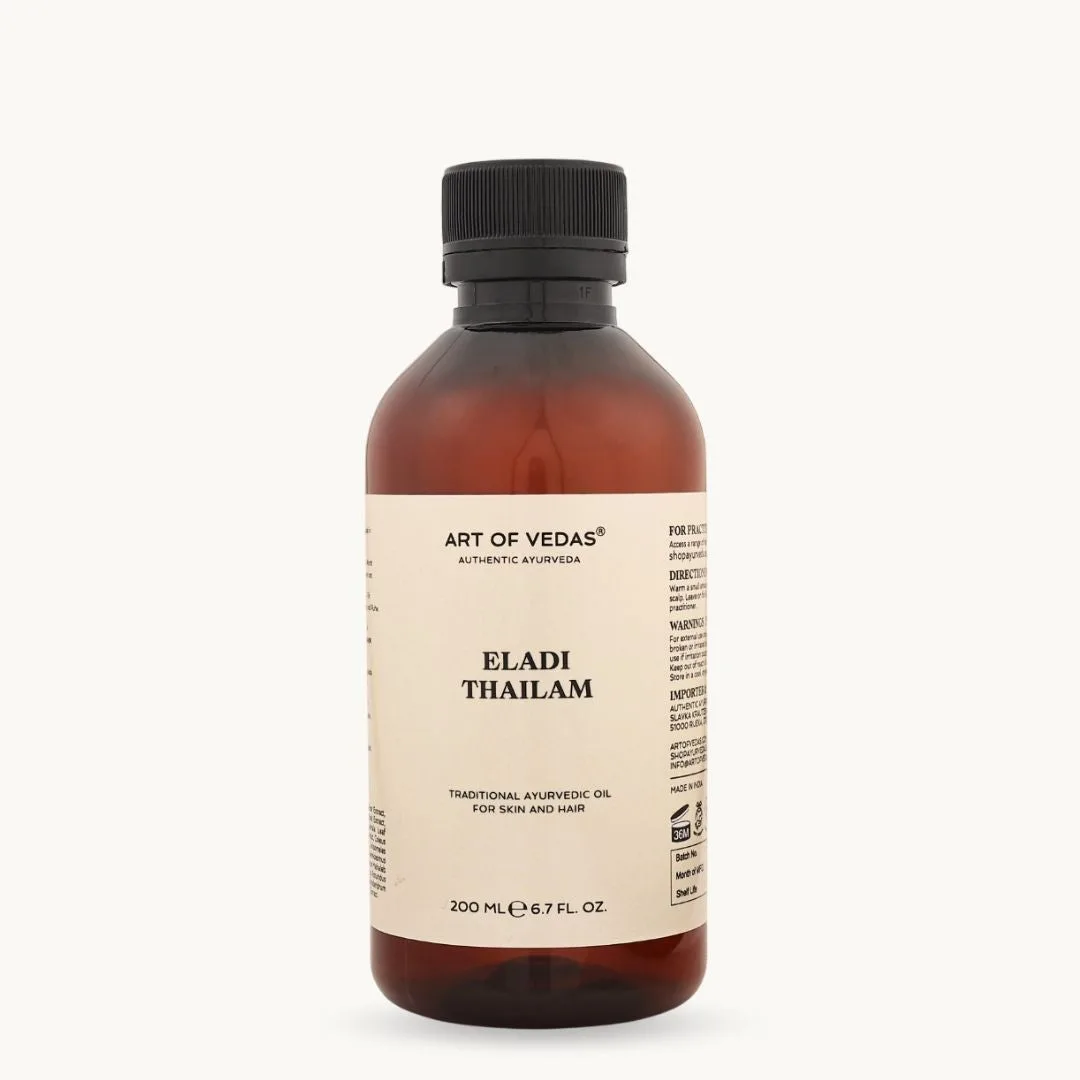
For the face - Eladi Thailam: A classical compound preparation specifically formulated for the face and head region, classically referenced for Pitta skin conditions. Eladi Thailam contains cooling herbs including Ela (Cardamom), Usheera (Vetiver), Chandana (Sandalwood) and others that directly address the heating and inflammatory tendency of Pitta. Lighter than full-body Vata oils - appropriate for face and sensitive areas.
Complete Eladi Thailam guide
For full-body Pitta Abhyanga: Pitta types generally benefit from lighter preparations than Vata types. Coconut oil - while not a classical compound Thailam - is widely referenced in classical texts as cooling and appropriate for Pitta. Among the compound Thailams, preparations with cooling herb bases are most appropriate. Consult our AYUSH-certified doctors for specific guidance on the best full-body option for your Pitta type.
Kapha Types: Lighter, More Stimulating Oils
Kapha Prakriti is characterised by heavy, slow, cold and stable qualities. Kapha types benefit from oils that are lighter than Vata oils - warming but not heavy, stimulating rather than deeply nourishing.
For Kapha full-body Abhyanga: Mustard oil is one of the most classically referenced oils for Kapha Abhyanga - its pungent, heating quality specifically counters Kapha's cold and heavy nature. Among medicated preparations, lighter Thailams without the heavy nourishing herbs appropriate for Vata are more suitable. The practice itself - the friction and stimulation of Abhyanga - is particularly valuable for Kapha types who benefit from increased circulation.
The Application Context Matrix
| Context |
Vata Primary |
Pitta Primary |
Kapha Primary |
| Full-body Abhyanga |
Dhanwantharam, Mahanarayana, Ksheerabala |
Lighter preparations, cooling herbs |
Lighter, more stimulating oils |
| Joints and muscles |
Mahanarayana, Murivenna |
Pitta-appropriate cooling oil |
Lighter stimulating oils |
| Face and head |
Eladi Thailam |
Eladi Thailam (cooling) |
Lighter face oils |
| Scalp and hair |
Neelibhringadi, Brahmi-based oils |
Cooling scalp preparations |
Lighter scalp oils |
| Nasal passages |
Anu Taila |
Anu Taila |
Anu Taila |
The Texture and Absorption Question
One practical question that often determines oil choice: how well does the oil absorb, and how quickly?
Heavier oils (like full Mahanarayana Thailam) penetrate deeply and slowly - they need longer contact time and thorough bathing to remove. They are most appropriate for a longer Abhyanga practice with adequate time before the day begins.
Lighter oils absorb more quickly and leave less residue after bathing. More convenient for shorter morning routines.
If time is a constraint in your daily practice, a lighter oil used consistently is more valuable than a heavier oil used rarely.
How Many Oils Do You Need?
Starting point: One oil, chosen for your primary constitution and the full-body Abhyanga practice. This is the most important starting point. Everything else is secondary.
Second addition: A separate facial oil, if you want to distinguish between face and body care. Eladi Thailam for the face is the most versatile addition for most constitutions.
Third addition: A specific local application oil, if you have a specific area of attention - a joint oil applied to the knees or shoulders, for example, in addition to a full-body Abhyanga oil.
Hair oil: Separate from body Abhyanga, if you include Shiro Abhyanga in your practice.
Resist the urge to begin with multiple oils simultaneously. A consistent practice with one well-chosen oil builds the foundation. Additional specificity can be added once the core practice is established.
The Role of the AYUSH Doctor in Oil Selection
Classical Ayurvedic text is specific about one thing: the best oil choice follows from the best Prakriti assessment. A trained Ayurvedic physician examining your pulse (Nadi Pariksha), physical constitution and current state will specify not just the oil but the warming temperature, application technique, duration and follow-up protocol appropriate for you specifically.
This level of precision is not possible from a self-assessment questionnaire alone - though the questionnaire is an excellent starting point.
Start with our free Dosha assessment to establish your constitutional type. Take the assessment here.
Book an online consultation with an AYUSH-certified Ayurvedic doctor for a personalised oil and Abhyanga protocol, from anywhere in Europe.
Browse the Complete Thailam Range
All 22 classical Ayurvedic Thailams
Complete Abhyanga guide - technique, timing and routine
Benefits of Abhyanga - what the classical texts say
How to do Abhyanga at home - step-by-step guide