

Kuzhambu (Classical Herbal Pastes)
Kuzhambu is the semi-solid form of classical Ayurvedic oil preparations, sharing the same herbs and traditional formulations as Thailam but with a thicker consistency that stays in place over joints, the lower back, and targeted areas. It softens with body heat, absorbs gradually, and is the preferred form for localised Panchakarma therapies such as Kati Basti and Janu Basti, as well as daily self-care at home.
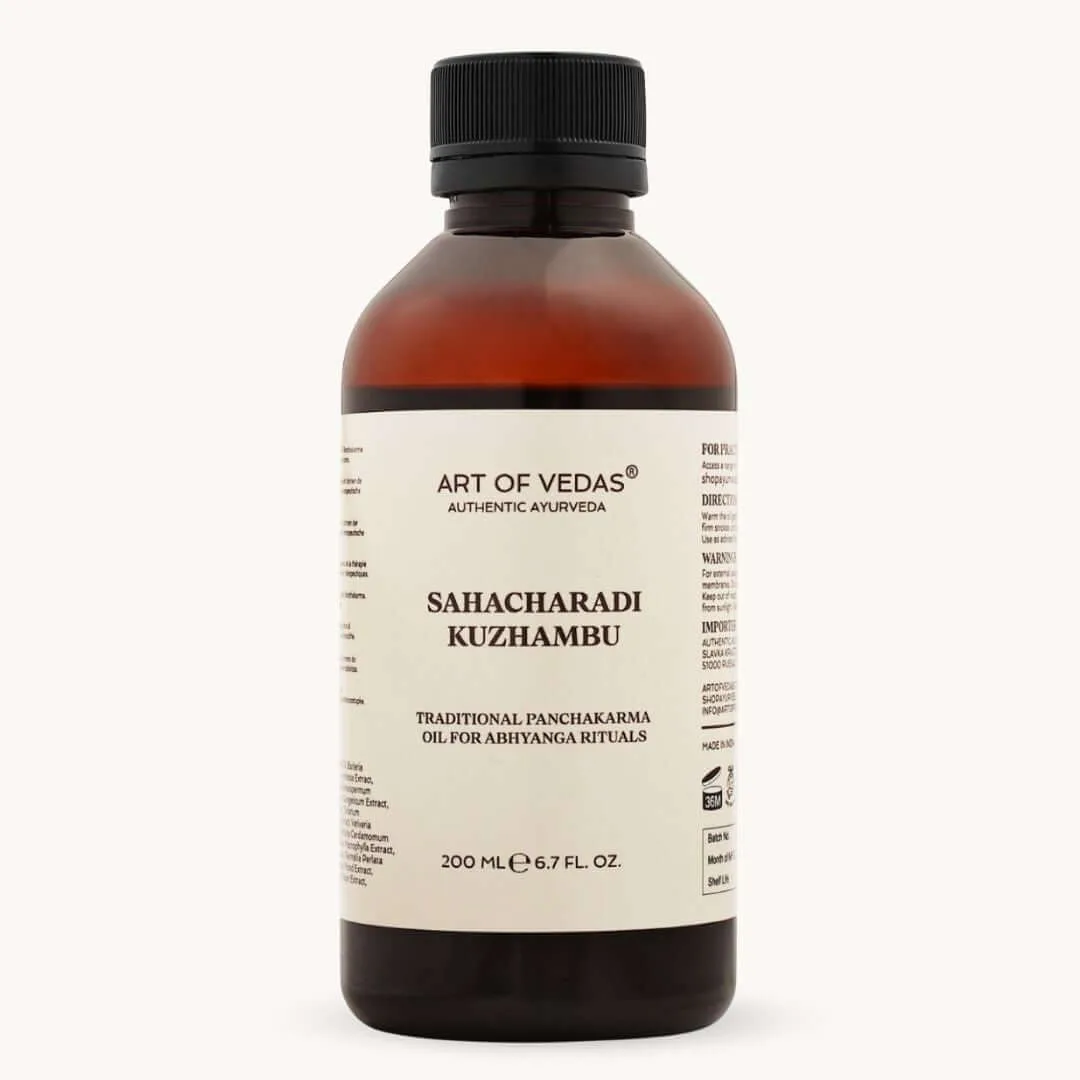
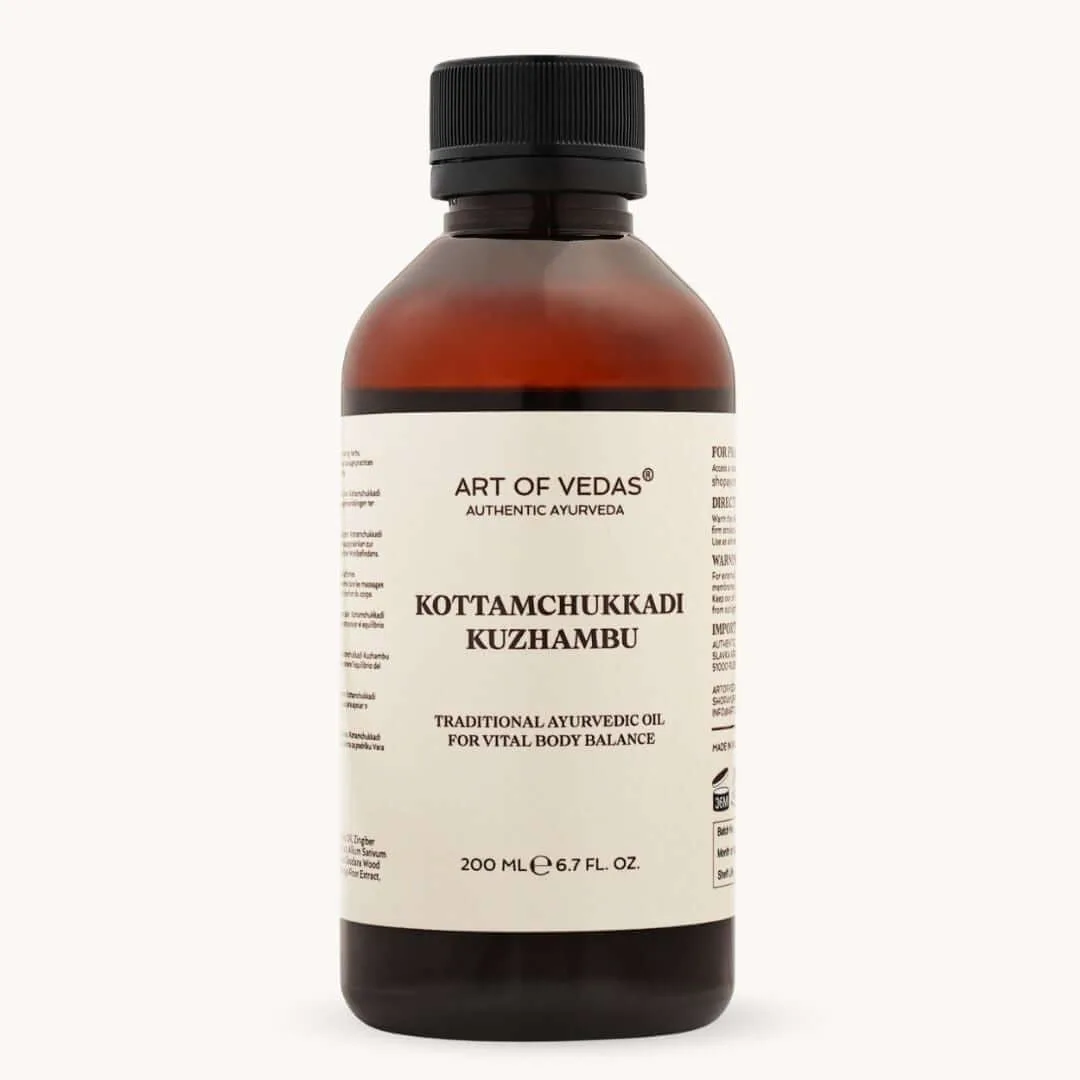

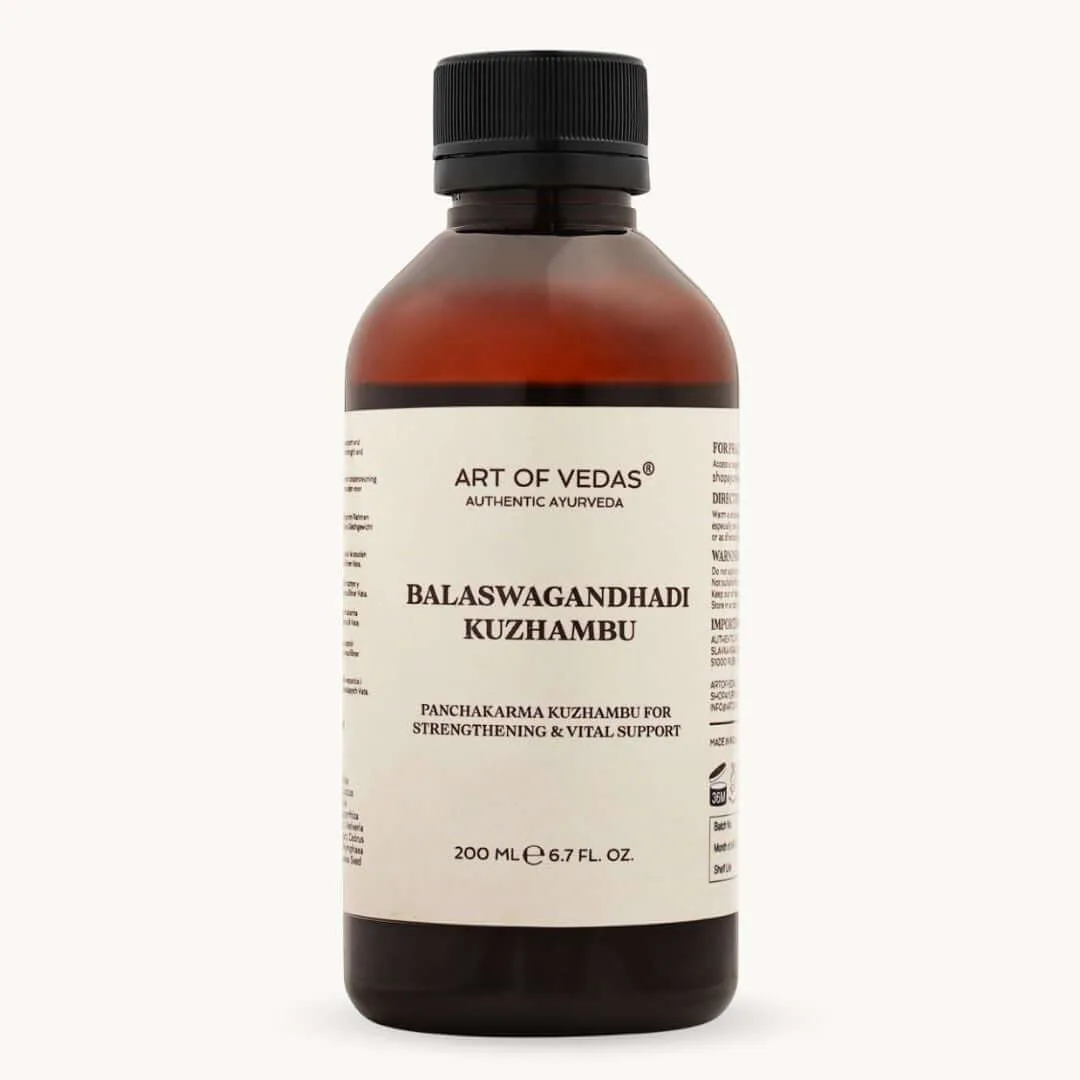
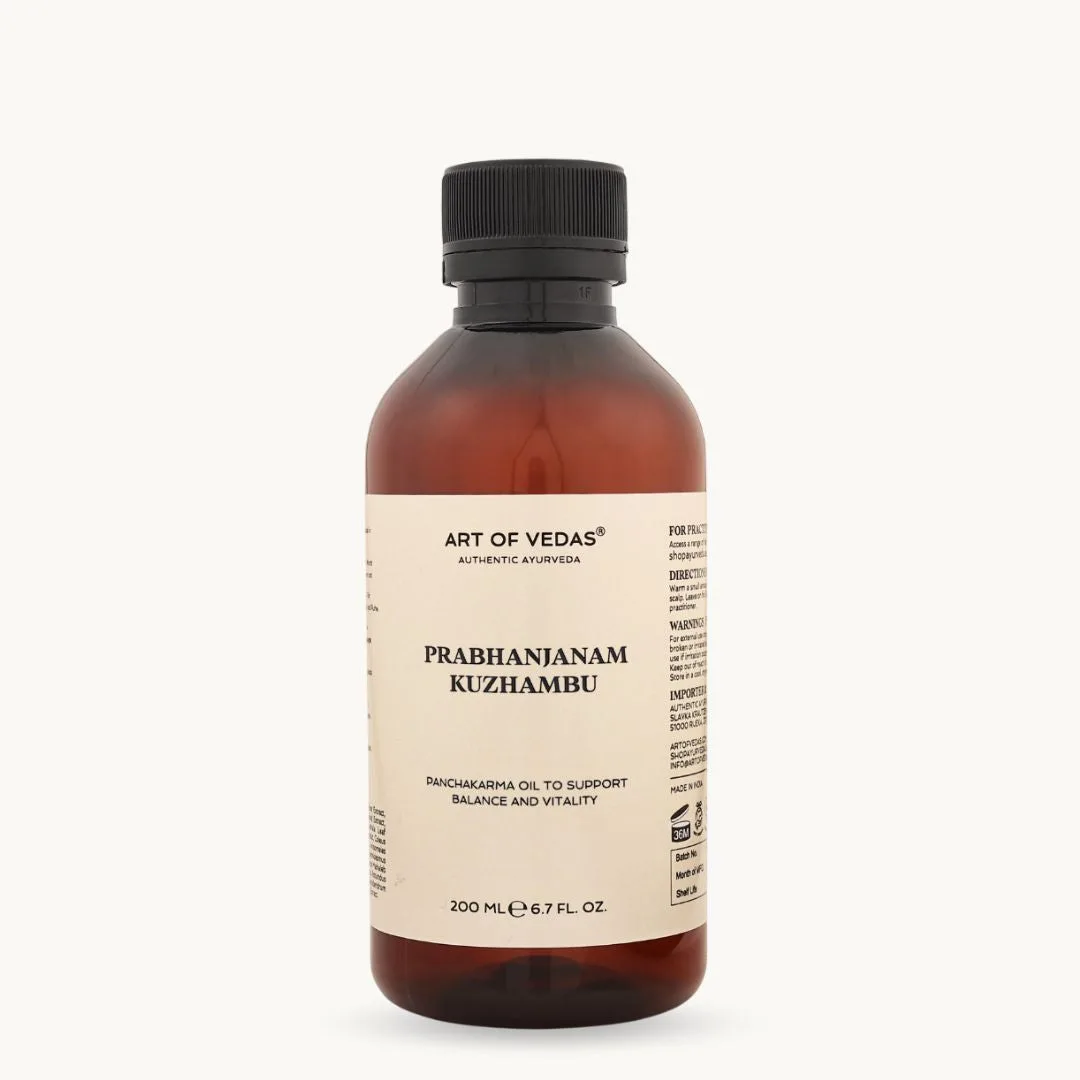
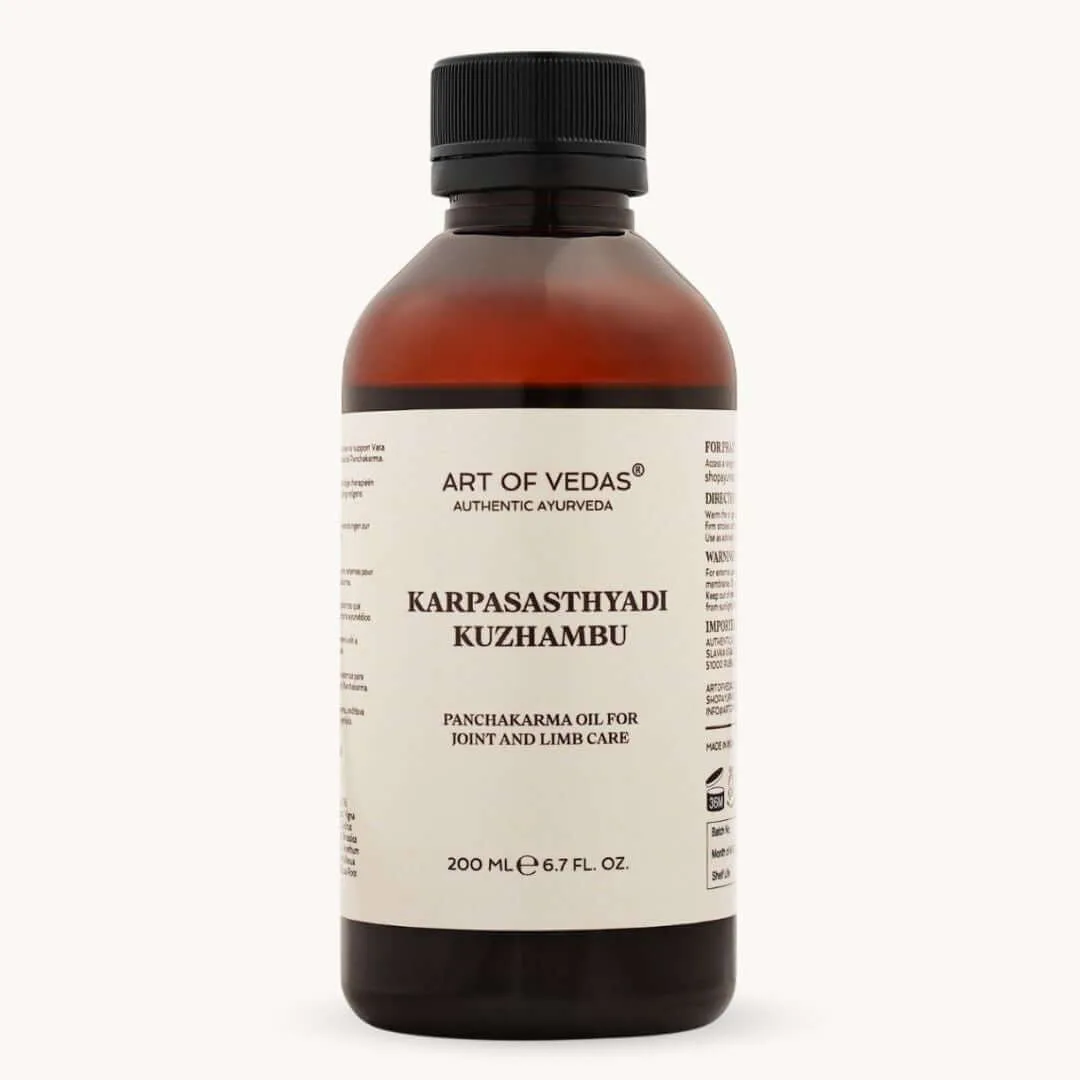
Kuzhambu: the steadfast form of classical oils
Kuzhambu is the semi-solid expression of the classical Ayurvedic oil tradition, prepared with the same herbs and the same time-honoured formulations as a Thailam, yet thickened so it settles and stays where you place it. Where a thin oil runs, a Kuzhambu rests over a joint, the lower back, or any area you wish to tend, softening gently with the warmth of the skin and releasing its herbs as it does. In classical Ayurveda this form is valued for sustained contact, which is why it accompanies localised therapies such as Kati Basti and Janu Basti, and it serves equally well as part of an unhurried home Dinacharya (daily routine). To choose within the range, begin with the quality you are seeking: a warming, grounding preparation suits Vata, while a cooler, settling one answers the restlessness of Pitta. Each formulation here follows the classical texts, including the Ashtanga Hridayam and the Sahasrayogam.
Questions about Kuzhambu
What exactly is a Kuzhambu, and how does it differ from a Thailam?
A Kuzhambu is a semi-solid herbal oil preparation, made from the same classical herbs and formulations as its companion Thailam but cooked to a thicker, paste-like consistency. The difference is one of form rather than recipe: a Thailam is a free-flowing oil, while a Kuzhambu holds its shape. That thickness is the point, since it lets the preparation stay in contact with one area instead of running off the skin.
How do I use a Kuzhambu at home?
Take a small amount on clean fingertips and let the warmth of your hands soften it before applying it to the area you wish to tend, such as a joint, the shoulders, or the lower back. Work it in slowly with steady, unhurried strokes, allowing it to settle and absorb at its own pace rather than rubbing it away. A short rest afterwards, and a warm cloth or gentle warmth over the area, helps the herbs continue their work. It suits a calm evening or a quiet moment in your Dinacharya (daily routine).
How do I choose which Kuzhambu is right for me?
Begin with the quality you are looking for and the area you wish to attend to. Warming, grounding preparations are traditionally valued in Ayurveda for Vata and for moments when you feel cold, dry, or unsettled, while cooler, more settling ones answer the heat and restlessness associated with Pitta. If you are new to the range, a versatile preparation such as Kottamchukkadi or Dhanwantharam is a considered place to start, and you can refine your choice from there.
Why is a Kuzhambu used in Kati Basti and Janu Basti?
Kati Basti and Janu Basti are localised therapies in which warm oil is held over the lower back or the knee within a small dough reservoir. A Kuzhambu is well suited to this work because its semi-solid form keeps the herbs in steady, sustained contact with one area rather than spreading thinly. This makes it the preferred form for such targeted treatments, whether carried out by a practitioner or adapted gently for unhurried care at home.
Who is a Kuzhambu suited to?
A Kuzhambu suits anyone who wants focused, lasting contact on a particular area rather than an all-over oil. It is a familiar companion for those who keep an Ayurvedic routine and tend to specific points of the body as the seasons turn, and it is equally welcoming to newcomers, since the method is simply to warm a little between the hands and apply it with patience. As with any oil preparation, those who are pregnant or managing a particular health concern are wise to speak with their own practitioner first.
How should I store a Kuzhambu, and how does its texture behave?
Keep your Kuzhambu in a cool, dry place away from direct sunlight, and close the lid firmly after each use. Because it is a semi-solid preparation, it will naturally firm up in cooler conditions and soften in the warmth, which is part of how it works: the warmth of your skin and hands brings it back to a workable consistency. A slight change in firmness between summer and winter is normal and does not affect the herbs within.