Neem in Ayurveda: Classical Properties of Nimba
Neem - known in Ayurvedic texts as Nimba (Azadirachta indica) - is one of the most thoroughly documented and widely used herbs in the entire classical tradition. The tree is native to the Indian subcontinent and has been used in Ayurvedic medicine, agriculture, and daily life for thousands of years. Virtually every part of the tree - leaf, bark, seed, oil, root, flower - has documented traditional applications, making Nimba one of the most comprehensively utilised plants in the classical materia medica.
In the Ayurvedic tradition, Neem's primary identity is as a bitter herb of exceptional purifying power - one of the foremost Tikta (bitter) herbs described in the classical literature, with a particularly strong affinity for the blood tissues (Rakta Dhatu) and the skin (Twak).
Nimba in the Classical Texts
The Charaka Samhita mentions Nimba in numerous contexts - in the Kushtaghna (skin condition management) group, the Krimighna group, and the Kandughna group. The Ashtanga Hridayam of Vagbhata places Nimba prominently among the herbs for conditions involving excess Pitta and Kapha in the skin, blood, and surface tissues.
The Bhavaprakasha Nighantu provides one of the most thorough classical descriptions of Nimba's properties:
-
Rasa (taste): Tikta (bitter) - the most dominant taste, making Neem one of the bitterest herbs in the entire Ayurvedic pharmacopoeia
-
Virya (potency): Sheeta (cooling)
-
Vipaka (post-digestive effect): Katu (pungent)
-
Guna (qualities): Laghu (light), Ruksha (dry)
-
Dosha effect: Pitta-shamana and Kapha-shamana primarily; Vata-vardhana in excess (the dry, light, cooling qualities can aggravate Vata if used excessively or without appropriate anupana)
The cooling potency combined with bitter taste makes Neem one of the most effective Pitta-clearing herbs in the classical tradition - and particularly relevant for conditions involving Pitta in the blood and skin tissues.
Neem's Classical Affinity for Rakta Dhatu and the Skin
In classical Ayurvedic pathology, many skin conditions are understood in terms of Pitta and Kapha excess in the Rakta Dhatu (blood tissue) - the accumulated heat, reactivity, and congestion that manifests outwardly through the skin. Nimba's Raktashodhana (blood-clarifying), Twachya (skin-beneficial), Pitta-shamana, and Krimighna properties give it a classical role at precisely this intersection.
This is why Neem appears so consistently in classical preparations for skin - not because it works on the skin surface alone, but because it addresses the underlying blood tissue imbalances that manifest through the skin. Classical Ayurvedic treatment of skin conditions almost invariably involves internal preparations alongside external ones, and Neem is often a component of both.
Traditional Forms and Uses of Nimba in Ayurvedic Practice
Neem Leaf (Nimba Patra)
The leaf is the most widely used part of the Neem tree in Ayurvedic practice. Fresh leaf juice, dried leaf powder (churna), and leaf decoctions (Kashayam) are all classical preparations. The leaf contains the full bitter principle of the herb and is the classical form for both internal use and external application (as a paste, wash, or bath additive).
Neem in Oral Care
One of the most historically continuous uses of Neem in Indian tradition is for oral hygiene. Classical Dinacharya recommends the use of Dantadhavana - cleaning the teeth - with herbal preparations including bitter herbs. The Ashtanga Hridayam specifically mentions Neem twigs (Nimba danta kashtha) as one of the appropriate Dantadhavana materials for Kapha and Pitta conditions.
This classical application has remained continuous from ancient times to the present, and the use of Neem in classical Ayurvedic oral care preparations reflects its traditional combination of Krimighna, Kaphahara (reducing Kapha excess in the mouth and gums), and Pitta-shamana properties. For related oral care practice, see our guide to oil pulling and classical oral care.
Neem in Skin Care
External application of Neem in various forms is one of its oldest and most consistent uses. Classical Lepas (pastes) for skin conditions frequently include Nimba as a primary ingredient - applied to the affected area for its local Pitta and Kapha clearing, Krimighna, and Twachya properties.
In modern Ayurvedic skin care, Neem appears in face washes, soaps, and preparations targeting oily, congested, or Pitta-affected skin. Its classical properties make it most relevant for Pitta and Kapha skin types, and less appropriate as a daily preparation for dry, Vata-type skin - where its drying, cooling character may be too depleting.
Neem as Supplement
Neem leaf powder and standardised preparations are used as internal supplements in classical Ayurvedic practice - traditionally for blood purification, support for healthy skin, and addressing excess Pitta-Kapha in the blood and digestive tissues. The supplement form follows the classical Churna tradition and is the most practical way to use Neem consistently as part of a daily Rasayana or blood-support protocol.
Neem and Pitta-Kapha Skin Types
In the context of classical Ayurvedic skin care, Neem is most aligned with:
-
Pitta skin: Reactive, sensitive, prone to redness, or showing signs of heat-related congestion - Neem's cooling, Pitta-clearing action is directly indicated
-
Kapha skin: Congested, oily, slow-clearing - Neem's drying, Kapha-clearing Tikta action supports clarity and circulation in the skin
-
Vata skin: Use with caution - Neem's Ruksha (dry) and Sheeta (cooling) qualities can aggravate Vata if used excessively. For Vata skin, combination with a nourishing carrier or a shorter-duration application is more appropriate.
For a comprehensive guide to dosha-based skin care and oil selection, see our Ayurvedic oils for skin by dosha guide.
Nimba's Role in Classical Compound Formulations
Neem appears as a component in numerous classical compound preparations across both internal and external traditions:
-
Nimbadi Churna: A classical compound powder for Pitta-Kapha skin support, including Neem leaf as primary herb alongside Haridra (turmeric) and other Pitta-clearing herbs
-
Panchanimba Churna: A classical five-Nimba preparation using different parts of the Neem tree for comprehensive action
-
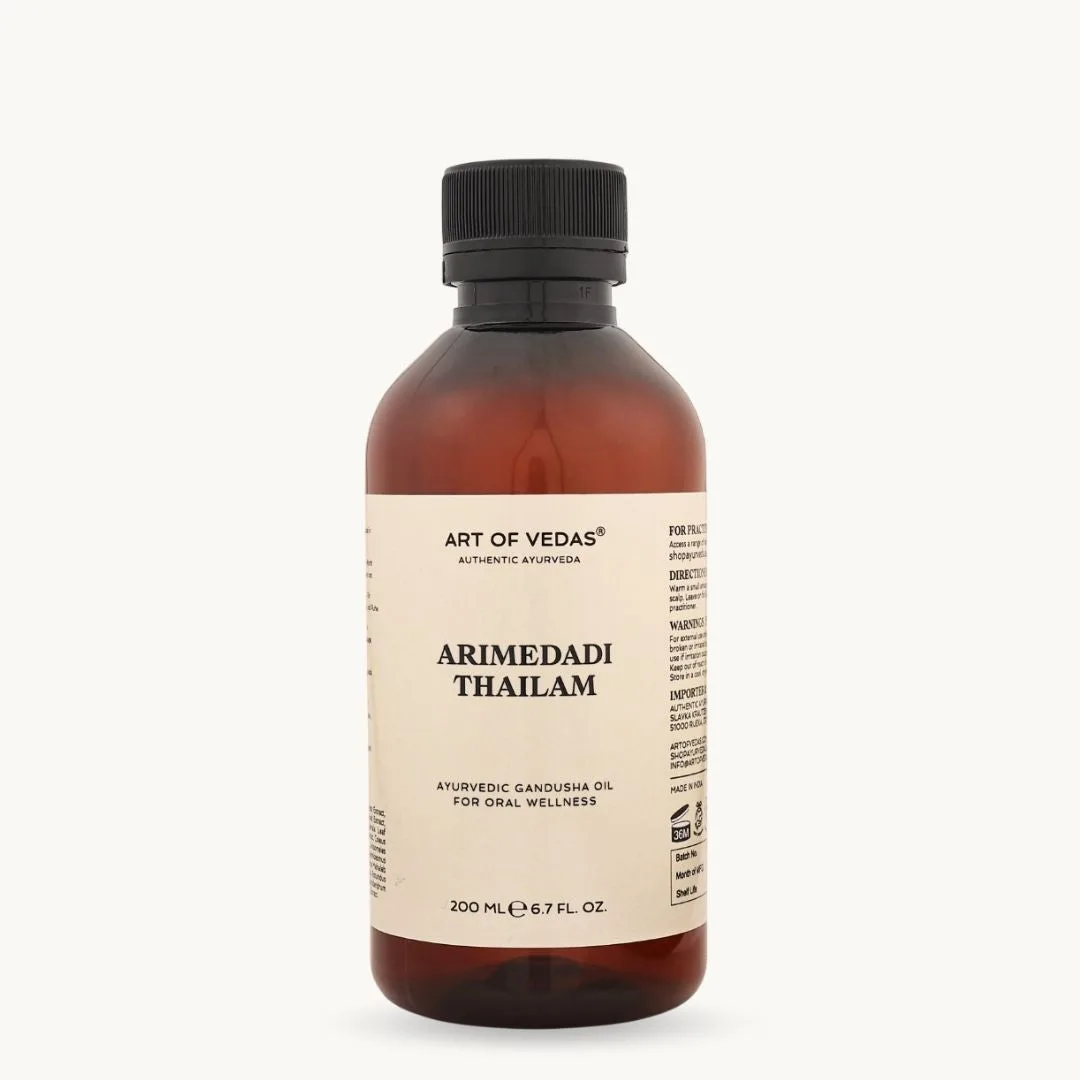
Arimedadi Thailam: The classical oil pulling preparation includes Neem as one of its primary Krimighna herbs alongside Arimedam (Acacia catechu). See our Arimedadi oil pulling guide.
Frequently Asked Questions
What is Neem (Nimba) used for in Ayurveda?
Neem is used in Ayurveda primarily for its Pitta-shamana, Raktashodhana (blood-clarifying), Krimighna, and Twachya (skin-beneficial) properties. Classical uses include support for healthy skin, oral hygiene, addressing conditions involving excess Pitta and Kapha in the blood and skin tissues, and as a component of both internal and external preparations for skin health.
Is Neem suitable for all doshas?
Neem is primarily Pitta-shamana and Kapha-shamana - most appropriate for Pitta and Kapha constitutions and conditions. Its dry, cooling, light qualities can aggravate Vata if used excessively or without appropriate modification. Vata types should use Neem with care, in combination with nourishing preparations, and for shorter durations.
What is the difference between Neem leaf powder and Neem oil?
Neem leaf powder (Nimba churna) is a classical internal preparation - the dried leaf ground to powder - used as a supplement for blood and skin support. Neem oil is pressed from the seed and is used primarily externally - as an ingredient in skin care preparations and as a topical application in classical Lepa practice. The two preparations have different primary applications though both reflect Neem's classical properties.
Can Neem be taken daily?
Classical Ayurvedic texts describe Neem as appropriate for regular use as part of a Pitta and Kapha management protocol. As with all bitter herbs, prolonged use without appropriate support and nourishment (Brimhana) is classically cautioned for Vata types. The appropriate dose, duration, and accompanying preparations are best determined with a qualified Ayurvedic practitioner.
Why is Neem used in Ayurvedic oral care?
The classical use of Neem in oral care reflects its Krimighna, Kaphahara (reducing Kapha excess in the oral cavity), and bitter-astringent taste properties. The Ashtanga Hridayam specifically recommends bitter herbs including Neem for Dantadhavana (tooth cleaning) as part of the Dinacharya daily routine - a practice with a continuous history from classical times to the present.
Explore Neem at Art of Vedas
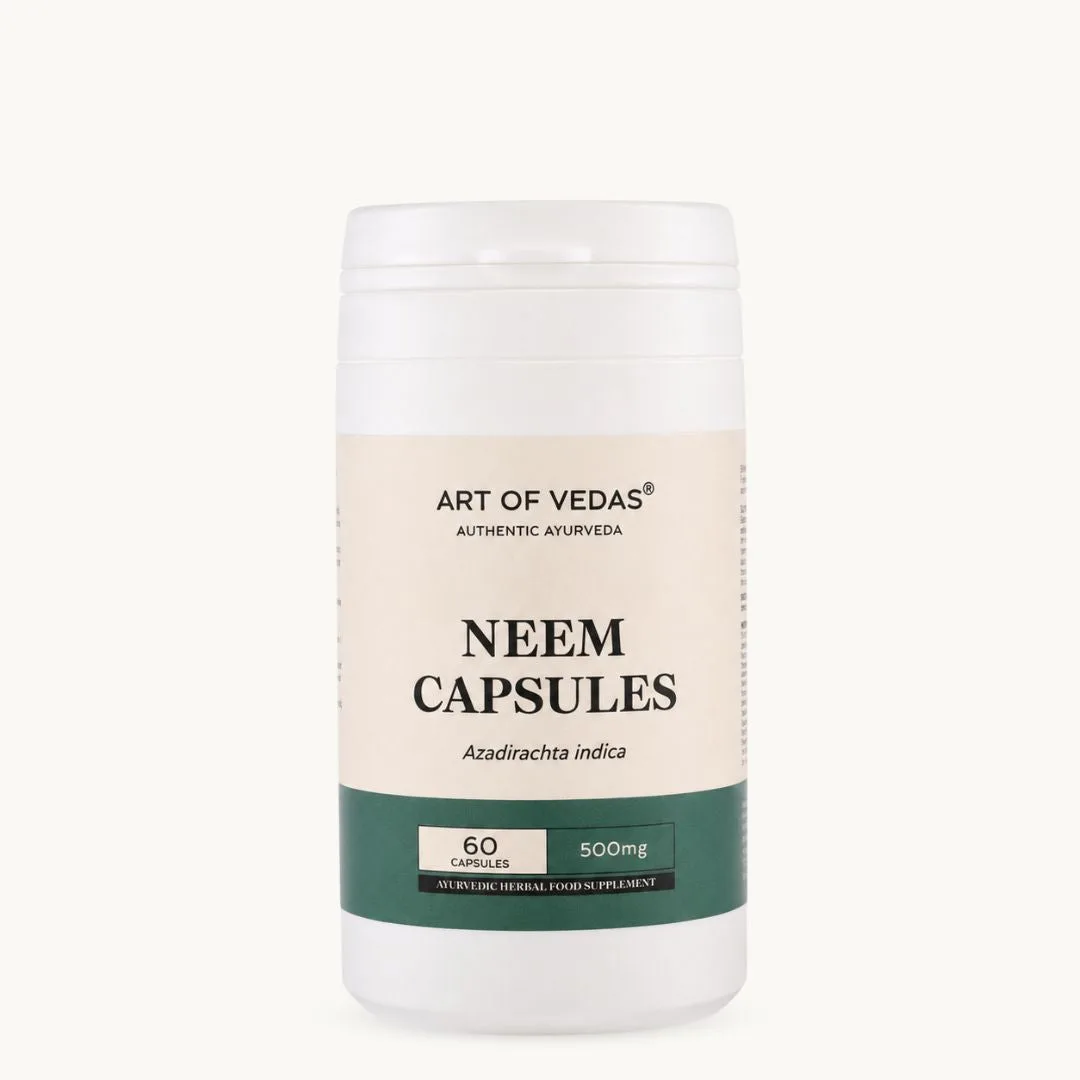
See our Neem Capsules and browse the full classical supplement range at Art of Vedas Supplements. For related Pitta-addressing preparations, see our Guduchi guide and our Ayurvedic oils for skin by dosha guide.
This article is for informational and educational purposes only. Neem is a traditional Ayurvedic herb used as a food supplement and in external preparations. It is not a medicine and is not intended to diagnose, treat, cure, or prevent any medical condition. This product is a food supplement and not intended to replace a varied diet. Consult a qualified Ayurvedic practitioner or healthcare professional for personalised guidance.