This article is part of our Abhyanga: The Complete Guide to Ayurvedic Self-Massage guide series.
For external use only. Not a substitute for professional medical advice.
Before You Begin: What You Need
Abhyanga is the classical Ayurvedic practice of warm oil self-massage described in the Charaka Samhita (Sutrasthana Ch.5) as one of the most important daily practices for maintaining health. The verse is unambiguous: "The body of one who uses oil massage regularly does not become affected much, even if subjected to accidental injuries or strenuous work. By using oil massage daily, a person is endowed with pleasant touch, trimmed body parts, and becomes strong, charming and least affected by old age."
This guide is purely practical. It assumes you have never done Abhyanga before and want to try it tonight. Everything you need to know is here.
You will need: A warm room (bathroom is ideal). A towel you do not mind staining with oil (designate one as your "Abhyanga towel" permanently). 30 minutes of uninterrupted time. And warm oil - approximately 50-75ml per session for a full body application.
Choosing Your Oil
The classical texts prescribe oil selection based on your Dosha type and the season. Here is the practical Art of Vedas selection guide:
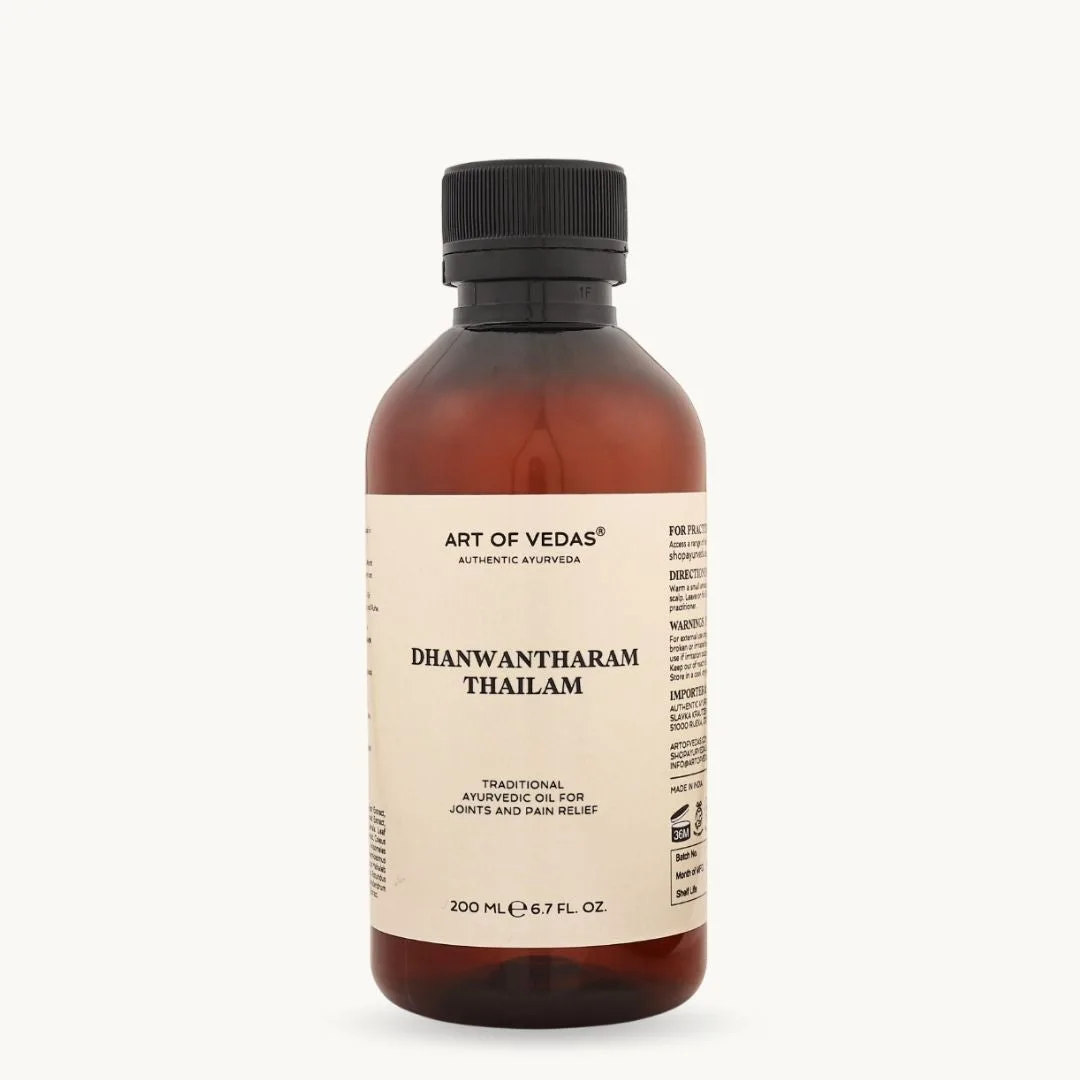
For most people, most of the time: Dhanwantharam Thailam. This is the most versatile classical body oil. It is Vata-Kapha pacifying, warming, deeply nourishing, and suitable for year-round use. If you are buying one oil to start your Abhyanga practice, this is it.
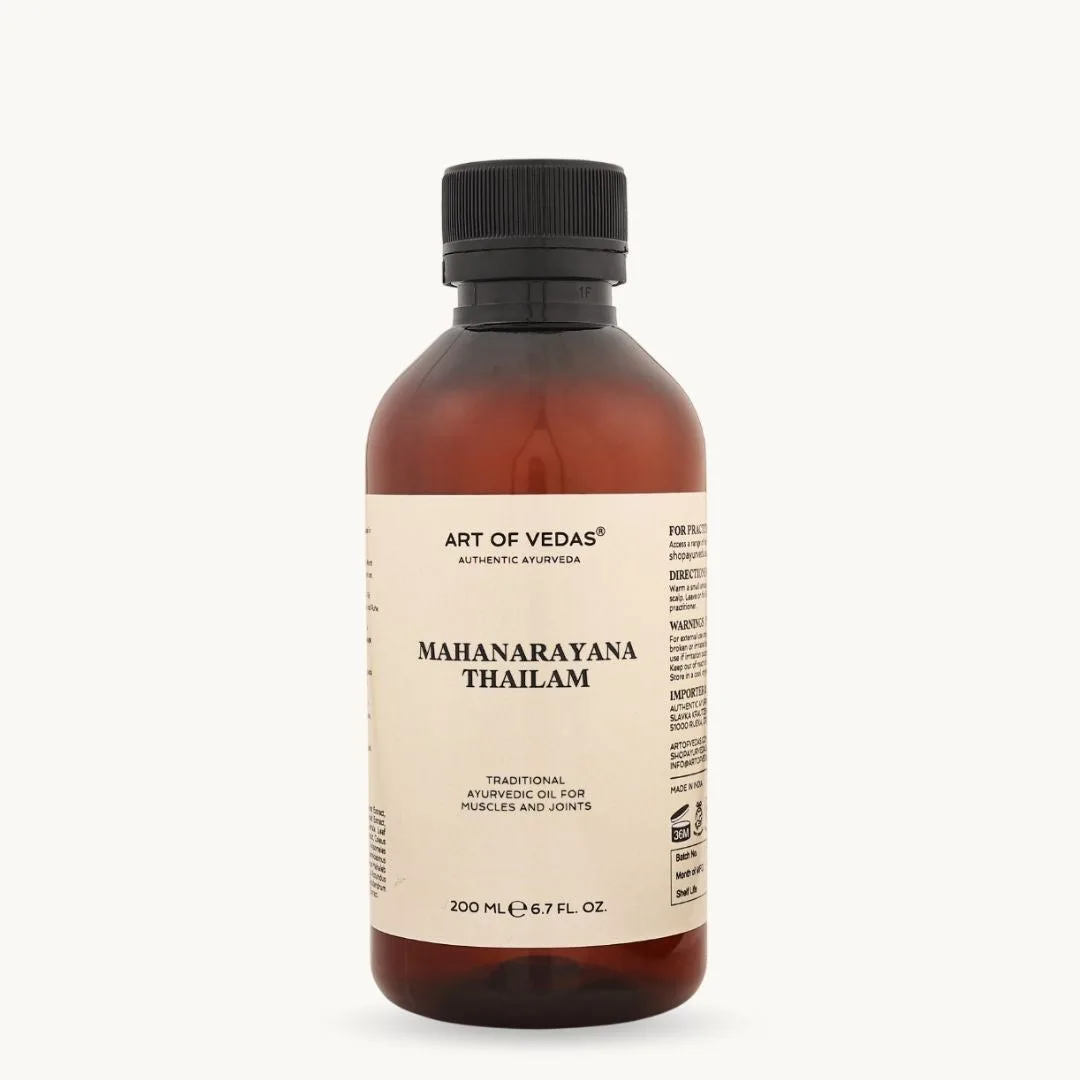
For joint stiffness, muscle soreness, or after physical activity: Mahanarayana Thailam. A 40+ herb formula classically indicated for musculoskeletal support. Especially effective when applied to specific areas of tension.
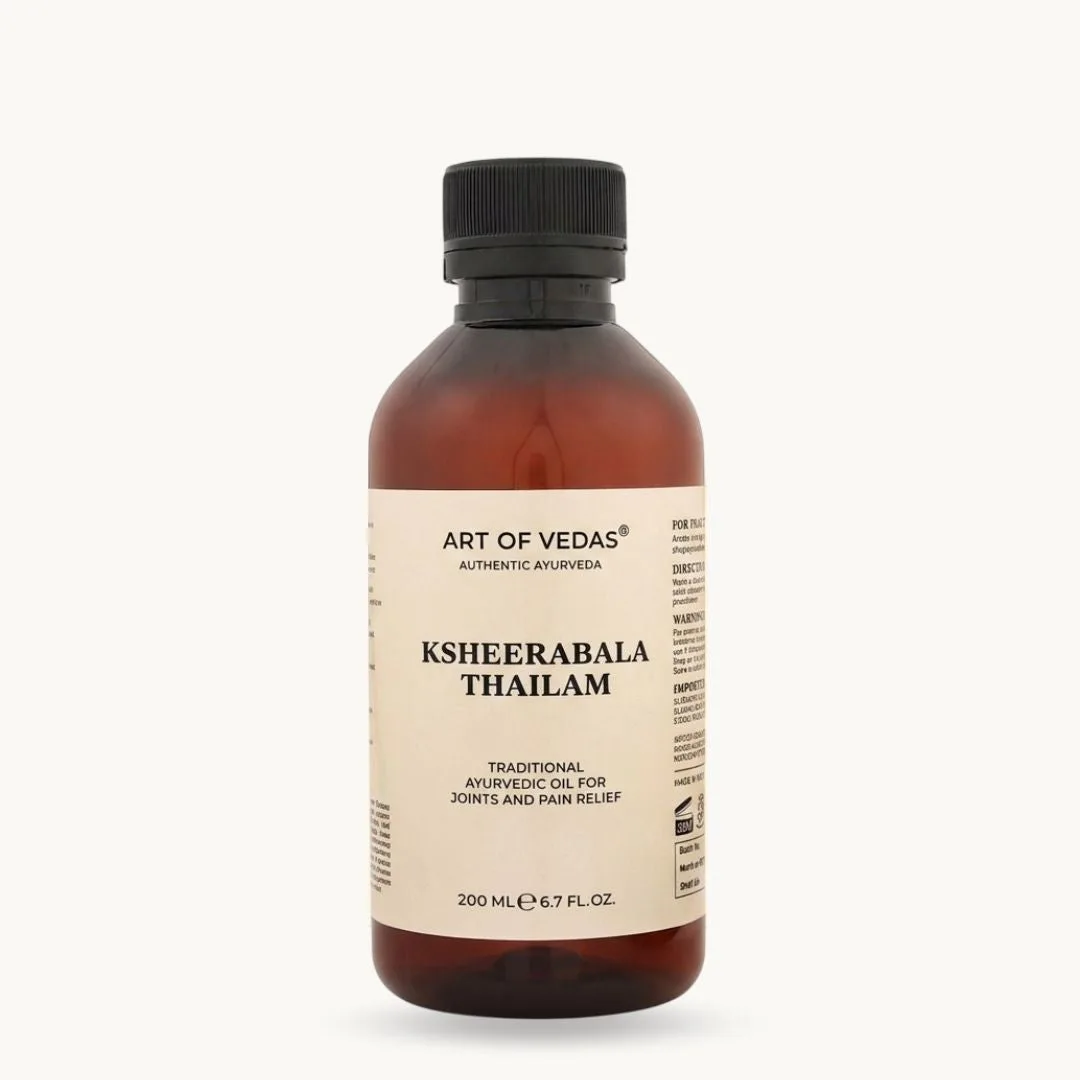
For Pitta types or during summer: Ksheerabala Thailam. The milk processing gives this oil a cooling quality that Pitta-dominant individuals and hot-weather Abhyanga sessions call for.
Not sure which type you are? The Dosha assessment takes five minutes and will guide your oil choice. For a deeper comparison of all oils, see our Abhyanga oil selection guide.
How to Warm the Oil
Never apply cold oil for Abhyanga. The Ashtanga Hridayam specifies that oil should be warm - approximately body temperature or slightly above. The simplest method: place your bottle of Thailam in a bowl of hot water for 5-10 minutes. Alternatively, pour the amount you need into a small cup and stand it in hot water. Test the temperature on the inside of your wrist - it should feel pleasantly warm, not hot.
The Full Stroke Sequence
The classical Abhyanga sequence works from the extremities towards the centre of the body, following the direction of venous return and lymphatic flow. The entire process takes 15-20 minutes for the massage itself, plus 10-15 minutes of resting with the oil on before showering.
Head and Scalp (3 minutes)
Begin with a small amount of oil on the crown of the head. Use circular motions with the fingertips, covering the entire scalp. Move to the temples, behind the ears and the base of the skull. Head oiling is described in the Ashtanga Hridayam as one of the most important practices for preventing headaches, premature greying, and maintaining sensory clarity. If you prefer not to oil your hair daily, do this step on weekends and skip it on workdays.
Face and Ears (2 minutes)
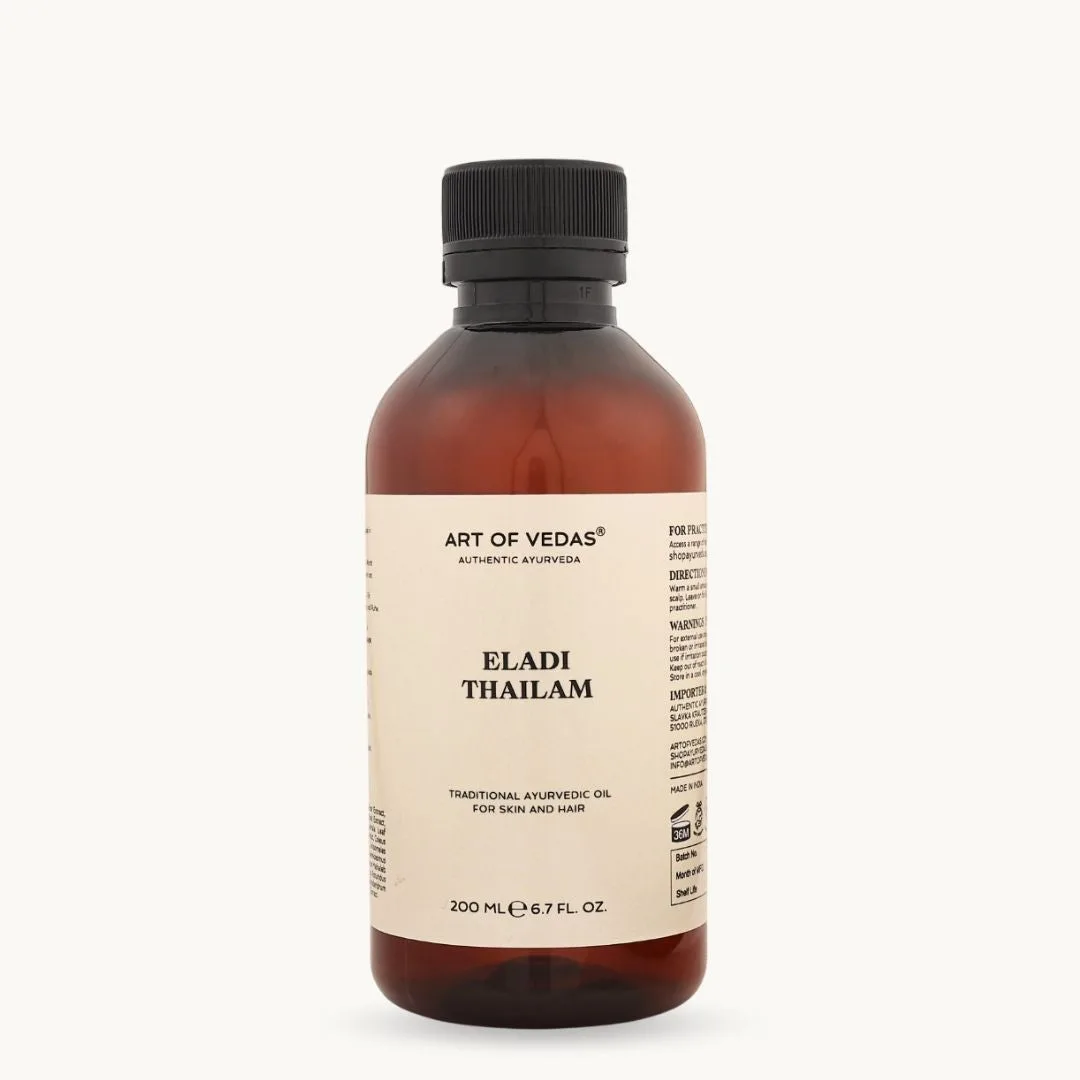
With a small amount of oil, gently massage the forehead, temples, cheeks, jaw and chin using circular upward motions. Oil the earlobes and the outer ear canal gently - the Charaka Samhita describes ear oiling (Karna Purana) as particularly calming for Vata. For facial massage specifically with Eladi Thailam (the classical face oil), see our facial Abhyanga guide.
Neck and Shoulders (2 minutes)
Long strokes down the back and sides of the neck. Circular motions on the shoulder joints. Firm but not painful pressure on the trapezius muscles (the area between neck and shoulder that holds tension). The neck is a primary Vata site - thorough oiling here directly calms the nervous system.
Arms (2 minutes each)
Long strokes on the upper arm (shoulder to elbow) and forearm (elbow to wrist). Circular motions on the elbow and wrist joints. The classical rule: long strokes on the long bones, circular motions on the joints. Do not forget the hands - massage each finger individually, the palm and the back of the hand. The hands contain numerous marma points (vital energy points).
Chest and Abdomen (3 minutes)
Broad circular motions on the chest (clockwise). For the abdomen, always massage in a clockwise direction - this follows the direction of the colon and supports digestive movement. The Charaka Samhita describes abdominal Abhyanga as particularly beneficial for Vata-type digestive irregularity. Use gentle pressure on the abdomen - this is not a deep tissue massage area.
Back (2 minutes)
Reach what you can. Long strokes along the spine, circular motions on the lower back (a major Vata site). If you cannot reach the middle back easily, focus on the lower back and use the excess oil on your hands to reach the upper back. The lower back is the seat of Apana Vata - the subdosha that governs elimination, menstruation and lower body function. Thorough oiling here is particularly important.
Legs (3 minutes each)
Long strokes from hip to knee, circular motions on the knee joint, long strokes from knee to ankle, circular motions on the ankle. The legs are the longest structures in the body and need generous oil and extended strokes. The Ashtanga Hridayam specifically mentions knee oiling as protective for joint integrity.
Feet (3 minutes)
The feet are the most important area in Abhyanga according to the classical texts. The Charaka Samhita (Sutrasthana Ch.5) states that diseases do not attack one who massages the feet with oil before sleeping. Massage the entire sole firmly, paying attention to the arch and the base of the toes. Massage each toe individually. Oil between the toes. The feet contain reflex points that correspond to every organ system. For an even deeper foot practice, the Kansa Vatki foot massage with a bronze bowl is the next level.
After the Massage: Rest and Shower
After completing the full sequence, sit or lie down for 10-15 minutes. Allow the oil to absorb. This resting period is not optional - the Charaka Samhita describes it as part of the therapeutic process. The oil needs time to penetrate the skin layers and begin its work in the tissues.
Then shower with warm (not hot) water. Use mild soap only on the areas that need it (armpits, groin). Do not scrub the oil off aggressively - a thin residue should remain on the skin. The classical texts describe this residual oil film as protective. Your skin will feel smooth and nourished, not greasy, if the oil quality is good.
How Often?
The Charaka Samhita describes Abhyanga as a daily practice (Dinacharya). In practice, most Europeans find 3-5 times per week sustainable. Even once weekly provides meaningful benefit. Weekend mornings are ideal for a full, unhurried session. On weekdays, a shortened version focusing on feet, scalp and joints takes 5-10 minutes and still delivers classical benefits.
For the complete Dinacharya morning routine including Abhyanga, tongue scraping, oil pulling and Nasya, see our daily routine guide.
Common Questions from First-Timers
How much oil do I actually use?
Approximately 50-75ml for a full body session. This is more than most people expect. The classical instruction is Snehana - "oleation" - which means the tissues should be genuinely saturated, not lightly moistened. If your skin absorbs the oil quickly and still feels dry, use more. Over time you will find the amount that suits your body and the season (more in winter, less in summer).
Will it stain my towels and sheets?
Yes. Sesame-based Thailams will stain fabric. Designate specific towels and perhaps an old sheet for your Abhyanga practice. The stains do not wash out completely. This is simply the reality of working with traditional oils - experienced Abhyanga practitioners accept this as part of the practice.
Can I do Abhyanga during my menstrual period?
The classical texts generally advise lighter activity during menstruation. Gentle foot and leg massage is always appropriate. Full Abhyanga with vigorous strokes is not recommended during the first 2-3 days of the period. A gentle, slow-paced application without strong pressure is acceptable. Listen to your body - if it feels right, it is likely fine.
What about Abhyanga for better sleep?
Evening Abhyanga focusing on the feet, scalp and ears is one of the most effective classical practices for supporting sleep onset. Use Dhanwantharam Thailam warmed and applied 30 minutes before bed, followed by a warm foot bath. See our dedicated Abhyanga for sleep guide for the full evening protocol.