This article is part of our AYURVEDIC SKINCARE FOR BEGINNERS guide series.
The information in this article is provided for educational purposes and reflects traditional Ayurvedic knowledge. It is not intended as medical advice and should not replace consultation with a qualified healthcare professional.
In brief: Classical Ayurveda describes the skin under several terms including Mukhadushika, and identifies three distinct doshic patterns: Pitta excess in the blood, Kapha obstruction of the channels, and a combined pattern. Each is approached differently in tradition. This guide covers the classical framework, traditional dietary and lifestyle practices, and the classical external preparations associated with each pattern.
Acne and Pitta: How Classical Ayurveda Views Inflammatory Skin Patterns
Conventional dermatology describes acne primarily as the result of follicular obstruction combined with bacterial colonisation and a secondary inflammatory response, influenced by hormonal factors. The treatments follow from this model: topical antibacterials, retinoids to reduce follicular obstruction, hormonal interventions. These approaches can be effective, and for severe or cystic acne they are often appropriate. What they largely do not describe is why the individual developed the skin's susceptibility to this process in the first place.
Classical Ayurveda describes a corresponding pattern, Mukhadushika, literally "that which spoils the face", through a framework that identifies the internal conditions traditionally associated with the skin's susceptibility. The primary pattern is described as excess Pitta in the Rakta dhatu (blood tissue), which is said to generate heat that rises to the surface and is associated with warmth and redness visible on the skin. A secondary pattern is excess Kapha associated with obstruction in the channels and follicles. The third pattern involves both simultaneously, typically the most complex to balance and the most common in modern presentations.
Understanding which pattern is dominant changes the entire traditional approach, which is why the classical framework is more useful than a single generic "Ayurveda for acne" protocol.
The Three Patterns: Pitta, Kapha, and Combined
The Charaka Samhita and Ashtanga Hridayam describe skin patterns arising from doshic imbalance in terms of which doshas are primarily involved in the blood and skin tissues. The Sahasrayogam provides the most detailed classical descriptions, including distinctions between types of skin presentation and their respective doshic profiles.
The Pitta-dominant pattern presents as red, hot, and inflamed lesions, often with a burning quality rather than primarily itchy. The surrounding skin tends toward redness, and the lesions are typically raised with an inflammatory rather than primarily comedonal character. The person's history usually includes significant dietary Pitta aggravation: alcohol or fermented preparations, very spicy foods, excess sour foods, processed and heating preparations. Emotional patterns involving sustained anger, high competitiveness, and intense mental effort are described with equal weight as Pitta-aggravating factors. This pattern is traditionally addressed through Pitta-balancing diet and internal herbs.
The Kapha-dominant pattern presents differently: larger, deeper, cystic or nodular lesions without much redness or heat, often white-headed or flesh-coloured, with a congested rather than inflamed quality. The surrounding skin tends to be oilier. This pattern is associated with Kapha accumulation creating obstruction in the follicular channels, often alongside Ama (metabolic residue) in the blood channels. The history typically involves heavy, sweet, dairy-rich, and cold foods, sedentary habits, and irregular elimination. Stimulating and lightening Kapha is the traditional emphasis.
The combined Pitta-Kapha pattern, the most common presentation in modern adults, involves both elements simultaneously: inflamed lesions alongside congestion, oily skin with redness. The classical approach involves addressing both doshas sequentially, usually starting with the one that is more dominant, as the practices for pure Pitta balancing can aggravate Kapha and vice versa if applied without discrimination.
Dietary Practices for Pitta-Dominant Skin
The dietary approach to Pitta-pattern skin is one of the most directly emphasised practices in the classical framework, more so, in tradition, than topical application, because the topical presentation is held to reflect an internal condition that dietary change can influence.
The Charaka Samhita's dietary guidance for Pitta balancing involves eliminating or significantly reducing the specific inputs that are traditionally said to aggravate Pitta in the blood: alcohol and fermented preparations are described as the most potent Pitta aggressors; very spicy and pungent foods (chili, raw garlic in excess, mustard in excess) follow; excess sour foods, including tomatoes, citrus in excess, vinegar, and fermented dairy, are also consistently identified. Coffee in large quantities has a Pitta-aggravating quality consistent with the classical framework.
Cooling and nourishing foods that are traditionally described as balancing Pitta in the blood include coconut (considered cooling Ayurveda), cucumber, sweet fruits in moderation, coriander, fennel, and adequate hydration with room-temperature or cool water. Sweet, bitter, and astringent tastes are described as Pitta-balancing. The bitter taste specifically is described in tradition as having a cooling and blood-supporting quality relevant to the skin.
Timing is relevant. The classical texts describe midday as the period of strongest Agni and Pitta, and eating the largest meal then while keeping dinner lighter and cooler is described as supporting balanced Pitta in the blood overnight.
Classical External Preparations for Pitta-Pattern Skin
Classical Ayurvedic external preparations for Pitta-dominant skin use cooling base materials and herbs. The approach is the opposite of Vata-pattern skin care: rather than warming and nourishing oils, Pitta-pattern skin is traditionally suited to cooler, lighter preparations that are described as cooling the skin without aggravating the underlying Pitta.
Chandana (sandalwood) is one of the most consistently referenced classical herbs for Pitta-pattern skin. The Ashtanga Hridayam describes it as having Varnya (complexion-supporting), cooling, and Pitta-balancing properties applied topically. Preparations incorporating sandalwood paste or sandalwood in an oil base are classical preparations valued for Pitta-pattern skin presentations.
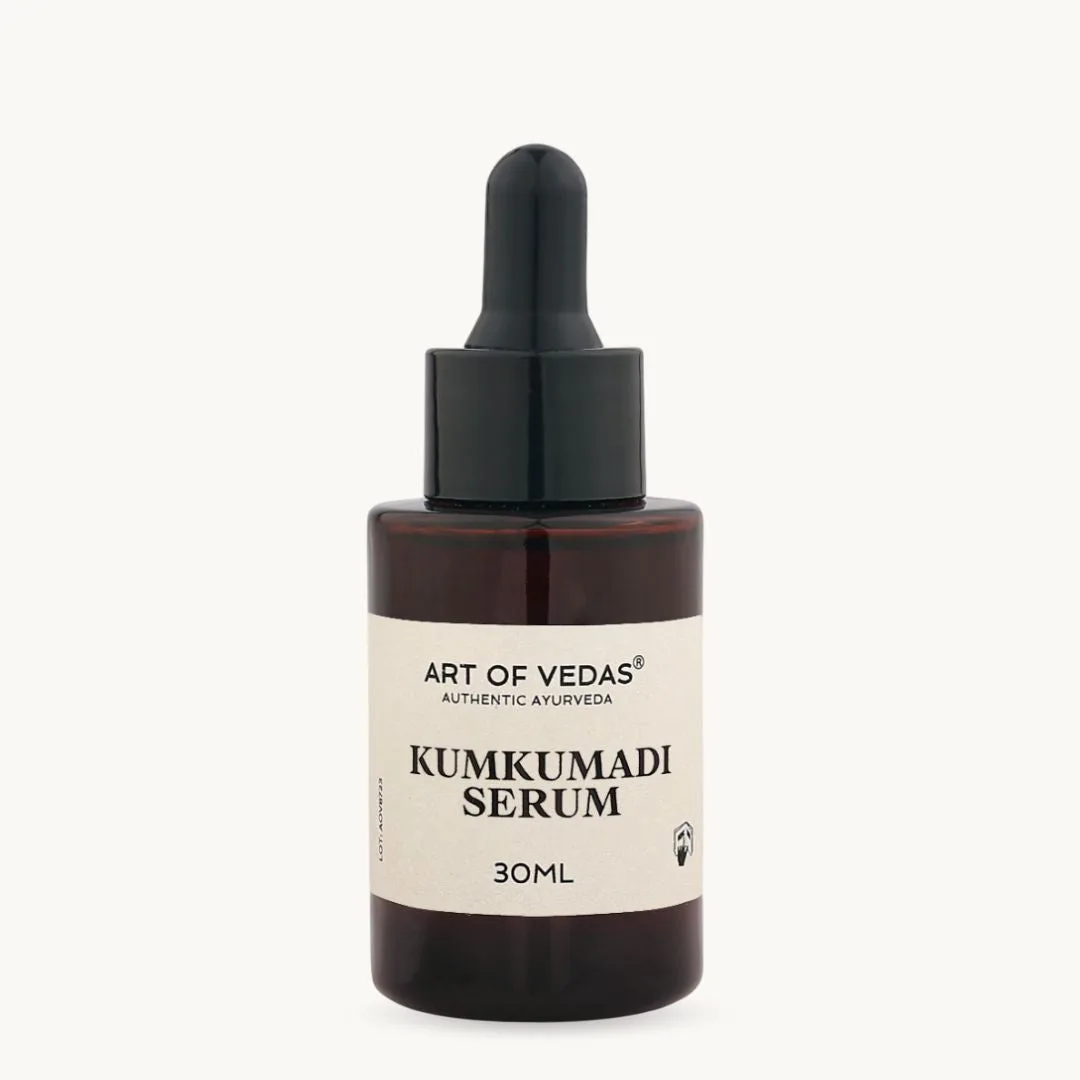
Kumkumadi Thailam is referenced texts as a Varnya preparation traditionally valued for supporting complexion and skin quality. The saffron-based formula has a cooling and Pitta-balancing character, and in tradition it is described for general skin quality support. See our guide to Kumkumadi oil.
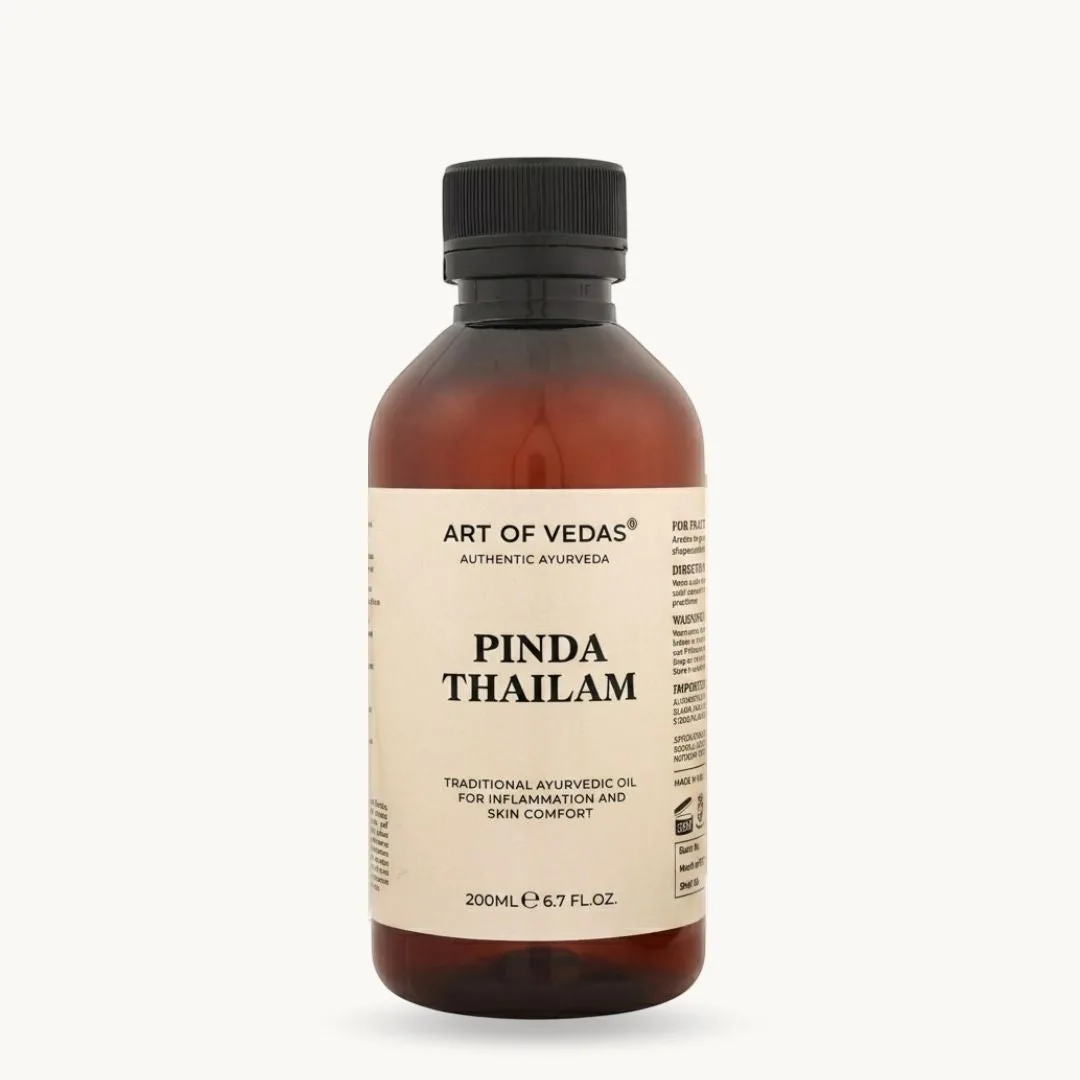
Pinda Thailam, described in the Ashtanga Hridayam as a cooling, Pitta-balancing medicated oil used Panchakarma contexts, is referenced for Pitta-pattern skin presentations. Its cooling potency and specific character in the classical framework make it traditionally relevant to the heat aspect of Pitta-pattern skin. See our guide to Pinda Thailam.
Browse the Art of Vedas skin care collection for classical preparations suitable for Pitta-pattern skin.
Frequently Asked Questions
How does classical Ayurveda view acne?
Classical Ayurveda describes Mukhadushika as arising primarily from excess Pitta in the Rakta dhatu (blood tissue), said to generate heat that rises to the skin surface. A secondary pattern is Kapha excess associated with obstruction in the follicular channels. Most modern presentations involve both. The traditional starting point is the root inputs, specific dietary and lifestyle factors aggravating Pitta or increasing Kapha.
What foods are traditionally avoided for Pitta-pattern skin?
The most significant classical Pitta aggressors are alcohol and fermented preparations, very spicy and pungent foods, and excess sour foods, tomatoes, vinegar, citrus in excess, fermented dairy. The classical dietary approach simultaneously increases cooling, bitter, and nourishing foods, coconut, cucumber, coriander, fennel, that are traditionally said to balance Pitta in the blood tissue.
Is oil application appropriate for Pitta-pattern skin?
It depends on the pattern. Heavy warming oils suited to Vata skin may aggravate Kapha obstruction in combined presentations. For Pitta-dominant patterns, cooler and lighter preparations are traditionally favoured, classical preparations such as sandalwood-based formulas, Kumkumadi Thailam, and Pinda Thailam are lighter in character than Vata-targeted oils. Identifying the dominant pattern before choosing preparations is the traditional emphasis.
What internal herbs does Ayurveda traditionally associate with Pitta-pattern skin?
For Pitta-dominant skin, classical texts reference herbs that cool and purify Rakta dhatu. Amalaki has specific relevance to Pitta balancing and skin quality over sustained use. Manjishtha (Rubia cordifolia) is a classical Rakta Shodhana (blood-purifying) herb referenced specifically in relation to the skin. Guduchi has bitter, cooling, and blood-purifying properties relevant to this pattern. These are traditionally used gradually and most often combined with dietary practices addressing the ongoing Pitta input.
Explore Skin Care at Art of Vedas
Browse our skin care collection for classical preparations suited to Pitta-pattern skin. Related reading: Pitta imbalance guide, Kumkumadi oil guide, Pinda Thailam guide, and Ayurvedic skincare guide.
For external use only. Not a substitute for professional medical advice.