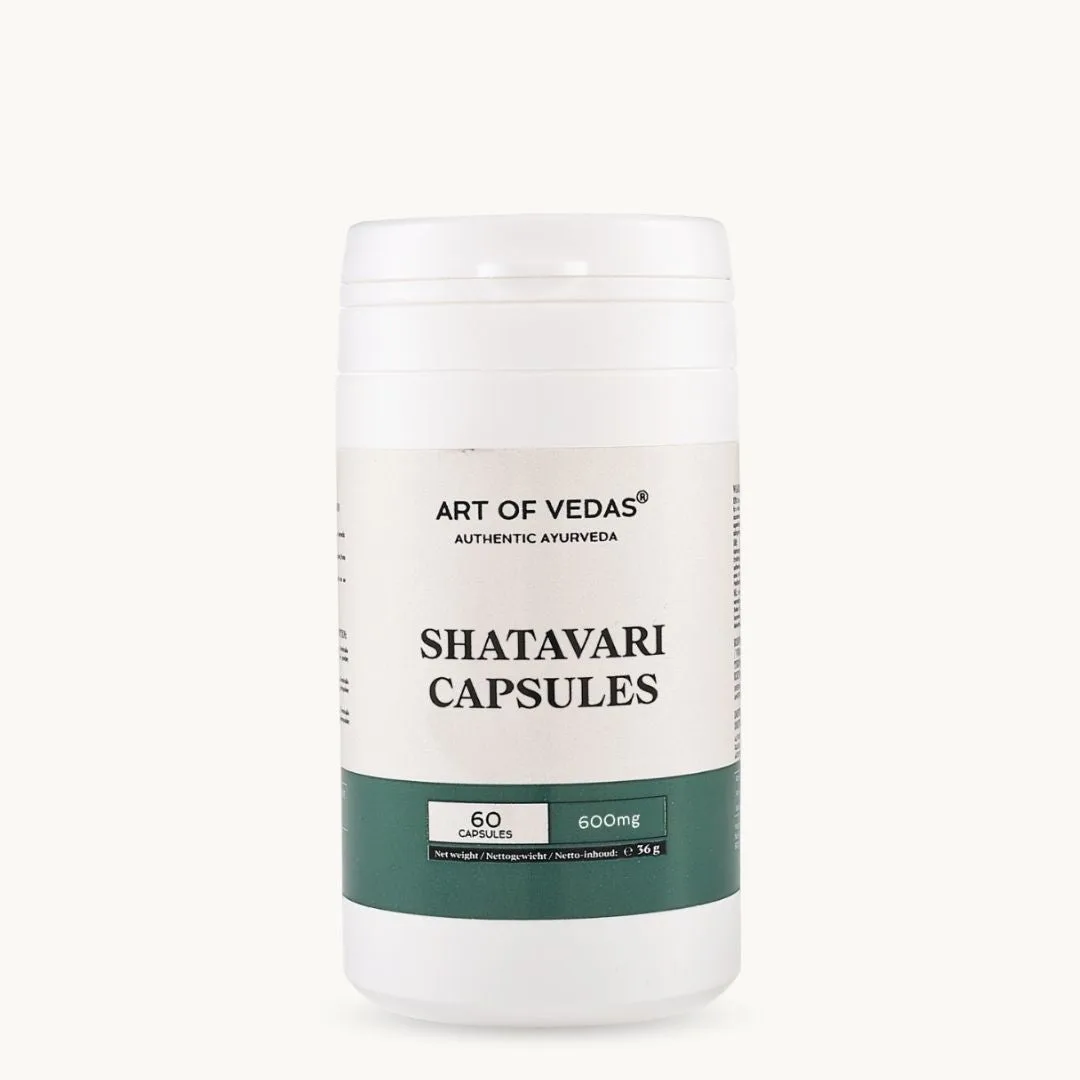
Shatavari is Asparagus racemosus, and it belongs to the same genus as the asparagus sold as a spring vegetable in Europe, Asparagus officinalis.
A climbing asparagus
Unlike the upright garden plant, Asparagus racemosus is a climber, with thin, needle-like branchlets that give it a feathery look and small white flowers. Below ground it forms a cluster of tuberous roots, the part the tradition uses.
The family
Both species belong to the Asparagaceae. The family relationship is real, but the two are used for different parts: the young shoots of the garden vegetable, and the roots of Shatavari.
Relation is not substitution
Sharing a genus does not make two plants interchangeable, which is why the species name, and not only the word asparagus, belongs on a label.
On the label
Shatavari Capsules contain Asparagus racemosus root powder.
Frequently Asked Questions
Is Shatavari related to asparagus?
Yes. Both are species of the genus Asparagus.
Is garden asparagus the same as Shatavari?
No. Garden asparagus is Asparagus officinalis, used for its shoots.
Which part of Shatavari is used?
The tuberous roots.
This article is for educational purposes and describes the classical Ayurvedic record. The products mentioned are food supplements, not a substitute for a varied, balanced diet, and are not intended to diagnose, treat, cure or prevent any disease. Take them under the guidance of a qualified Ayurvedic practitioner.