Panchakarma Tool
Greeva Basti Yantra
The Greeva Basti Yantra is a professional-grade instrument designed for Greeva Basti, a localised oil-retention therapy applied to the cervical spine and posterior neck region. Rooted in the classical Bahya Snehana (external oleation) principles described in the Charaka Samhita, Sushruta Samhita, and Ashtanga Hridayam, Greeva Basti is one of the most widely practised localised Basti therapies in modern Panchakarma clinics.
How to use
For professional use by trained Ayurvedic practitioners. Place over cervical spine (C4, C7), seal with Masha flour paste, fill with warm medicated oil (40, 44°C). Maintain temperature throughout session (20, 40 min).
Greeva Basti Yantra
In this traditional Ayurvedic treatment, the practitioner positions the Yantra over the cervical spine (typically C4, C7) of the prone-lying client, seals the perimeter with a ring of Masha (urad dal) flour paste, and retains warm medicated oil within the reservoir. The sustained warmth and herbal properties of the oil deliver deep nourishment to the cervical vertebrae, surrounding muscles, and local tissue.
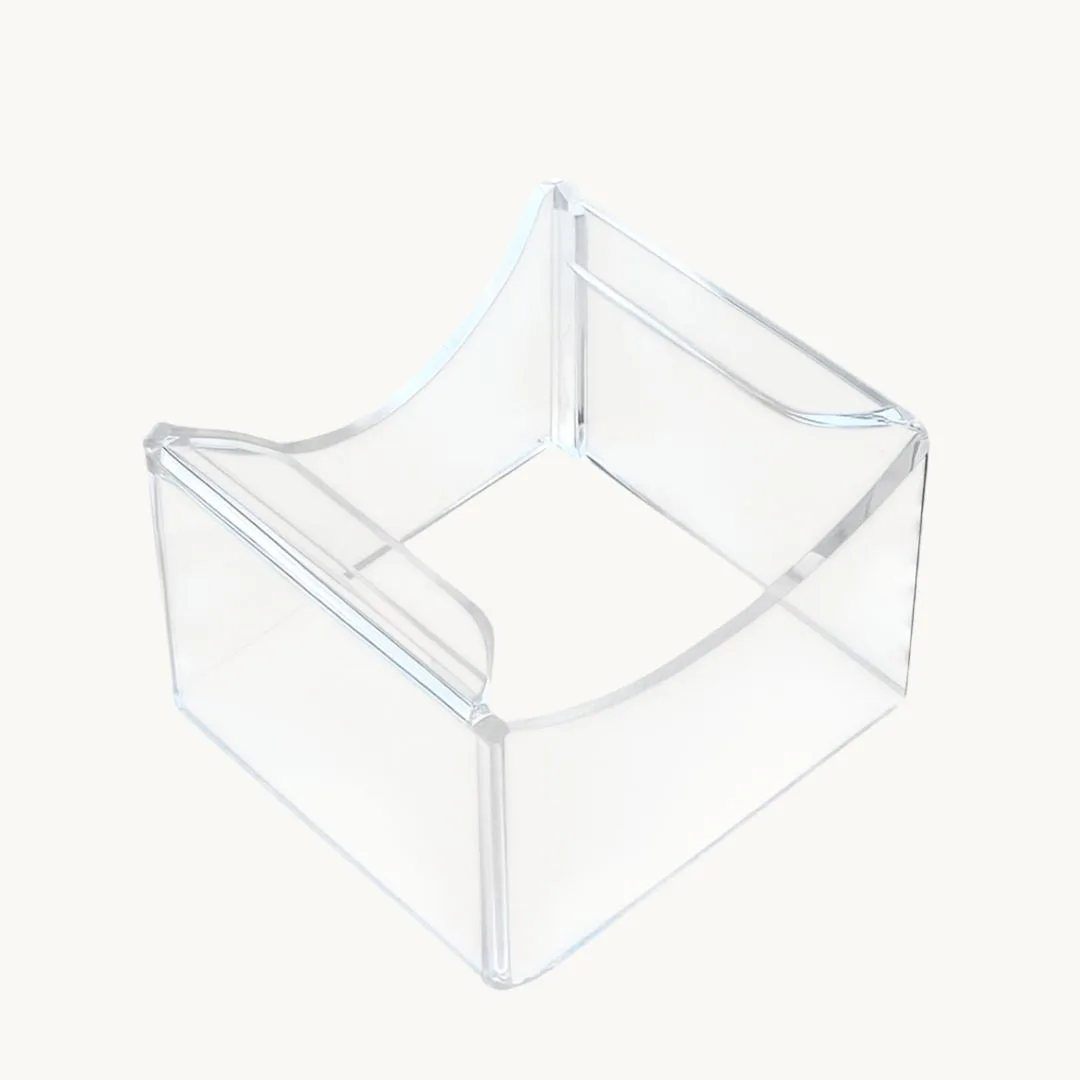
This set includes one Greeva Basti Yantra with a four-sided profile, ergonomically shaped to conform to the posterior neck contour.
Care and Cleaning
After each session, remove all flour paste residue and rinse the Yantra with warm water and a mild, fragrance-free detergent. Sanitise with isopropyl alcohol or a clinical-grade surface disinfectant. Allow to air dry completely before storing. Inspect regularly for any damage or rough edges that could cause discomfort during treatment.
What’s in the Set
- 1 × Greeva Basti Yantra
- Four-sided profile designed for the posterior cervical region
- Material: Durable, reusable clinical-grade construction
- Oil capacity: Approximately 200, 300 ml
Classical Reference
Bahya Snehana principles, Charaka Samhita (Sutrasthana Ch. 13, Snehadhyaya), Sushruta Samhita (Chikitsasthana Ch. 24, Snehopayogika), Ashtanga Hridayam (Sutrasthana Ch. 16, Snehavidhi). Localised Basti therapy practice refined within the classical Ashtavaidya Panchakarma tradition.
How it Works
The Greeva Basti Yantra acts as a structural frame for the dough-dam reservoir. The practitioner places the Yantra over the client’s posterior neck, centred on the cervical spine between C4 and C7, while the client lies in a prone (face-down) position. A ring of Masha (urad dal) flour paste is applied around the outer perimeter to create a watertight seal against the skin. Warm medicated oil is then poured through the open top until it fills the reservoir and covers the treatment area.
The oil is maintained at a consistent temperature of 40, 44°C throughout the session by periodically removing cooled oil with a cotton swab or syringe and replacing it with freshly warmed oil. Sessions typically last 20 to 40 minutes, depending on the treatment protocol and the practitioner’s clinical assessment.
Why a Professional Basti Yantra?
Traditionally, the reservoir for localised Basti therapies is constructed entirely from Masha flour dough, shaped and moulded around the treatment area by the practitioner. While effective, this method requires considerable skill to maintain structural integrity over the full duration of a session, particularly on the curved, uneven surface of the posterior neck.
The Greeva Basti Yantra offers a practical, professional alternative. Its four-sided profile is ergonomically shaped to conform to the cervical contour, providing consistent structure throughout the treatment. The practitioner still uses flour paste to seal the instrument to the client’s skin, combining the reliability of a reusable clinical tool with the traditional sealing method that ensures a proper fit for every body type.
Advantages for practitioners:
- Structural consistency, no risk of the reservoir collapsing or deforming during longer sessions on the curved neck surface
- Standardised volume, ensures even oil coverage across treatments
- Significantly reduced preparation time compared to full dough-dam construction
- Easy to clean and reuse between clients
- Ergonomic profile designed specifically for the cervical region
The Classical Medium: Medicated Oils
Greeva Basti uses medicated Thailams (oils) as the therapeutic medium, selected by the treating practitioner based on the client’s presentation, Dosha involvement, and treatment goals. The most commonly used classical oils for Greeva Basti include:
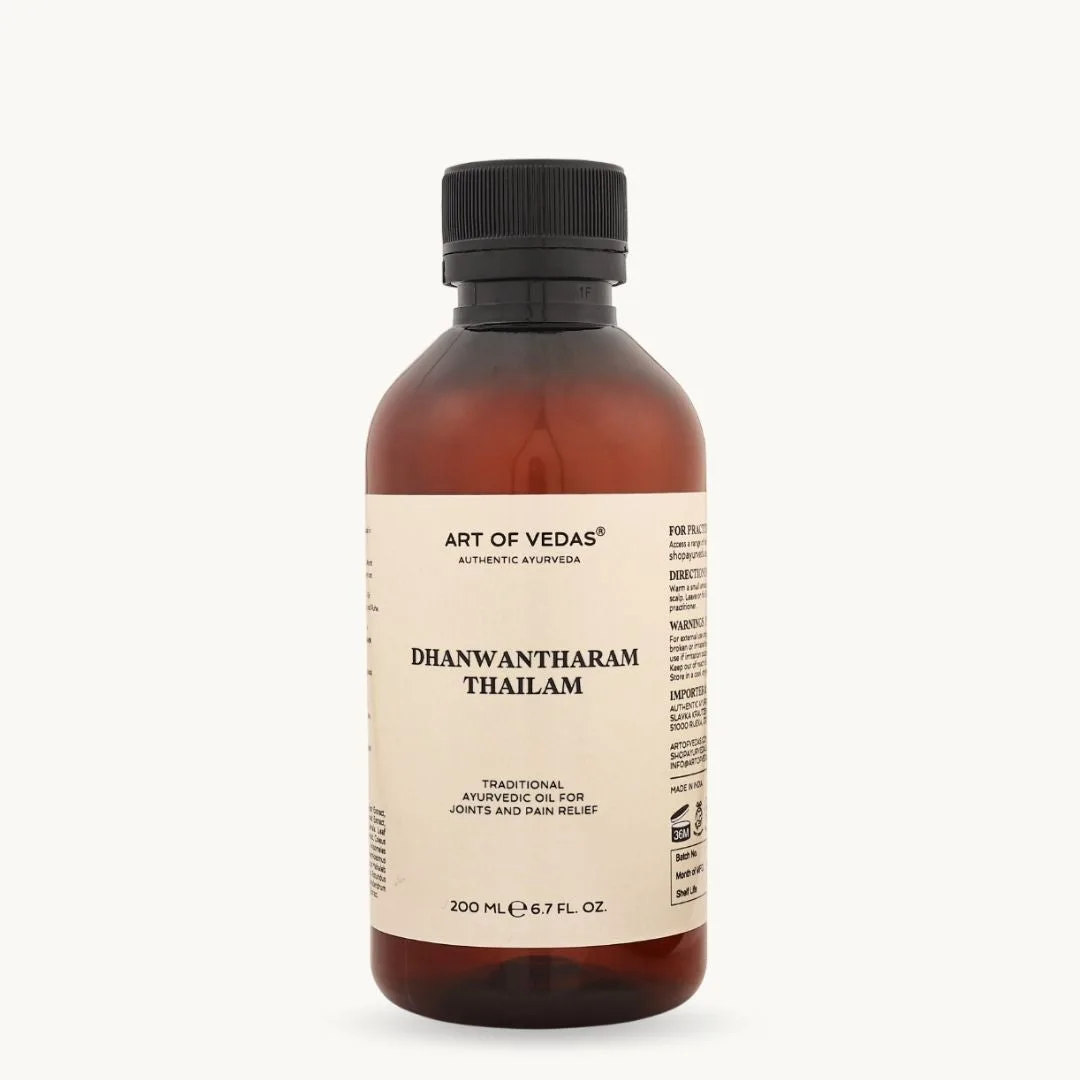
- Dhanwantharam Thailam, the primary classical choice for Vata-dominant conditions of the musculoskeletal system; deeply nourishing and warming
- Ksheerabala Thailam, traditionally valued for its Brimhana and nervine properties; often selected for presentations involving both Vata and Pitta
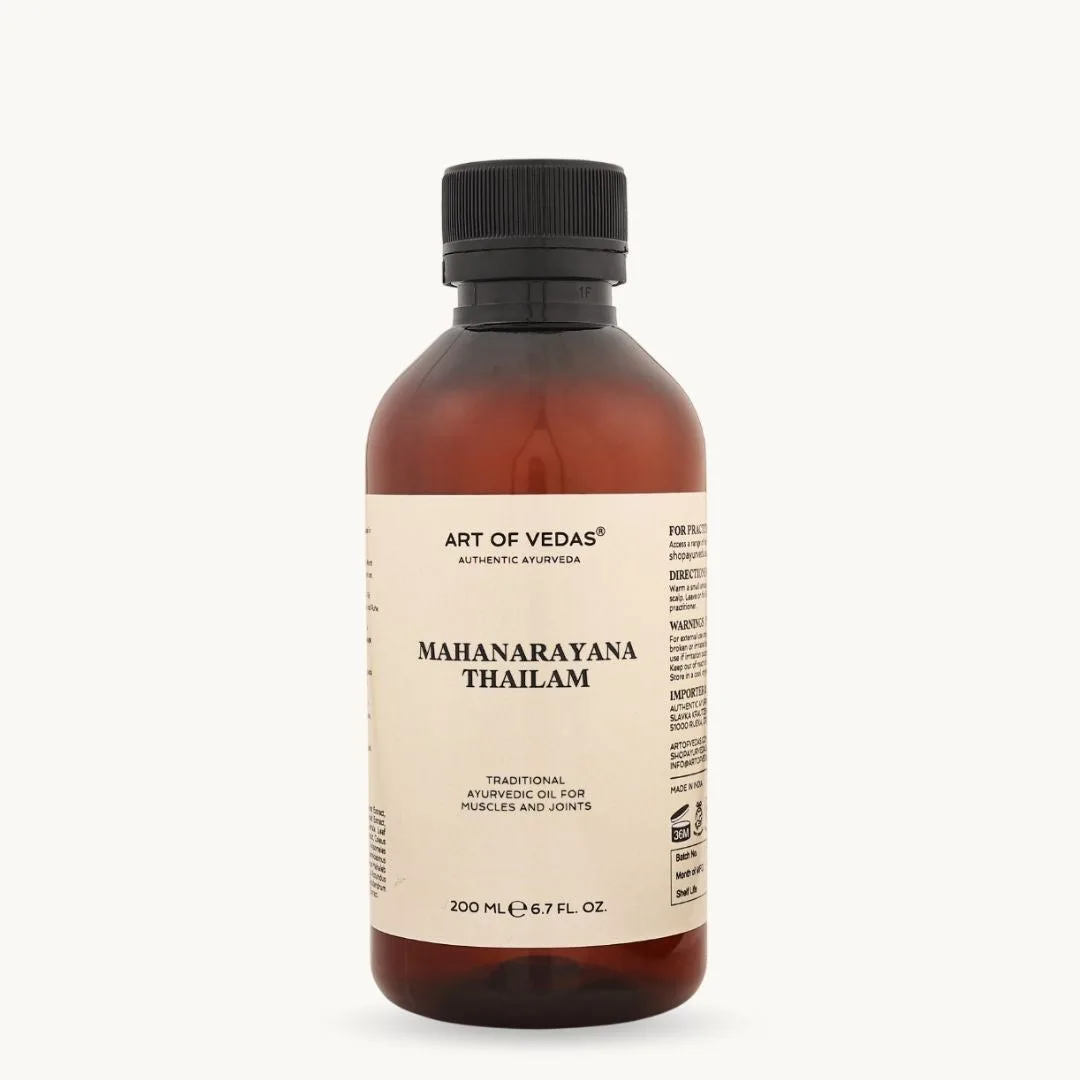
- Mahanarayana Thailam, a broad-spectrum musculoskeletal Thailam with over 50 herbs; suitable for a wide range of Vata presentations
- Karpooradi Thailam, a cooling Thailam traditionally used where Pitta involvement is suspected alongside Vata
- Prasarini Thailam, classically indicated for conditions of the Sandhi (joints) and Snayu (ligaments)
- Balaswagandhadhi Thailam, traditionally valued for its Brimhana and Balya properties; supports tissue nourishment
Plain sesame oil (Tila Taila) may be used for general Abhyanga preparation and post-treatment massage but is not typically the primary medium for the Basti itself.
Suggested Procedure Overview
Preparation (Purva Karma):
Ensure a calm, warm, draft-free treatment space. Apply a brief local Abhyanga (oil massage) to the cervical and upper thoracic region to prepare the tissue. Warm the selected medicated oil to 40, 44°C using a double-boiler or oil warmer, never heat directly over flame. Prepare a sufficient quantity of Masha (urad dal) flour paste for sealing. Position the client in a comfortable prone position with appropriate head support.
During the session (Pradhana Karma):
Place the Greeva Basti Yantra over the cervical spine, centred between C4 and C7. Seal the outer perimeter with flour paste, ensuring a watertight boundary. Pour warm medicated oil through the open top until it covers the treatment area. Maintain the oil temperature at 40, 44°C throughout the session by periodically exchanging cooled oil for freshly warmed oil. Typical treatment duration is 20 to 40 minutes. A standard course consists of 7 to 14 consecutive daily sessions, as determined by the treating practitioner.
After the session (Paschat Karma):
Drain the oil carefully. Remove the Yantra and flour paste. Gently wipe any excess oil and perform a light local massage. A mild Swedana (warm fomentation) may be applied to the area. Advise the client to avoid cold drafts, heavy physical exertion, and sudden neck movements for several hours following treatment. Classical texts recommend post-care precautions for twice the duration of the treatment itself (Dwiguna Parihara Kala).
This is a professional Ayurvedic therapy instrument intended for use by trained practitioners. Greeva Basti should be performed by or under the supervision of a qualified Ayurvedic practitioner. This product is not a medical device and is not intended to diagnose, treat, cure, or prevent any disease. Always consult a qualified healthcare professional for neck or spinal concerns.
Benefits
- Professional-grade Greeva Basti instrument for localised cervical oil-retention therapy
- Four-sided ergonomic profile shaped for the posterior neck contour
- Provides consistent structure throughout 20, 40 minute treatment sessions
- Reusable clinical tool, easy to clean and sanitise between clients
- Significantly reduces preparation time compared to full dough-dam construction
- Compatible with all classical medicated Thailams
Classical reference
Bahya Snehana principles, Charaka Samhita (Sutrasthana Ch. 13), Sushruta Samhita (Chikitsasthana Ch. 24), Ashtanga Hridayam (Sutrasthana Ch. 16). classical Ashtavaidya Panchakarma tradition.
Specifications
- Material
- Food-grade acrylic
- Size
- Approx. 14 cm footprint, 4.5 cm wall
- In the box
- One Greeva Basti frame
For professionals
The practice
Greeva Basti is the classical warm-oil ritual for the neck: a reservoir is seated over the nape and filled with comfortably warm Thailam, bathing the region in steady, penetrating warmth. Traditionally the dam is shaped from black-gram dough; this Yantra holds the oil securely for repeated use in practice and at home.
How it is used
- Have the recipient lie face down with the chest and forehead comfortably supported.
- Seat the Yantra over the nape of the neck and check that it rests evenly.
- Fill with comfortably warm Thailam, classically Mahanarayana or Dhanwantharam.
- Maintain the warmth for twenty to thirty minutes, gently exchanging cooled oil for warm.
- Remove the oil, wipe the area and allow a short, quiet rest.
Material & care
- Wash with warm water and a mild soap after each session.
- Dry completely before storing.
- Reserve the vessel for oil rituals only.
Learn more about Greeva Basti Yantra
Which Thailam is used for Greeva Basti?
Classically Mahanarayana or Dhanwantharam Thailam, kept comfortably warm throughout the session.
How long does a session last?
Twenty to thirty minutes, with cooled oil gently exchanged for warm so the temperature stays steady.
Can Greeva Basti be practised at home?
Yes, with care and a second pair of hands; many prefer to first experience the ritual with a practitioner.
For professionals