Manjishtha in Ayurveda: Classical Raktashodhana Herb Guide
In the classical Ayurvedic understanding of skin health, the condition of the skin reflects the condition of the blood. The skin - Twak - is the outer expression of Rakta Dhatu (blood tissue), and when the blood tissue accumulates excess Pitta heat, toxins (Ama), or stagnation, this internal state manifests outwardly through the quality, clarity, and reactivity of the skin.
Manjishtha (Rubia cordifolia) - Indian Madder - is the foremost classical herb for addressing this blood-skin connection. Known in Ayurvedic texts as the primary Raktashodhana (blood-clarifying) and Varnya (complexion-enhancing) herb, Manjishtha has been at the centre of classical Ayurvedic skin protocols for thousands of years. Its characteristic deep red root reflects the classical correspondence with Rakta Dhatu - a correspondence recognised across ancient botanical traditions worldwide.
Manjishtha in the Classical Texts
The Charaka Samhita places Manjishtha foremost among the Varnya (complexion-supporting) herbs - a group specifically described as clarifying and enhancing the natural lustre of the skin. The Ashtanga Hridayam describes Manjishtha as Raktashodhana, Pittashamana, and Tvachya - three properties that together define its classical role as the primary internal herb for Pitta-related skin conditions and complexion support.
In Ayurvedic pharmacology, Manjishtha is characterised as:
- Rasa (taste): Madhura (sweet), Tikta (bitter), Kashaya (astringent)
- Virya (potency): Ushna (warming)
- Vipaka (post-digestive effect): Katu (pungent)
- Guna (qualities): Guru (heavy), Ruksha (dry)
- Dosha effect: Pitta-Kapha-shamana - primarily clearing Pitta from Rakta Dhatu; also Kaphahara through its bitter and astringent tastes
The apparent paradox of a warming herb (Ushna virya) that simultaneously clears Pitta is explained in classical Ayurvedic pharmacology through the distinction between the primary Pitta-clearing action via the Tikta rasa and Raktashodhana mechanism, and the warming potency that supports circulation and movement through the blood channels - which is essential for effective blood purification in the classical framework.
Raktashodhana: The Classical Blood-Clarifying Action
Raktashodhana - literally "blood purification" - is a classical Ayurvedic concept describing the clarification of Rakta Dhatu from accumulated excess Pitta, Ama (metabolic residue), and other factors that disturb the quality and circulation of the blood. In classical Ayurvedic pathology, the Rakta Dhatu is one of the most Pitta-prone Dhatus - its inherent warmth and movement make it naturally susceptible to Pitta accumulation.
When Rakta Dhatu accumulates excess Pitta over time, classical texts describe the resulting manifestations at the skin level as the most visible: reactive, sensitive skin prone to heat, congestion, and loss of natural lustre. The Raktashodhana herbs address this by clearing the Pitta-Ama accumulation from the blood tissue - restoring the natural clarity and nourishing quality of Rakta Dhatu, which in turn supports the health and appearance of the skin it nourishes.
Manjishtha is consistently described as the most effective single Raktashodhana herb in the classical literature - its affinity for Rakta Dhatu and its multiple taste-based mechanisms (bitter for direct Pitta clearing, sweet for tissue nourishment, astringent for toning and tightening the channels) making it uniquely effective for comprehensive blood tissue support.
Manjishtha and Skin Health in the Classical Tradition
Varnya - Complexion Support
The Charaka Samhita's Varnya classification places Manjishtha alongside Chandana (sandalwood), Ushira (vetiver), and other classical complexion-supporting herbs. Varnya herbs are understood to support Bhrajaka Pitta - the sub-dosha of Pitta located in the skin that governs the natural lustre, warmth, and healthy colour of the complexion. By clearing excess Pitta from Rakta Dhatu, Manjishtha supports the normalised functioning of Bhrajaka Pitta and the natural complexion quality it underpins.
Pitta-Related Skin Conditions
In the classical framework, Pitta-type skin presentations - reactive, heat-prone, prone to redness, sensitive to temperature changes and certain foods - reflect the underlying accumulation of Pitta in Rakta Dhatu. Manjishtha is the primary internal intervention for this pattern, typically combined with other Raktashodhana and Pitta-clearing herbs like Neem, Guduchi, and Amalaki in classical compound preparations.
Kumkumadi Thailam Connection
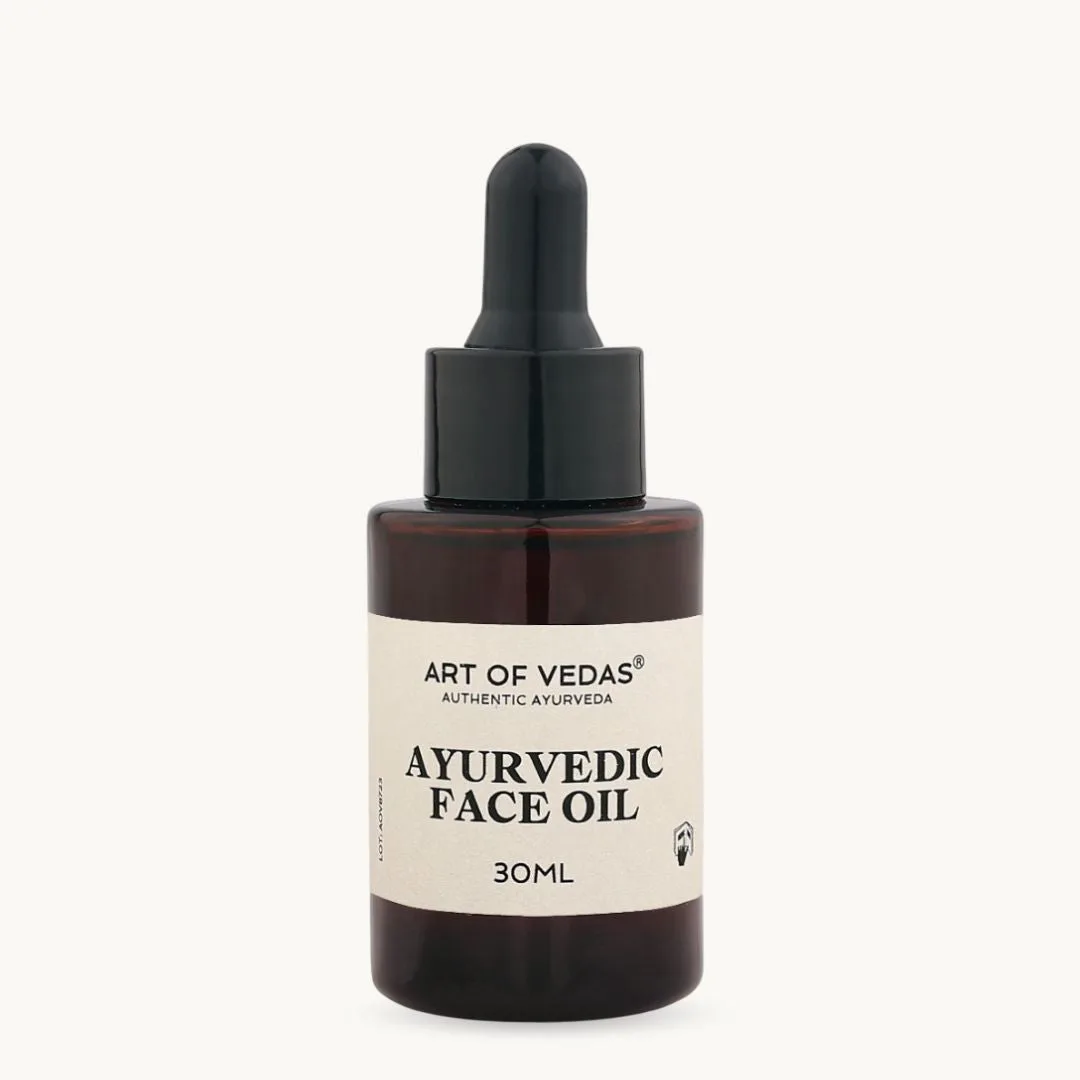
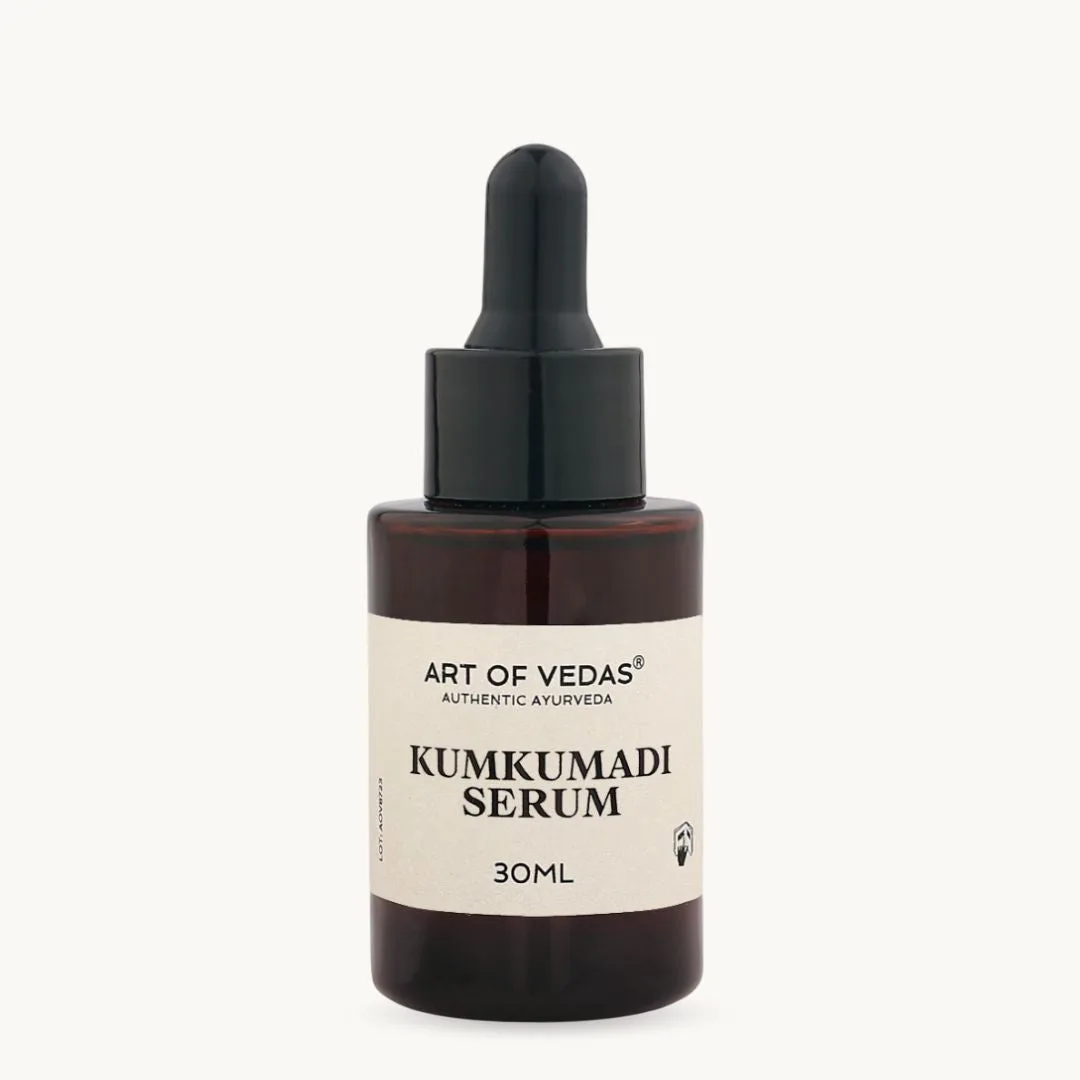
Manjishtha is one of the primary ingredients in Kumkumadi Thailam - the classical face oil described in the Ashtanga Hridayam Uttara Sthana as the foremost Varnya preparation. In the oil preparation, Manjishtha's Raktashodhana and Varnya properties are delivered topically through the oil base directly to Bhrajaka Pitta in the skin. For the complete guide to Kumkumadi and classical face oils, see our Ayurvedic face massage oil guide.
Manjishtha Beyond the Skin: Other Classical Applications
While Manjishtha's most widely known classical application is for skin and Rakta Dhatu, the classical texts describe additional applications that reflect the same blood-clarifying mechanism operating in different contexts:
- Classical women's health preparations: Manjishtha appears in numerous classical formulations for supporting the healthy flow and quality of Artava (menstrual blood) - again reflecting its Raktashodhana and Pitta-addressing action in the blood tissue
- Joint and musculoskeletal support: In conditions where Pitta accumulation in the blood tissue affects the joints, Manjishtha is used as part of broader Pitta-clearing and Raktashodhana protocols
- Lymphatic channel support: Classical texts describe Manjishtha as benefiting the Rasa Dhatu (lymph and plasma tissue) and its channels - supporting the clarity and flow of the lymphatic system
Classical Compound Formulations with Manjishtha
- Manjisthadi Kashayam: The classical Raktashodhana decoction - Manjishtha as primary herb with supporting blood-clarifying and Pitta-clearing herbs
- Saribadyasavam: Classical fermented preparation with Manjishtha for skin and blood tissue support
- Kumkumadi Thailam: The classical face oil - Manjishtha alongside saffron, Laksha, Chandana, and other Varnya herbs in sesame or safflower oil base
- Mahamanjisthadi Kashayam: The comprehensive Raktashodhana decoction used in classical Panchakarma preparatory protocols
Frequently Asked Questions
What is Manjishtha used for in Ayurveda?
Manjishtha is the foremost Raktashodhana (blood-clarifying) and Varnya (complexion-supporting) herb in the classical Ayurvedic tradition. Its primary classical application is for supporting the clarity and health of Rakta Dhatu (blood tissue) - particularly in conditions involving excess Pitta heat in the blood tissue that manifests through the skin as reactive, heat-prone, or dull-complexion skin.
Is Manjishtha suitable for all doshas?
Manjishtha is primarily Pitta-Kapha-shamana - most appropriate for Pitta and Kapha constitutions, and specifically for conditions with Pitta-Ama accumulation in Rakta Dhatu. Its Ushna (warming) virya means it is used with care for acute Pitta conditions with strong heat - typically combined with cooling Pitta-clearing herbs like Chandana or Amalaki in these contexts. For Vata constitutions with Pitta secondary imbalance, short-term use as part of a broader protocol is appropriate.
Why is Manjishtha red?
The characteristic deep red-orange colour of the Manjishtha root is due to its anthraquinone content. In the classical Ayurvedic tradition of Dravyaguna (herb property analysis), this visible redness reflects the herb's classical affinity for and action on Rakta Dhatu (blood tissue) - one of the traditional observational correspondences between a plant's colour and its tissue affinity.
Can Manjishtha be taken daily?
Classical Ayurvedic texts describe Manjishtha as appropriate for regular use as part of a Raktashodhana protocol - typically in a course of treatment over weeks to months rather than as an indefinite daily supplement. The duration and dose are best established with an Ayurvedic practitioner based on your constitution and the specific condition being addressed.
Explore Manjishtha at Art of Vedas
See our Manjishtha Capsules at Art of Vedas. For the external expression of Manjishtha's classical Varnya action, see our Ayurvedic face oil guide. For related Raktashodhana herbs, see our Neem guide and our Guduchi guide. Browse all supplements at Art of Vedas Supplements.
This article is for informational and educational purposes only. Manjishtha is a traditional Ayurvedic herb used as a food supplement. It is not a medicine and is not intended to diagnose, treat, cure, or prevent any medical condition. This product is a food supplement and not intended to replace a varied diet. Consult a qualified Ayurvedic practitioner or healthcare professional for personalised guidance.