Kashayam: The Classical Ayurvedic Herbal Decoction Guide
Kashayam - the classical Ayurvedic herbal decoction - is the water-based extraction method that holds a unique and important position among the classical pharmaceutical preparations. Where a Churna delivers the dry herb's full spectrum of properties, a Kashayam selectively extracts the water-soluble components of the herb into a concentrated liquid form - producing a preparation that acts more rapidly and more directly on the digestive and circulatory channels than the equivalent powder.
The Charaka Samhita and Ashtanga Hridayam both describe the Kashayam as one of the five primary classical dosage forms (Panchavidha Kashaya Kalpana): Swarasa (fresh juice), Kalka (paste), Kwatha/Kashayam (decoction), Hima (cold infusion), and Phanta (hot infusion). Of these five, the Kashayam is the most widely used in classical clinical practice - the standard liquid preparation for a broad range of therapeutic contexts.
The Classical Kashayam Preparation Method
The classical method for preparing a Kashayam is described in precise detail in the Sharangadhara Samhita (a classical pharmaceutical text) and confirmed in the Ashtanga Hridayam:
-
Coarse powder or broken pieces: The herbs are coarsely powdered or broken (not finely powdered as for Churna) - the coarser particle size is appropriate for the decoction process
-
Water ratio: One part herbs to sixteen parts water is the classical standard for a Kashayam
-
Reduction: The mixture is brought to a boil and then simmered until reduced to one-quarter of the original water volume - from sixteen parts water to four parts decoction. This reduction concentrates the water-soluble constituents of the herbs.
-
Straining: The decoction is strained while hot and allowed to cool to a warm, drinkable temperature
-
Freshness: Classical texts specify that Kashayam should be used fresh - within three to four hours of preparation - as its potency diminishes rapidly once cooled and stored
Kashayam vs Churna: When to Use Which
The choice between Kashayam and Churna for a given herb is not arbitrary in the classical framework - each form has specific contexts where it is most appropriate:
-
Kashayam is preferred when: Rapid action is needed (liquid preparations act faster than powders), the condition involves the digestive system or blood channels (water-soluble extraction reaches these quickly), the condition is more acute (decoctions have stronger, more immediate action), or Panchakarma clinical protocols specify it (Kashayam is the standard form in classical Panchakarma practice)
-
Churna is preferred when: Long-term daily use is the intention (more practical for daily supplementation), the condition requires sustained nourishment of deeper Dhatu layers (powder with milk or ghee penetrates deeper over time), or the specific preparation is described classically as a Churna formulation (e.g., Triphala Churna, Trikatu Churna)
Classical Compound Kashayams
Many of the most important classical Ayurvedic formulations are Kashayams - compound decoctions used extensively in clinical practice:
-
Dashamula Kashayam: The ten roots decoction - the primary classical Vata-addressing compound, used extensively in Panchakarma and for musculoskeletal Vata conditions
-
Guduchyadi Kashayam: Guduchi-based decoction - classical Vyadhikshamatva and Pitta-Kapha clearing compound
-
Sahacharadi Kashayam: The classical lower body and lower limb Vata decoction
-
Mahamanjisthadi Kashayam: The comprehensive Raktashodhana compound - used in classical protocols for Pitta-Kapha skin and blood conditions
-
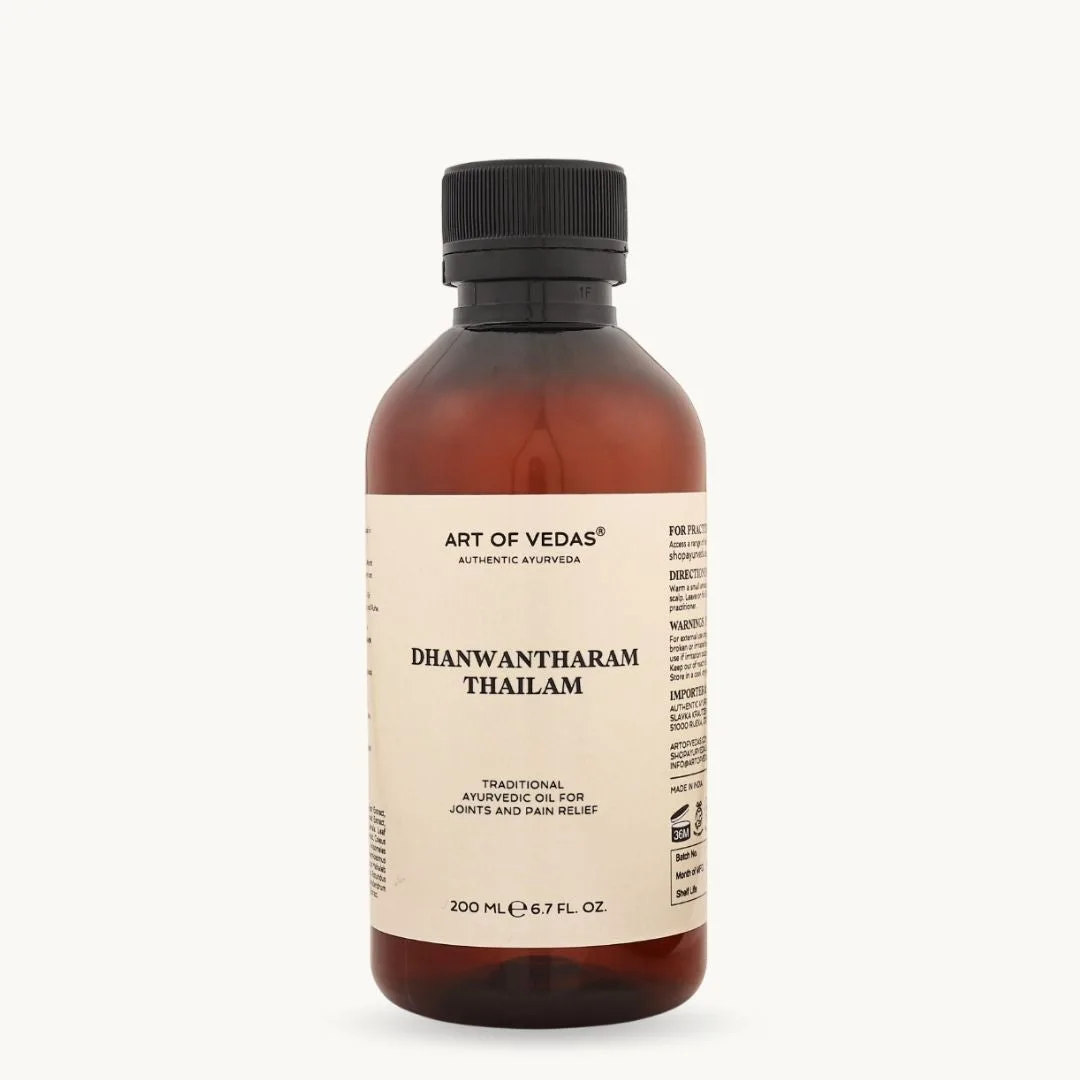
Dhanwantharam Kashayam: The decoction equivalent of the classical Dhanwantharam preparation - used in both internal and Basti administration
Ready-Made Kashayam: Classical Tablets and Liquid Concentrates
The classical requirement for freshly prepared Kashayam - used within hours of preparation - creates obvious practical challenges for daily use. Classical Ayurvedic pharmacy addressed this through two traditional solutions that remain relevant today:
-
Kashayam tablets (Kwatha Vati): The decoction is prepared by the classical method, then reduced further to a semi-solid and formed into tablets or pills. These are reconstituted in warm water before use - approximating the fresh decoction without requiring home preparation. This is the most authentic traditional solution and the form most widely used in modern Ayurvedic clinical practice in India.
-
Arishtam and Asavam: Classical fermented liquid preparations in which the Kashayam is used as the base for a fermentation process - the fermented preparation has a much longer shelf life (years rather than hours) while retaining and in some cases enhancing the therapeutic properties of the original decoction. See our supplements collection for classical Arishtam preparations.
Kashayam in Panchakarma
Kashayam has a specific and important role in classical Panchakarma practice beyond oral administration. Niruha Basti - one of the two classical types of medicated enema - uses a compound Kashayam preparation administered rectally, directly into the large intestine (the primary seat of Vata). The Kashayam Basti is described in the Charaka Samhita as the more therapeutically active of the two Basti types - its water-soluble contents rapidly absorbed through the colonic mucosa to directly address Apana Vata in its primary seat.
Frequently Asked Questions
What is Kashayam in Ayurveda?
Kashayam (also Kwatha) is the classical Ayurvedic herbal decoction - a water-based extraction prepared by boiling coarsely powdered herbs in water (one part herb to sixteen parts water) and reducing to one quarter of the original volume. It is one of the five primary classical dosage forms and the most widely used liquid preparation in classical Ayurvedic clinical practice.
Is Kashayam the same as herbal tea?
Kashayam is stronger and more concentrated than an herbal tea. An herbal tea is a brief infusion; a Kashayam is a prolonged decoction reduced to one quarter of its original volume - significantly more concentrated and more therapeutically active. The classical reduction ratio produces a preparation that is categorically different from a tea in terms of concentration and speed of action.
How long does Kashayam last?
Classical texts specify that Kashayam should be used fresh - within three to four hours of preparation - as its potency diminishes rapidly when cooled and stored. Kashayam tablets (Kwatha Vati), which are reconstituted in warm water, provide a more practical solution for daily use without fresh preparation.
What is the difference between Kashayam and Arishtam?
Kashayam is a fresh decoction with a short shelf life. Arishtam is a fermented preparation in which a Kashayam base is fermented with jaggery and specific herbs - the fermentation extends shelf life to years and in many classical preparations enhances the bioavailability and therapeutic properties of the original decoction. Many classical Arishtams are the fermented long-shelf-life equivalents of important Kashayam formulations.
Related Guides
For the powder formulation equivalent, see our Churna guide. For the Panchakarma context, see our Panchakarma guide. Browse our classical supplement collection including Kashayam and Arishtam preparations.
This article is for informational and educational purposes only. Classical Ayurvedic preparations are food supplements and not intended to diagnose, treat, cure, or prevent any medical condition. Consult a qualified Ayurvedic practitioner for personalised guidance.