This article is part of our Where to Buy Authentic Ayurvedic Oils in Europe: How to Tell the Real Thing from the Imitation guide series.
Finding authentic Ayurvedic products in Europe means navigating a growing number of suppliers who differ considerably in quality, authenticity, and their closeness to the classical Indian Ayurvedic tradition. This guide explains what to look for when buying Ayurvedic products, what distinguishes genuine classical formulations from modern wellness products that merely borrow Ayurvedic terminology, and where Art of Vedas sits within the European Ayurvedic landscape.
Art of Vedas ships across Europe - including Germany, Austria, Switzerland, the Netherlands, France, and beyond - from our European base, with short delivery times and full EU compliance on all products. The complete range is available in the Art of Vedas full collection; the key categories are explained below.
What makes an Ayurvedic product authentic?
The question of authenticity is particularly relevant in the European Ayurvedic market because the term "Ayurveda" is not protected and can be applied to practically any product containing even a single ingredient mentioned somewhere in a classical text. A genuine classical Ayurvedic product can be distinguished from a merely "Ayurveda-inspired" product by several criteria:
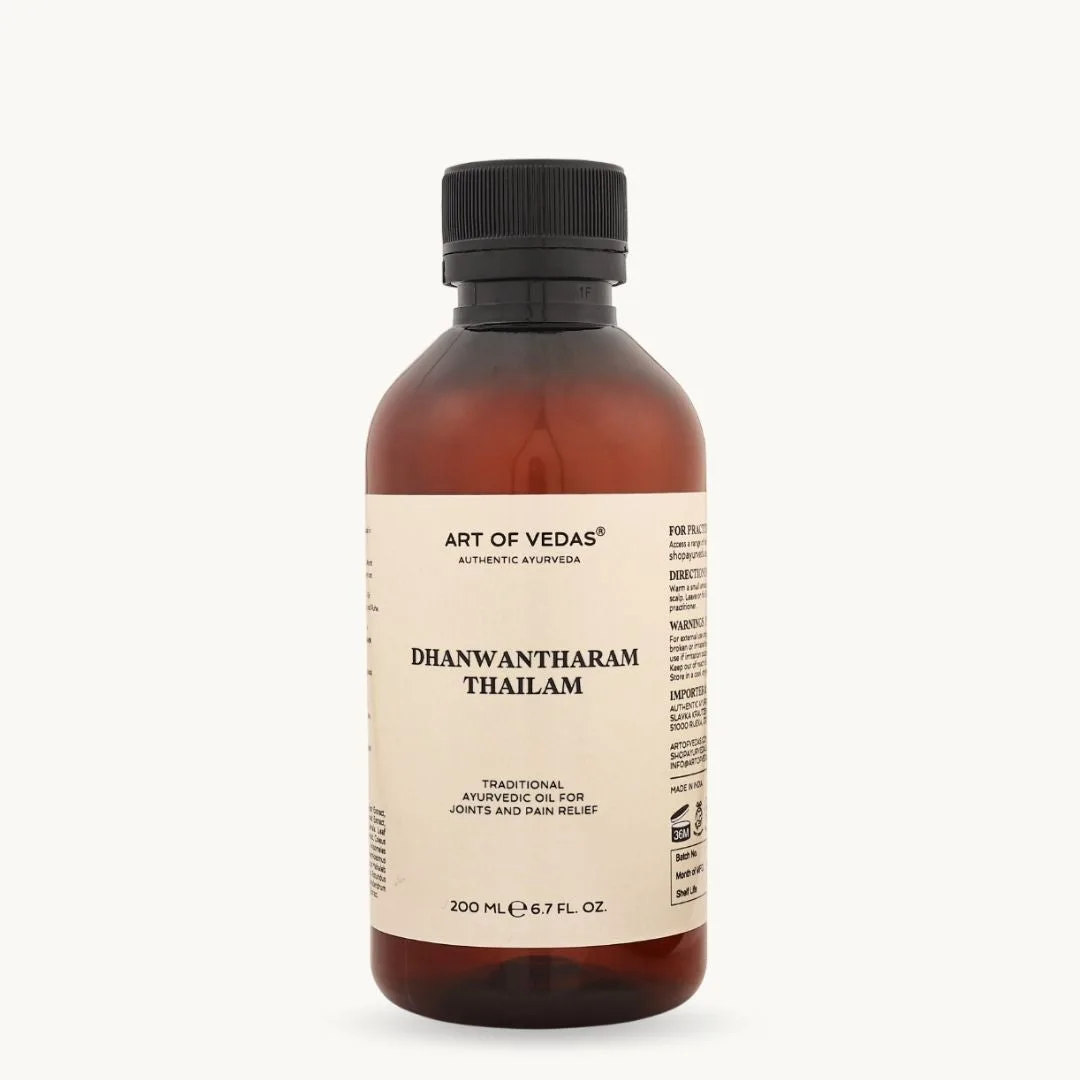
Classical textual basis: Genuine classical formulations derive from the major Ayurvedic texts - the Charaka Samhita, the Ashtanga Hridayam, the Sahasrayogam, or the Bhaishajya Ratnavali. These texts describe the composition, preparation method, and classical indications of each formulation in detail. Art of Vedas cites the textual source for all classical oils and formulas - for example, for Dhanwantharam Thailam (Ashtanga Hridayam, Chikitsa Sthana) or Mahanarayana Thailam (Sahasrayogam).
Traditional production methods: Classical Ayurvedic oils (Thailams) are not simply oils infused with herbal extracts. They are prepared through a specific multi-stage cooking process in which herbs, roots, barks, and other ingredients are processed into a base oil together with a liquid medium (such as milk or herbal decoctions) - a process described in classical texts as Taila Paka Vidhi. This method determines the potency and character of the final oil.
Ingredient sourcing: Classical Ayurvedic formulas require specific plant species in their correct form - often whole roots, bark, or seeds rather than standardised extracts. The classical herb Bala (Sida cordifolia), for example, which is a key ingredient in Ksheerabala Thailam, must be used as the whole root - not as a standardised withanolide extract.
Production in India: The classical tradition of Ayurvedic pharmacy (Ayurvedic Pharmacopoeia) is maintained in licensed manufacturing facilities in India, which are subject to regulation by the Ministry of AYUSH. Products produced in Europe from Indian herb extracts are not the same as formulas carefully made according to classical methods.
The Art of Vedas product range
Art of Vedas sources its products directly from licensed trusted makers. The range covers the main categories of classical Ayurvedic body care and wellness:
Ayurvedic Oils and Thailams
Thailams - classical medicated oils - form the core of the Art of Vedas range. They include some of the most important formulations in the classical Ayurvedic pharmacopoeia:
-
Mahanarayana Thailam - a complex classical Vata-pacifying oil prepared from 57 ingredients (Sahasrayogam), used for full-body Abhyanga and targeted self-massage
-
Dhanwantharam Thailam - one of the most established classical Ayurvedic massage oils (Ashtanga Hridayam), a cornerstone of South Indian Panchakarma practice
-
Ksheerabala Thailam - a classical oil prepared with Bala and, described in the Ashtanga Hridayam as a Vata-pacifying preparation
-
Neelibhringadi Thailam - the classical hair and scalp oil of Ayurvedic tradition, formulated with Neeli and Bhringraj
-
Murivenna Thailam - a classical topical oil for skin and muscle care
The full selection of Ayurvedic oils is available in the Thailams and Oils collection.
Ayurvedic Supplements and Herbal Preparations
Art of Vedas offers a range of classical Ayurvedic herbal preparations in formats suited to daily use:
-
Churnams (herbal powders) - classical formulations such as Triphala Churnam and Ashwagandha Powder in authentic preparation
-
Capsules - classical herbs in capsule form for convenience: Ashwagandha, Shatavari, Brahmi, Guduchi, Gokshura and others
-
Arishtams - traditional fermented herbal preparations such as Ashokarishta and Dashamoola Arishtam
-
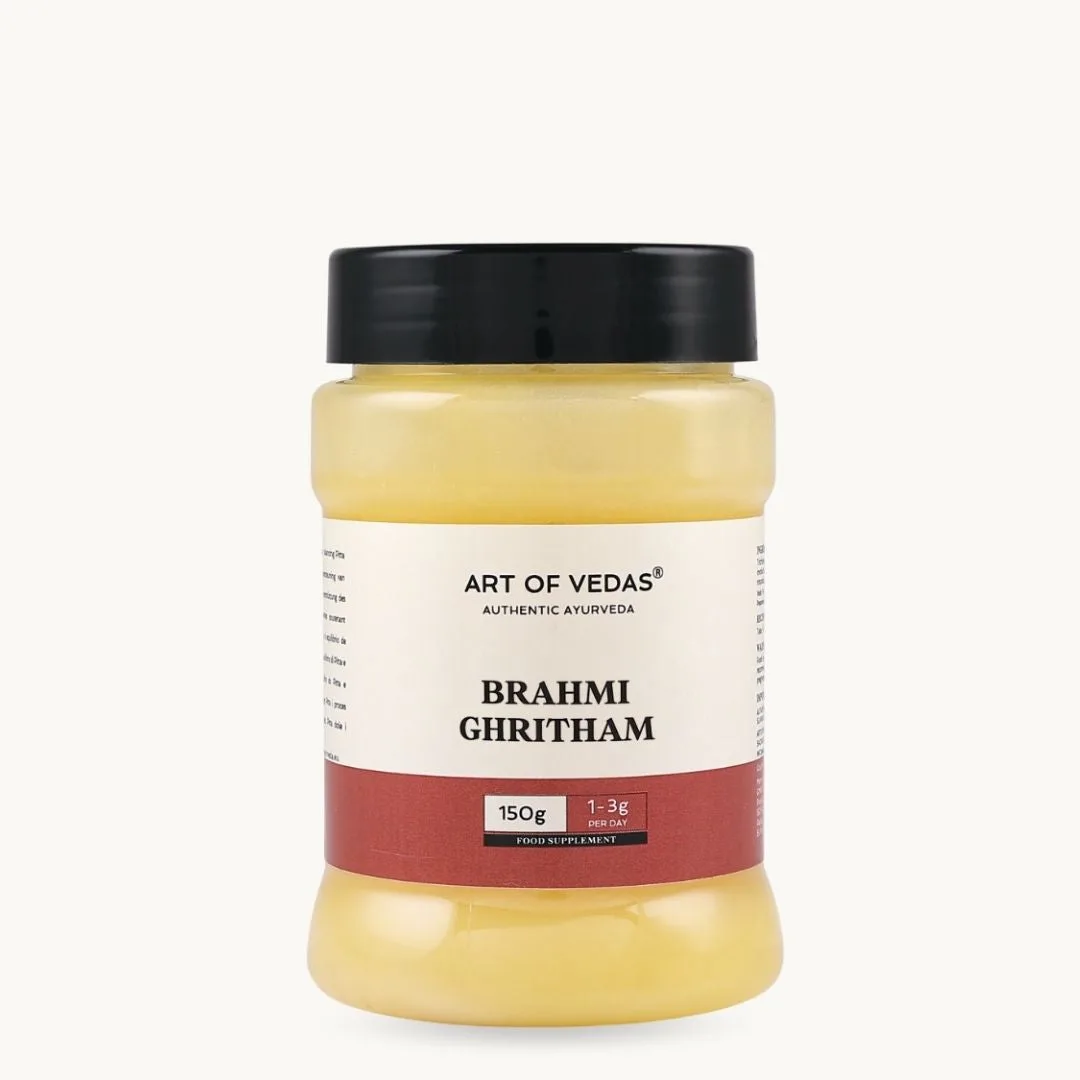
Ghrithams - classical medicated ghee formulations including Brahmi Ghritham and Kalyanaka Ghritham
-
Vati and Gulika - classical Ayurvedic tablets in traditional formats
All supplements are offered as food supplements in accordance with EU regulations and are not intended to diagnose, treat, cure, or prevent any disease.
Kansa Ritual Tools
Kansa tools - massage tools made from the traditional bronze alloy Kansa - are among the most distinctive offerings in the Art of Vedas range. Kansa (a specific alloy of copper and tin) is described in Ayurvedic texts as a harmonising metal and has a long history of use in Ayurvedic body and facial massage. The range includes:
- Kansa Wand for facial Abhyanga (Mukha Abhyanga)
- Kansa Gua Sha for facial massage and lymphatic movement
- Kansa Vatki Bowl for Padabhyanga (foot massage)
- Kansa Abhyanga Wand for body massage
Ayurvedic Oral Care
The classical Ayurvedic oral care routine - described in the Ashtanga Hridayam - forms an established part of the daily self-care practice (Dinacharya). Art of Vedas offers:
-
Copper tongue scrapers - the classical Jihva Nirlekhana tool for daily tongue cleaning
-
Arimedadi Thailam - the classical oil for Kavala Graha (oil pulling)
-
Herbal tooth powders - classical Ayurvedic formulations for oral hygiene
Ayurvedic Hair and Face Care
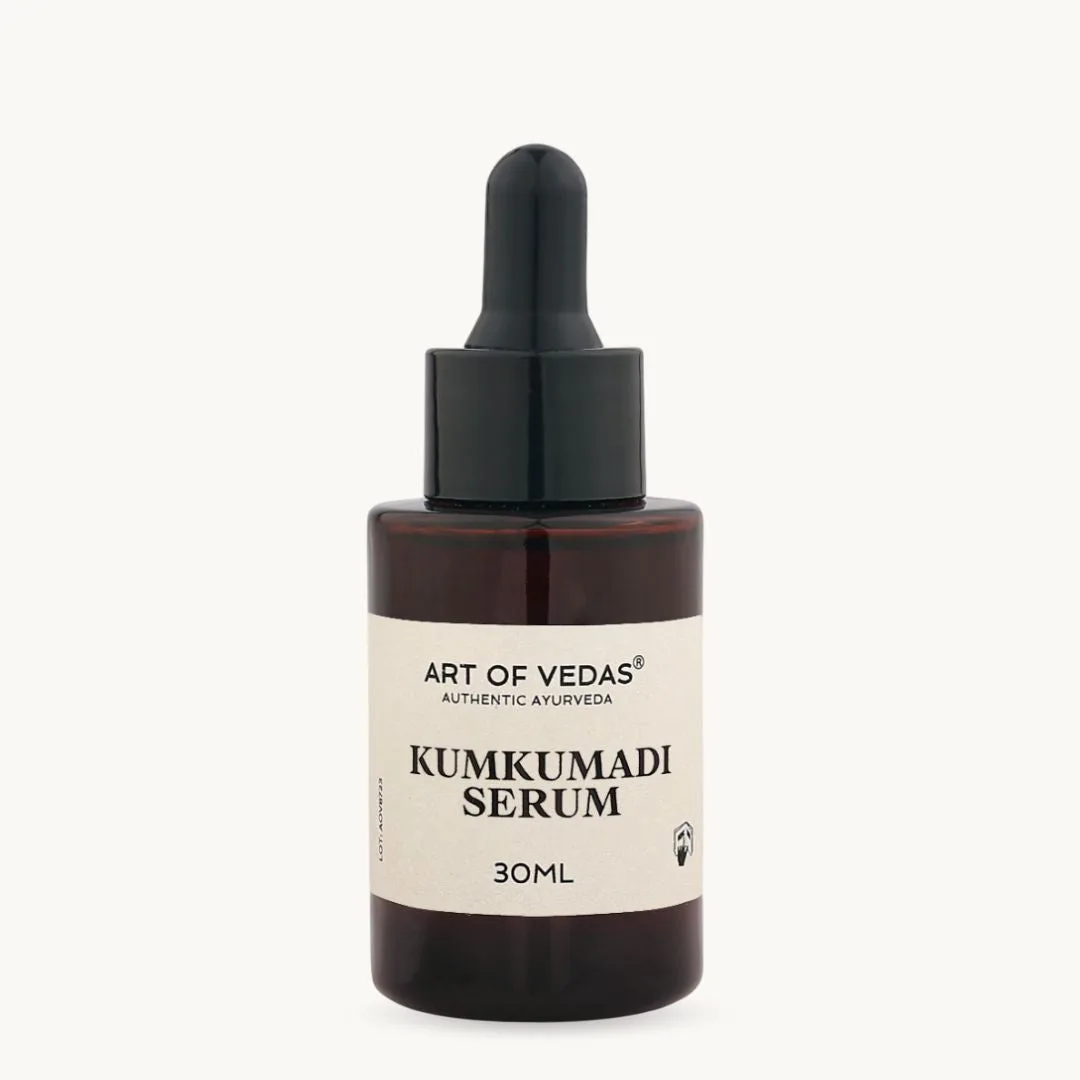
Art of Vedas offers a selection of classical Ayurvedic facial and hair care oils, including Kumkumadi Serum, Eladi Thailam, Nalpamaradi Cream, and Triphaladi Thailam.
How to find the right Ayurvedic product for you
Choosing among the wide range of Ayurvedic products available in Europe is easier when you have a clear understanding of your Ayurvedic constitution (Prakriti) and your primary self-care goals. A few practical starting points:
For daily oil massage (Abhyanga): Mahanarayana Thailam and Dhanwantharam Thailam are the most versatile classical choices for full-body Abhyanga. For those new to Ayurvedic oil massage, Dhanwantharam Thailam is an excellent starting point.
For facial care: Kumkumadi Serum is the most renowned classical Ayurvedic facial oil. Eladi Thailam suits sensitive and dry skin types. Nalpamaradi Cream is traditionally used for brightening and evening skin tone.
For daily supplements: Triphala (as powder or capsules) is one of the most widely used classical Ayurvedic preparations and is suitable as a starting point for most constitutions. Ashwagandha is the foremost classical Ayurvedic Rasayana, traditionally used to support vitality and resilience.
For oral and scalp care: The copper tongue scraper and Arimedadi Thailam for oil pulling form the classical foundation of the Ayurvedic oral care routine. Neelibhringadi Thailam is the classical choice for head massage and scalp care.
If you are unsure where to begin, you can take the Dosha test on the Art of Vedas website to identify your Ayurvedic constitution and receive product recommendations tailored to your type.
EU compliance and product safety
All Art of Vedas products are fully compliant with European Union legislation on food supplements and cosmetics. Ayurvedic products sold in the EU are subject to EU food and cosmetics regulations and are classified as food supplements or cosmetic products - not as products. They may not carry claims.
Art of Vedas does not make medical claims on any of its products. All classical properties and traditional indications are described as historical Ayurvedic knowledge, not as evidence-based medical statements.
Note: Ayurvedic products are not a substitute for medical treatment. If you have health concerns, please consult a qualified physician or healthcare professional.