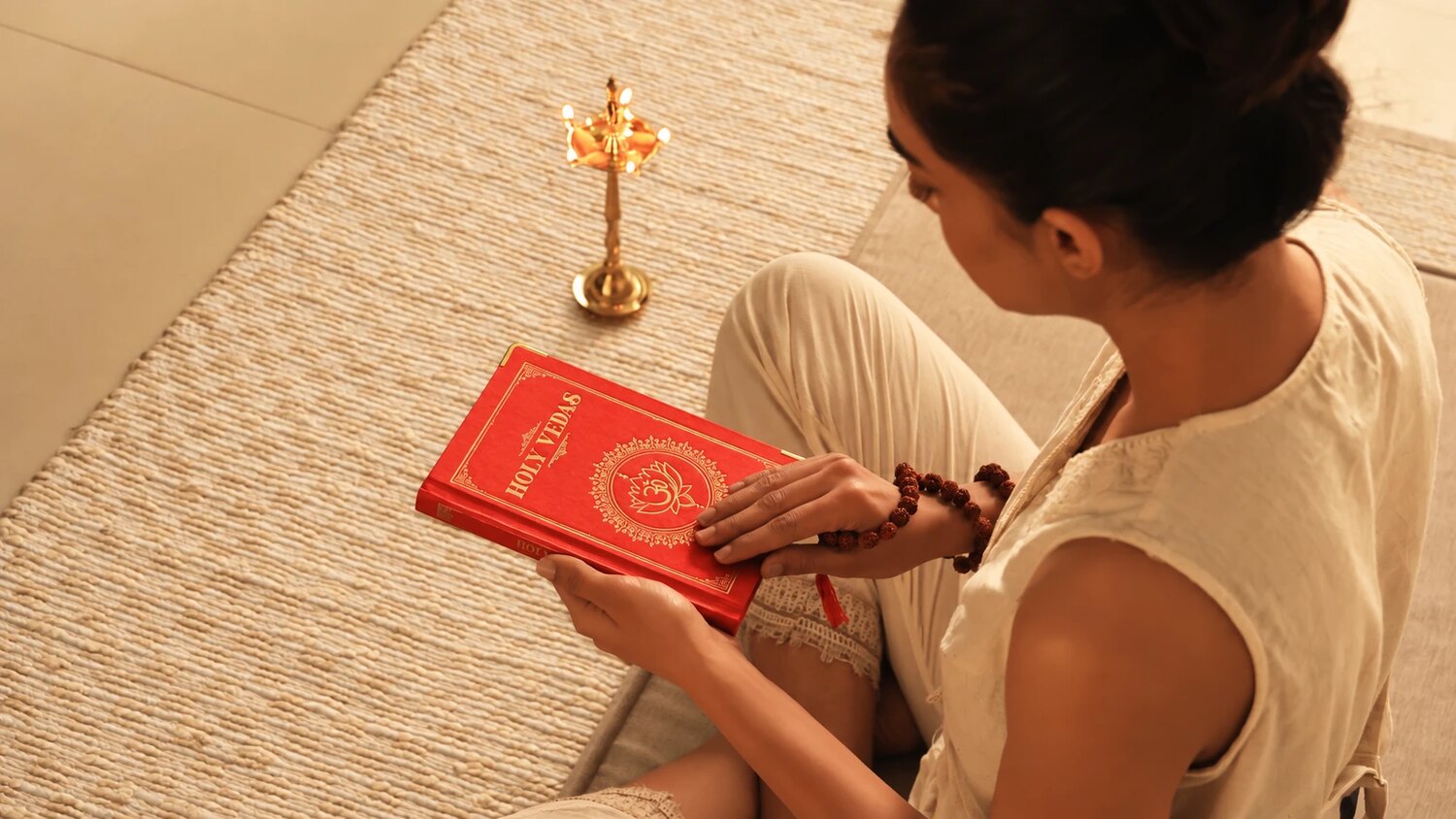
Understanding Abhyanga: The Traditional Daily Practice
The term "Abhyanga" derives from Sanskrit roots meaning "to anoint" or "to apply with loving hands." In Ayurvedic tradition, Abhyanga is classified as part of Dinacharya - the recommended daily routine designed to support overall wellbeing and maintain balance throughout the seasons and stages of life.
The Charaka Samhita, one of Ayurveda's foundational texts, describes the traditional benefits of regular oil massage in poetic terms, suggesting that those who practice Abhyanga regularly may experience improved skin quality, better sleep, and a general sense of physical comfort. The Ashtanga Hridayam further elaborates on the timing, technique, and constitutional considerations for this practice.
Unlike therapeutic massage performed by a practitioner, Abhyanga is designed as a self-care ritual - a meditative practice where you actively participate in nurturing your own body. This self-directed aspect makes Abhyanga particularly accessible and sustainable as a daily or regular practice.
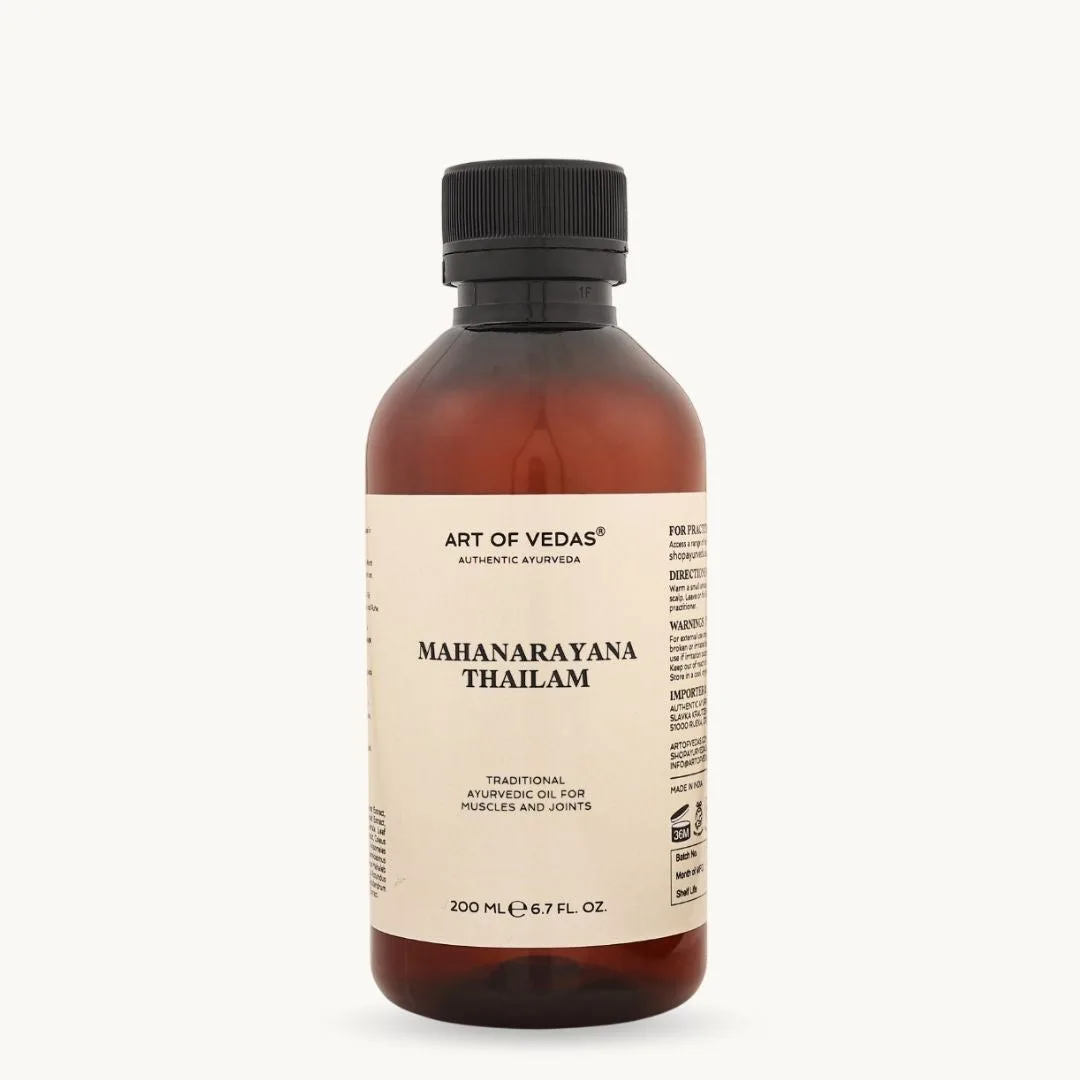
While various oils can be used for body massage, Mahanarayana Thailam offers specific qualities that make it particularly suited for traditional Abhyanga practice, especially for those with Vata-related concerns or anyone seeking a warming, grounding oil.
Traditional Formulation: Art of Vedas Mahanarayana Thailam follows the classical Sahasrayogam recipe with over 50 herbs prepared through authentic Taila Paka Vidhi methods. This complexity distinguishes it from simple carrier oils or essential oil blends.
Warming Properties: The predominantly heating (ushna virya) nature of Mahanarayana Thailam makes it traditionally suitable for cooler seasons and for individuals with cold, dry skin - characteristics associated with Vata imbalance in Ayurvedic understanding.
Sesame Oil Base: Traditional Ayurvedic texts favor sesame oil for Abhyanga due to its unique penetrating qualities and stability. The sesame base in Mahanarayana Thailam provides excellent slip for massage while carrying herbal constituents through the skin layers.
Comprehensive Herbal Action: The synergistic blend of Dashmoola, Bala, Ashwagandha, Shatavari, and dozens of other herbs creates a traditionally balanced formulation that addresses multiple aspects of body care simultaneously.
Optimal Temperature: The Importance of Warm Oil
Traditional Abhyanga practice emphasizes using comfortably warm oil rather than room-temperature or cold oil. This detail, though seemingly minor, significantly impacts both the experience and the traditional understanding of the practice's effects.
Recommended Temperature Range
Ideal warmth: 37-42°C (body temperature to slightly warmer)
Feel test: The oil should feel pleasantly warm when tested on your inner wrist - comfortable, not hot
Safe Warming Methods
Water Bath Method (Recommended): Place your Mahanarayana Thailam bottle (cap closed) in a container of hot water for 5-10 minutes. This gentle, indirect warming preserves the herbal constituents while achieving ideal temperature.
Bowl Transfer Method: Pour the amount needed into a small heat-resistant bowl, then place the bowl in hot water to warm.
Avoid These Methods:
-
Direct flame or stovetop heating (degrades herbs and creates fire risk)
-
Microwave heating (uneven warming, potential constituent damage)
-
Excessively hot warming (can burn skin or degrade oil quality)
The warming step serves multiple purposes in traditional practice: it enhances the oil's flow and absorption, creates a more comfortable sensory experience, and aligns with Ayurvedic principles about using warming applications for Vata-balancing purposes.
Preparing for Abhyanga: Setting the Space
Creating an appropriate environment enhances the Abhyanga experience, transforming it from a mechanical routine into a nurturing ritual.
Practical Preparations
Timing: Allow 30-60 minutes total (15-20 minutes for application, 15-40 minutes for absorption before bathing). Morning practice is traditional, though evening Abhyanga can support relaxation before sleep.
Space: Choose a warm, draft-free room. Bathrooms work well due to easy cleanup. Consider using an old towel on the floor to catch any oil drips.
Temperature: Ensure the room is comfortably warm. Applying oil to cold skin in a cold room works against the warming, nurturing intention of the practice.
Materials Needed:
-
Warm Mahanarayana Thailam
-
Old towel for standing on
-
Old clothing or towel for the absorption period
-
Gentle natural soap for post-massage bathing
Mental Preparation
Traditional texts suggest approaching Abhyanga with mindful intention rather than rushing through mechanically. Consider this time as dedicated self-care - a daily appointment with yourself for nurturing and maintenance.
Step-by-Step Abhyanga Technique
This sequence follows traditional Ayurvedic guidance for self-massage, adapted for practical modern application.
Head and Scalp (Optional)
Technique: Pour a small amount of warm oil onto your crown. Using fingertips, massage in circular motions across the scalp. Work systematically from crown to temples to the base of the skull.
Note: Scalp oiling is traditional but optional for daily practice, especially if you prefer not to wash your hair daily. Many practitioners do full-head Abhyanga weekly and focus on body massage on other days.
Time: 2-3 minutes if included
Face and Ears
Technique: Use gentle upward and outward strokes on the face. Massage ears thoroughly - traditional texts emphasize ear massage for its calming qualities. Use circular motions on the temples.
Application: Use lighter oil quantities on the face to avoid heavy, greasy feeling.
Time: 2-3 minutes
Neck and Shoulders
Technique: Apply generous oil to hands. Use broad strokes from the base of the neck across shoulders. Work any areas of holding or tension with gentle circular motions.
Emphasis: This area often holds stress. Take extra time here, using firm but comfortable pressure.
Time: 3-4 minutes
Arms and Hands
Technique:
-
Long bones (upper arms, forearms): Use long, smooth strokes following the direction of the limb
-
Joints (shoulders, elbows, wrists): Use circular motions
-
Hands: Massage palms, backs of hands, and each finger individually
Traditional principle: Long strokes on long bones, circular motions on joints - this pattern applies to all limbs.
Time: 3-4 minutes per arm
Chest and Abdomen
Technique:
-
Chest: Gentle circular motions, avoiding direct pressure on the heart area
-
Abdomen: Clockwise circular motions (following the direction of the colon), using moderate pressure. Traditional practice considers this particularly supportive for digestive comfort.
Sensitivity: Use lighter touch on the torso than on limbs.
Time: 3-5 minutes
Back
Technique: Reach behind as much as comfortably possible. Focus on the lower back and kidney area (considered important in Ayurvedic tradition). Use a long-handled applicator if desired for areas difficult to reach.
Reality check: Complete back coverage isn't always practical in self-massage. Do what you can comfortably reach.
Time: 2-3 minutes
Legs and Feet
Technique:
-
Thighs and calves: Long, firm strokes on the long bones
-
Knees: Circular motions with moderate pressure
-
Feet: Thorough massage of soles, tops, and each toe. Traditional texts particularly emphasize foot massage before sleep.
Emphasis: Legs typically receive the most oil and attention in Abhyanga, as they represent a large body area and are often subject to dryness and fatigue.
Time: 5-7 minutes per leg
Oil Quantity Guidelines
-
Full body: Approximately 30-50ml of oil
-
Focused application (legs, arms, specific areas): 10-20ml
-
Adjust based on: Skin dryness, season, personal preference
Art of Vedas Mahanarayana Thailam is available in 100ml and 200ml sizes to accommodate different usage patterns.
Post-Application: The Absorption Period
Traditional Abhyanga practice includes a crucial absorption period between oil application and bathing.
The Waiting Period
Duration: Traditionally 15-60 minutes; even 10-15 minutes provides benefits
Activity: Rest, gentle stretching, meditation, or calm activities. Avoid vigorous movement.
Covering: Wear old, comfortable clothing or wrap in an old towel during this period.
Traditional understanding: This rest period allows the oil and its herbal constituents to be absorbed while promoting a sense of calm and grounding.
Bathing After Abhyanga
Timing: After the absorption period, take a warm (not hot) bath or shower.
Cleansing:
-
Use a gentle, natural soap on key areas (underarms, groin, feet)
-
Light soap on the rest of the body or simply rinse with warm water
-
The goal is to remove excess oil while leaving a light protective layer
Temperature: Warm water is ideal. Very hot water can be overly drying and works against the moisturizing intention of the practice.
Hair washing: If you oiled your scalp, shampoo as usual. The traditional practice uses natural cleansers like chickpea flour or gentle herbal shampoos.
Post-Bath Care
Many practitioners find that skin feels optimally hydrated after Abhyanga - moisturized but not greasy. The combination of oil absorption and gentle cleansing creates comfortable, nourished skin.
Towel care: Use old towels for post-Abhyanga bathing, as some oil residue may transfer. Wash towels with hot water and extra detergent if needed.
Frequency Recommendations by Constitution
Ayurvedic tradition offers guidance on Abhyanga frequency based on constitutional type (dosha predominance).
For Vata Predominance
Recommended frequency: Daily or 5-6 times weekly
Rationale: Vata's dry, cold, rough qualities benefit most from regular oil application
Best timing: Morning or evening; especially important during cold, dry seasons
Oil temperature: Warm to comfortably warm
For Pitta Predominance
Recommended frequency: 3-5 times weekly
Rationale: Pitta benefits from the moisturizing and calming aspects but may find daily heavy oil application excessive
Best timing: Evening for cooling effect; morning in cooler seasons
Oil temperature: Warm but not very hot; consider cooler seasons for Mahanarayana use
For Kapha Predominance
Recommended frequency: 2-4 times weekly
Rationale: Kapha's naturally oily, heavy qualities require less frequent oil application
Best timing: Morning; more vigorous application technique
Oil temperature: Comfortably warm
For Mixed Constitutions
Adjust based on current season, climate, and how your skin responds. Most people can benefit from 3-4 times weekly as a moderate approach.
Seasonal Adaptations
Traditional Dinacharya emphasizes adjusting practices according to seasonal changes.
Cold, Dry Seasons (Autumn/Winter)
Frequency: Increase to daily or near-daily
Oil choice: Warming oils like Mahanarayana are ideal
Application: Use generous amounts; longer absorption time
Rationale: These seasons naturally aggravate Vata; extra oil application provides balance
Hot, Humid Seasons (Summer)
Frequency: Reduce to 2-3 times weekly if desired
Oil choice: Consider lighter applications or cooler oils
Application: Moderate amounts; shorter absorption time possible
Rationale: Heat and humidity naturally provide some of oil's moisturizing effects
Transitional Seasons (Spring)
Frequency: Moderate (3-4 times weekly)
Application: Standard technique
Observation: Pay attention to how your skin responds as weather changes.
Abhyanga for Specific Concerns
While Abhyanga is fundamentally a daily wellness practice, traditional application can be modified for specific situations.
For Dry, Rough Skin
-
Increase frequency to daily
-
Use generous oil amounts
-
Extend absorption period to 30-60 minutes
-
Consider morning and evening application on particularly dry areas
After Physical Activity
-
Apply oil 1-2 hours after exercise once body temperature normalizes
-
Focus on legs, joints, and areas of exertion
-
Traditionally thought to support comfortable recovery
For Better Sleep
-
Evening Abhyanga, especially foot massage, is traditionally associated with improved sleep quality
-
Focus on feet, legs, and scalp if included
-
Use calming, mindful technique
-
Allow at least 30 minutes before bedtime
During Times of Stress
-
Slow, mindful application
-
Emphasis on head, neck, shoulders, and feet
-
Extended absorption period with meditation or rest
-
The ritual itself provides grounding benefit beyond the physical oil application.
Art of Vedas provides the authentic traditional formulation that makes Abhyanga practice truly align with classical Ayurvedic principles.
Authentic Classical Preparation
Every bottle of Mahanarayana Thailam follows the complete Sahasrayogam formulation with over 50 herbs prepared through traditional Taila Paka Vidhi methods. This authenticity ensures you're practicing Abhyanga with an oil that matches the quality described in classical texts - not a simplified modern approximation.
Quality Sesame Oil Base
The sesame oil base in Mahanarayana Thailam provides the ideal slip and absorption characteristics recommended in traditional texts. This differs significantly from lighter oils that may not provide adequate massage lubrication or proper herbal constituent delivery.
Manufacturing Partnership
Art of Vedas works exclusively with traditional manufacturers who understand classical Ayurvedic pharmaceutical methods. This ensures proper herb selection, precise ratios, appropriate cooking duration, and traditional quality markers.
EU Safety Standards
While maintaining complete traditional authenticity, Art of Vedas ensures all products meet European cosmetic safety regulations, providing peace of mind about purity, preservation, and contamination testing.
Complete Transparency
Full INCI listings, batch numbers, manufacturing dates, and clear sourcing information allow you to make informed choices about the oil you apply to your skin daily. This level of transparency is rare in Ayurvedic product markets.
Common Questions and Practical Tips
Can I do Abhyanga daily?
Yes, daily practice is traditional, especially for Vata-predominant individuals. Start with 3-4 times weekly and adjust based on how your skin responds and your schedule allows.
What if I don't have 30-60 minutes?
A modified practice focusing on feet, legs, and arms takes 15-20 minutes including a brief absorption period. Even abbreviated Abhyanga provides benefits over skipping the practice entirely.
Will oil stain my bathtub?
Minimal staining occurs with proper rinsing. Use hot water and mild cleanser to clean the tub after use. Placing a bath mat during application prevents slipping.
Yes, though some prefer lighter oils for facial application. Test on a small area first. Art of Vedas offers multiple traditional oils suitable for different areas and constitutions.
How do I know if I'm using enough oil?
Your skin should feel well-lubricated during application, allowing smooth gliding strokes without dragging. After bathing, skin should feel moisturized but not greasy.
Should Abhyanga feel relaxing or invigorating?
Both are appropriate depending on intention. Morning practice might use brisker strokes; evening practice slower, more meditative movements. The self-directed nature allows you to adjust the experience.
Integrating Abhyanga into Modern Life
While rooted in ancient tradition, Abhyanga adapts beautifully to contemporary routines.
Morning Practice
-
Wake 15-20 minutes earlier
-
Practice before showering
-
Creates a grounding start to the day
-
Particularly suitable for those who shower daily
Evening Practice
-
Unwind after work or before bed
-
More leisurely, meditative approach possible
-
May support better sleep
-
Suitable for those who prefer morning efficiency
Weekend Extended Practice
-
Full traditional timing (60+ minutes total)
-
Include head oiling if preferred
-
Combine with other self-care practices
-
Compensates for quicker weekday applications
Seasonal Intensives
-
Daily practice for 7-14 days during seasonal transitions
-
Traditional Ayurvedic approach to supporting adaptation
-
Particularly beneficial during autumn (Vata season).
Conclusion: Embracing Daily Abhyanga
Abhyanga represents a profound intersection of practical body care and mindful self-nurturing. This ancient practice, documented in texts thousands of years old, remains remarkably relevant for modern wellness precisely because it addresses timeless human needs: the desire for physical comfort, the benefits of touch and self-care, and the grounding effect of daily ritual.
When practiced with authentic, traditionally prepared oils like Mahanarayana Thailam, Abhyanga becomes more than moisturizing - it becomes a daily affirmation of self-care rooted in centuries of empirical wisdom. The combination of proper technique, quality oil, and consistent practice creates a sustainable wellness ritual that supports both immediate comfort and long-term wellbeing.
Art of Vedas, as the authoritative European source for classical Ayurvedic body care oils, provides the authentic formulations that allow you to practice Abhyanga as it was traditionally intended. Discover how genuine Mahanarayana Thailam, prepared according to Sahasrayogam specifications by traditional manufacturers, transforms your daily self-care ritual at artofvedas.com.
Disclaimer: Abhyanga is a traditional Ayurvedic body care practice for external use. It supports general wellbeing as part of your daily self-care routine. It is not a medical treatment and does not replace professional healthcare advice. If you have specific health concerns or skin conditions, consult with a qualified healthcare practitioner before beginning any new body care practice.