Triphala: The Classical Three-Fruit Formula in Ayurveda
There are few formulations in all of Ayurveda as widely used, as extensively documented, or as consistently recommended across constitutions and conditions as Triphala. The name means simply "three fruits" - Tri (three) + Phala (fruits) - and the formula is exactly that: a combination of three classical fruits in equal proportion, dried and powdered together. Yet from this simple foundation emerges one of the most sophisticated and versatile preparations in the entire classical pharmacopoeia.
Triphala has been used continuously in Ayurvedic practice for at least two thousand years. It appears in the Charaka Samhita, the Ashtanga Hridayam, the Sushruta Samhita, the Bhavaprakasha, and virtually every major classical Ayurvedic text that follows. Its reputation is not that of a specialised formula for a narrow indication, but of a general Rasayana and supportive preparation relevant to virtually all contexts.
The Three Components of Triphala
Amalaki - Emblica officinalis (Indian Gooseberry)
Amalaki is consistently described in classical texts as the foremost Rasayana herb in the Ayurvedic pharmacopoeia. The Charaka Samhita names Amalaki as Vayasthapana and Sarva Roga Nivarina (capable of addressing all diseases in the classical Ayurvedic sense). It is the primary source of the five tastes (Pancha Rasa) in a single fruit - possessing all six tastes described in Ayurveda except for Lavana (salty), with Amla (sour) dominant.
Amalaki is Pitta-shamana, Tridosha-hara, and specifically nourishing to all seven Dhatus. It is the primary ingredient in Chyawanprash, the classical Rasayana preparation of the Charaka Samhita. In Triphala, Amalaki provides the predominant Rasayana and Pitta-balancing action of the formula.
Bibhitaki - Terminalia bellirica (Baheda)
Bibhitaki is the most powerful Kapha-addressing herb of the three. Its name - Bibhitaki - is sometimes interpreted as "that which removes fear of disease." In Ayurvedic pharmacology it is Kashaya (astringent) in taste, Laghu (light) and Ruksha (dry) in quality, and Ushna (warming) in potency. It has particular classical affinity for the respiratory passages, the throat, and the functioning of Avalambaka Kapha - the sub-dosha of Kapha governing the chest and lungs.
In Triphala, Bibhitaki contributes the formula's capacity to address Kapha accumulation, support the clarity of the respiratory channels, and enhance the tonifying, astringent quality of the combination.
Haritaki - Terminalia chebula (Chebulic Myrobalan)
Haritaki is the most classically significant of the three fruits in its own right. The Charaka Samhita describes Haritaki as the equivalent of a mother to the body - nourishing and supportive in all conditions. It is the only herb described in the classical texts as possessing all five post-digestive effects (Panchavimsati Gunas) - an extraordinary pharmacological breadth.
Haritaki is Vata-shamana above all others in the Triphala triad. Its warming, slightly sweet-sour character and its classical Anulomana action make it the primary herb for supporting the regularity and health of the Apana Vata (the sub-dosha governing the lower digestive tract and elimination).
Triphala as a Tridosha Formula
The genius of Triphala as a classical formula lies in its Tridosha-hara quality - each of the three fruits addresses a primary dosha, and together they create a formula that is genuinely balancing for all three simultaneously:
-
Haritaki: Primary Vata-shamana
-
Amalaki: Primary Pitta-shamana
-
Bibhitaki: Primary Kapha-shamana
This three-way coverage is why Triphala is appropriate across constitutions - it can be used by Vata, Pitta, and Kapha types without the concern about aggravating a particular dosha that would apply to a more single-dosha-targeting formula. Adjustments can be made by varying the proportions of the three fruits for specific constitutions, but the equal-proportion formula is the classical standard.
Classical Uses of Triphala
Digestive Support and Anulomana
Triphala's most widely known classical use is in supporting the health and regularity of the digestive system. The Ashtanga Hridayam and Charaka Samhita both describe its Anulomana action - the gentle downward movement of Apana Vata that supports regular, complete elimination without the forceful purgative action of more aggressive Virechana herbs.
Classical Ayurveda distinguishes carefully between Anulomana and Virechana (purgation). Triphala is Anulomana, not Virechana - it supports the natural function rather than forcing it. This is one of the reasons it is considered appropriate for long-term daily use, unlike harsh laxatives.
Rasayana and Tissue Nourishment
Triphala's Rasayana quality operates particularly through Amalaki's comprehensive tissue-nourishing action. Classical texts describe regular use of Triphala as supporting the progressive nourishment of all seven Dhatus - from the foundational Rasa Dhatu outward. This is why Triphala is described in classical texts as appropriate for long-term use as part of a general Rasayana practice, rather than only for acute digestive support.
Eye Health in the Classical Tradition
One of the more specific classical uses of Triphala that distinguishes it from purely digestive formulas is its traditional use in supporting the health of the eyes (Netra). The Ashtanga Hridayam describes Triphala as Chakshushya - attributed to its Pitta-clearing, Rakta-clarifying (blood-clarifying) properties and the classical understanding that the eyes are the seat of Alochaka Pitta, which depends on the clarity of Rakta Dhatu for their health and sharpness.
Support for Skin and Complexion
Classical texts describe Triphala as Varnya (complexion-supporting) and Tvachya (beneficial for the skin) - particularly through Amalaki's action on Bhrajaka Pitta (the sub-dosha governing skin health and lustre) and the formula's general Rakta-clarifying and Pitta-addressing properties.
How Triphala Is Used: Classical Methods
Classical Ayurveda describes several methods of taking Triphala depending on the intended purpose:
-
With warm water, before sleep: The most classical and widely recommended method for digestive and Anulomana support - taken thirty to sixty minutes before sleep, allowing the formula to work during the night when Apana Vata is most active in the lower body.
-
With ghee (Triphala Ghritam): A classical preparation combining Triphala with medicated ghee - used specifically in the classical tradition for the Chakshushya application and for deeper Rasayana use.
-
With honey: The classical formula for Kapha-predominant conditions - the honey enhances the Kapha-clarifying action and the formula's penetrating quality.
-
With Trikatu (three spices - ginger, black pepper, long pepper): A classical combination that enhances the digestive-stimulating and Ama-clearing action of Triphala, particularly relevant for sluggish Agni and Kapha accumulation.
Triphala and Seasonal Practice
The Charaka Samhita describes a classical recommendation for varying the accompaniment of Triphala with the seasons - using different vehicles (Anupana) to adapt the formula's action to the seasonal dosha predominance:
-
Summer: With jaggery (Guda) or cane sugar - cooling the formula and supporting Pitta-season balance
-
Autumn: With rock salt (Saindhava) - supporting Vata as it begins to accumulate in the transition season
-
Early winter: With dry ginger (Shunthi) - warming the formula for the Kapha season
-
Late winter and spring: With Trikatu or long pepper (Pippali) - supporting the clearing of Kapha accumulation at its peak season
-
Rainy season: With honey - supporting Agni during the classical period of digestive weakness
Frequently Asked Questions
What is Triphala used for in Ayurveda?
Triphala is used in Ayurveda as a Rasayana formula and digestive support preparation. Classical uses include supporting the natural function of elimination (Anulomana), nourishing the tissue layers, supporting the clarity of the skin and eyes, and as a general Tridosha-balancing preparation for long-term daily use.
Is Triphala suitable for all doshas?
Yes. Triphala is one of the few classical Ayurvedic formulas described as genuinely Tridosha-hara - balancing for all three doshas simultaneously. This is because each of the three component fruits addresses a primary dosha: Haritaki for Vata, Amalaki for Pitta, Bibhitaki for Kapha. The equal-proportion formula is the classical Tridosha standard.
Can Triphala be taken daily?
Classical texts describe Triphala as appropriate for long-term daily use as a Rasayana preparation. Its Anulomana action is gentle and normalising rather than forceful - making it suitable for daily practice in a way that more aggressive preparations are not. The classical method varies the accompaniment seasonally. Consult your Ayurvedic practitioner for guidance on dose and duration appropriate for your constitution.
What is the best time to take Triphala?
Classical Ayurveda most commonly recommends taking Triphala in warm water thirty to sixty minutes before sleep, allowing the formula to work during the night hours when Apana Vata is most active. Morning use is also classical, particularly for the Rasayana and tissue-nourishing aspects of the formula.
What is the difference between Triphala churna and Triphala capsules?
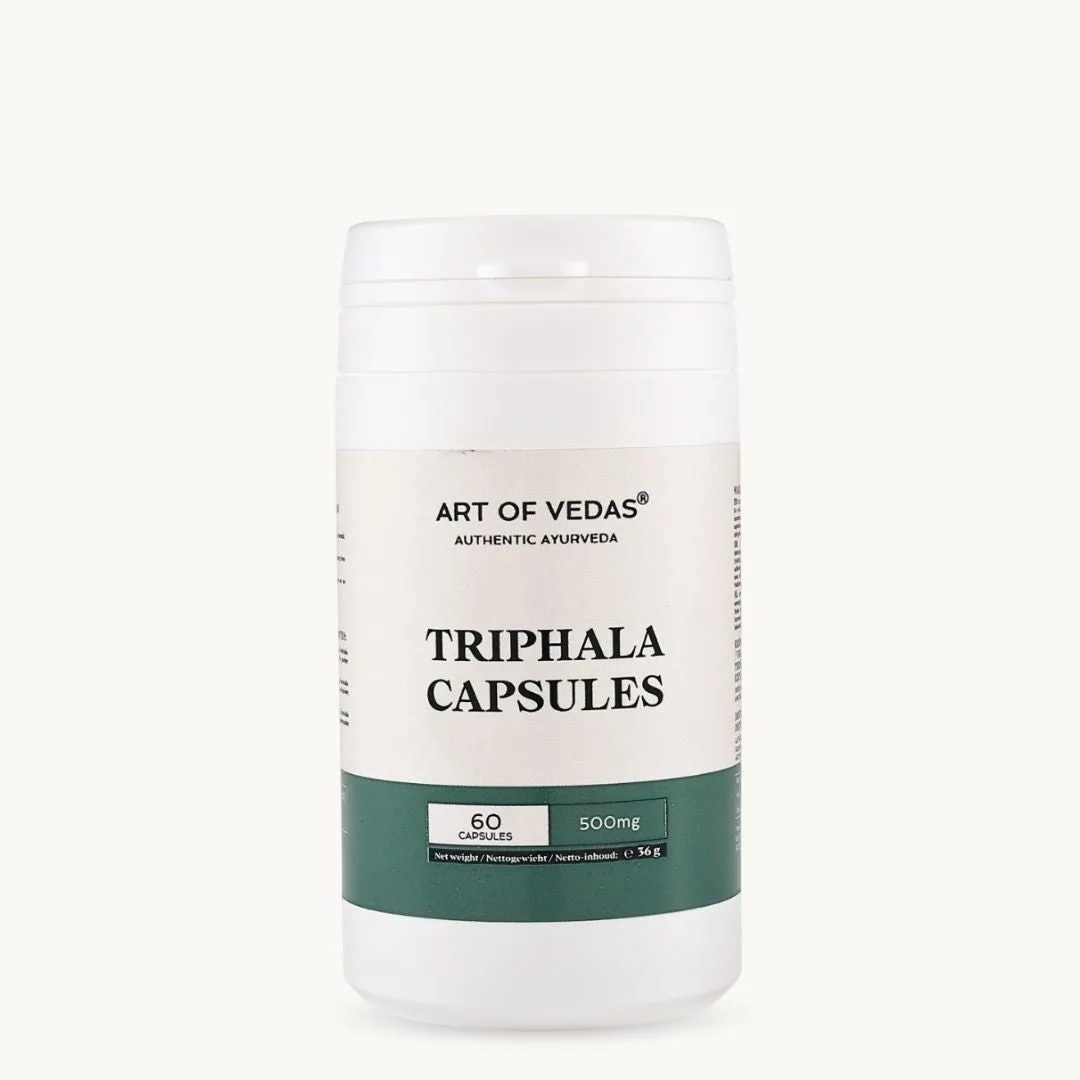
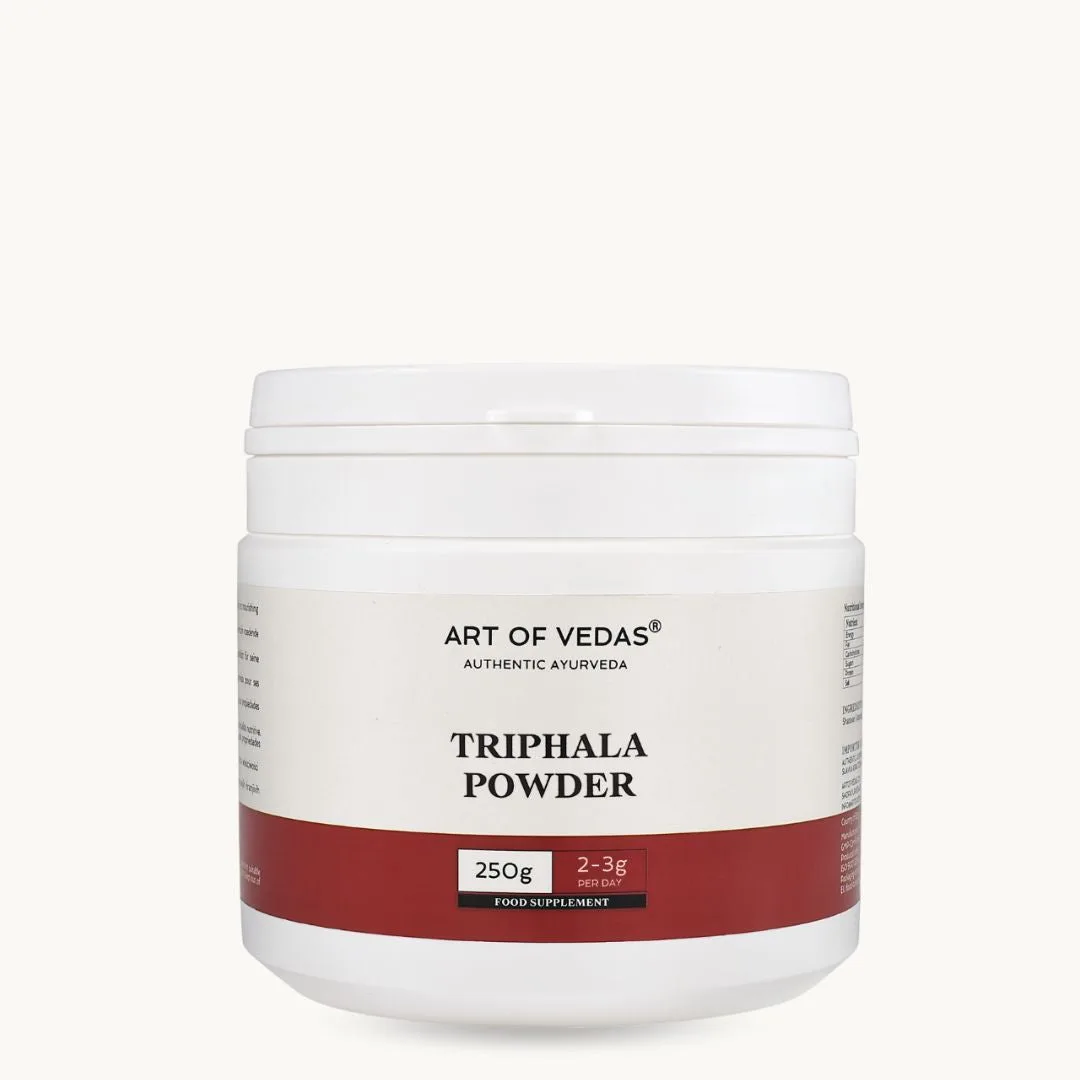
Triphala churna (powder) is the traditional preparation - mixed with warm water or appropriate vehicle. Triphala capsules provide the same preparation in a more convenient form for modern daily use. The essential ingredient is the same; the capsule form simply encapsulates the classical churna. For those who find the taste of Triphala challenging, capsules are the practical equivalent.
Explore Triphala at Art of Vedas
Art of Vedas offers Triphala in the classical preparation. See our Triphala Capsules and browse the full range of classical Ayurvedic supplements at Art of Vedas Supplements. For related Rasayana herbs, see our Guduchi guide, our Ashwagandha guide, and our complete guide to Rasayana in Ayurveda.
This article is for informational and educational purposes only. Triphala is a traditional Ayurvedic preparation used as a food supplement. It is not a medicine and is not intended to diagnose, treat, cure, or prevent any medical condition. This product is a food supplement and not intended to replace a varied diet. Consult a qualified Ayurvedic practitioner or healthcare professional for personalised guidance.