Pizhichil is 's most theatrical therapy and its most demanding piece of logistics. Warm medium is squeezed in a continuous stream from cloth over the body while therapists work in long, synchronised strokes, and everything about the session depends on quantities, temperature and timing being right before the guest ever enters the room. This guide is written for practitioners and centre teams: how much medium a session realistically consumes, how to keep it warm without spoiling it, and where the semi-solid Kuzhambu earns its place alongside the classical streaming oils.
The therapy in outline
In Pizhichil, cloths are soaked in a vessel of warm medium and wrung rhythmically over the guest, section by section, while a second pair of hands follows the stream with massage. The therapy is performed by trained therapists, traditionally on a wooden Droni table, and belongs firmly in the professional setting; it is not a home practice. What the household tradition does share with it is the underlying question answered below: which preparation, at what warmth, for how long. For the category basics behind that question, our complete guide to Kuzhambu is the reference.
Volumes and warming logistics
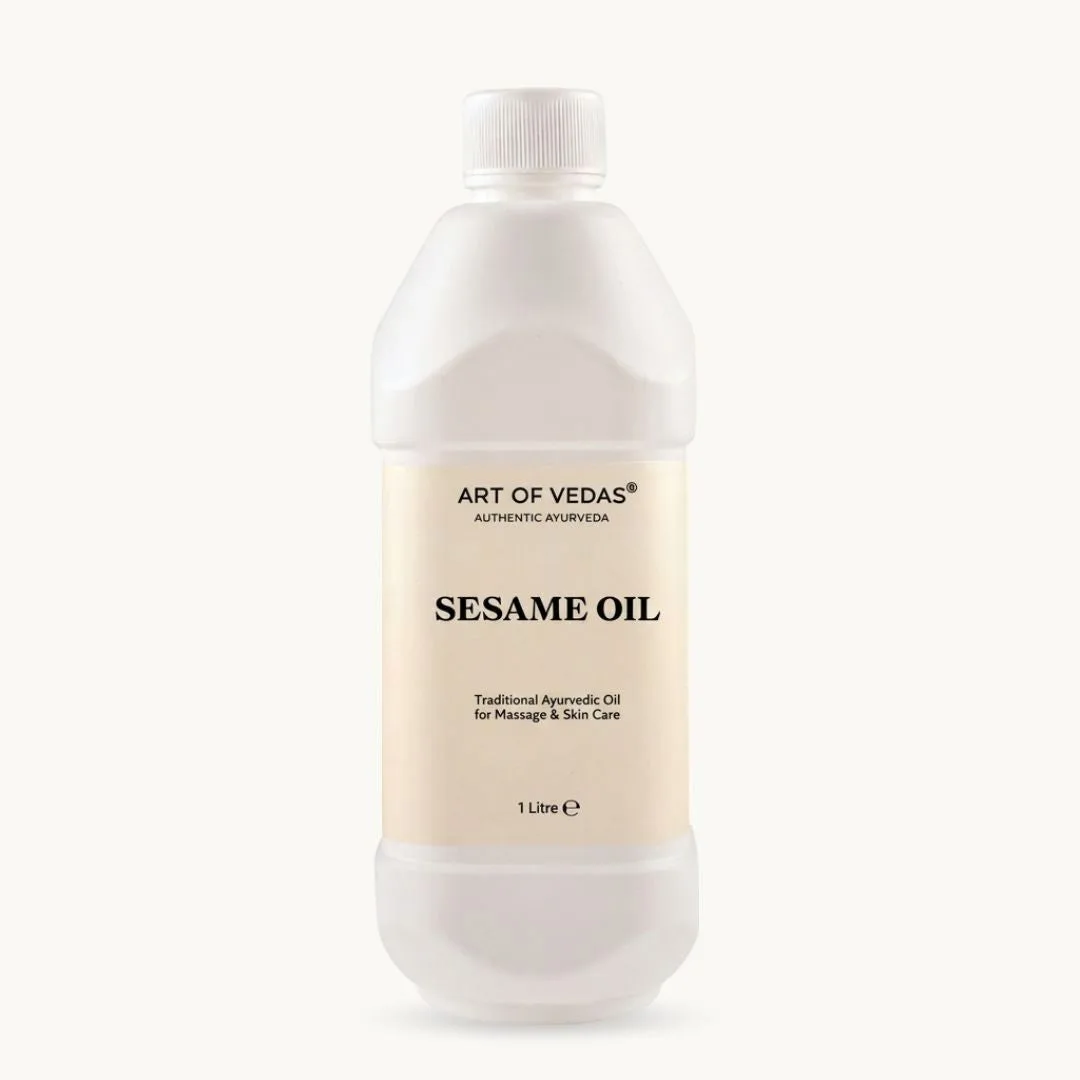
Plan generously. Practitioners commonly work with around three litres of warm medium for a full-body session, and busy centres keep more in reserve so the stream never pauses while a fresh vessel heats. A classical base such as cold-pressed sesame oil underpins most protocols, medicated according to the centre's line. The working points that separate a smooth session from a stressful one:
- Heat by water bath, never direct flame: a vessel standing in hot water holds temperature evenly and cannot scorch the preparation
- Verify warmth on the therapist's inner wrist before the first pour, and again whenever the vessel is refreshed
- Keep a second vessel warming in parallel so the stream is continuous for the full session
- Strain the medium between guests if your protocol re-warms it during a course, and log every batch
- Protect the room: warmed medium travels, and floor and table coverings save an hour of cleaning per day
Where the Kuzhambu fits
The streaming phase of Pizhichil calls for a flowing oil, but the professional day around it is where the semi-solid format proves itself. A Kuzhambu, cooked on the classical three-fat base of sesame, coconut and castor with the formula's decoctions and pastes, stays on the applied area and absorbs slowly, which makes it the natural choice for the focused follow-up work many centres schedule after streaming sessions: quiet, local attention to shoulders, lower back or knees while the guest rests. Dhanwantharam Kuzhambu, carrying Bala and the Dashamoola roots 's most used household formula, is the standard shelf item for this purpose. Therapists new to the format will find the practical method, warming, quantity and wipe-down, summarised in our guide on how to warm and apply a Kuzhambu.
Sourcing at professional volumes
A centre running regular Pizhichil sessions consumes base oil by the tens of litres and Kuzhambu by the jar shelf, and pricing should reflect that. Art of Vedas supplies practitioners, therapy centres and retreats across Europe at professional terms, with the classical preparations covered in this article available in working quantities. Our practitioner bulk guide for Kuzhambu sets out formats and volumes, and the team at Art of Vedas answers professional enquiries directly through the contact page.
Frequently Asked Questions
How much medium should we plan per full-body session?
Around three litres warmed and ready is the common working figure, with reserve stock heating in parallel. Partial-body sessions scale down accordingly.
Can a Kuzhambu be used for the streaming phase itself?
No. The stream needs a flowing oil. The Kuzhambu belongs in the focused hand-work around the therapy, where its slow absorption is an advantage.
What temperature should the medium be?
Comfortably warm to the therapist's inner wrist, kept steady by water bath. Individual protocols and guest comfort set the exact working range.
Is Pizhichil suitable as a home practice?
No. It is a two-to-four-therapist professional therapy. The household tradition offers its own simpler rituals with the same preparations.
Does Art of Vedas supply professional quantities?
Yes. Base oils and classical preparations are available at practitioner terms; see the bulk guide linked above or write to us through the contact page.
This article describes a traditional professional therapy for general information. It is not medical advice, makes no claims about therapeutic outcomes and does not replace professional training. Pizhichil should be performed only by qualified therapists.