10 Time-Honoured Uses of Nasya Oil
1. Traditionally Valued During Pollen Season
If you find yourself sensitive during spring pollen season or notice indoor dust and pet dander, Nasya oil has long been part of seasonal self-care routines. The oil leaves a soothing layer on the nasal mucosa, which is part of why it has traditionally been turned to as the seasons shift.
From an Ayurvedic perspective, seasonal sensitivity is traditionally associated with an imbalance of Kapha dosha combined with accumulated Ama in the respiratory channels. The warming, penetrating herbs in Nasya formulations were traditionally chosen to help with a feeling of congestion while supporting the body's natural resilience.
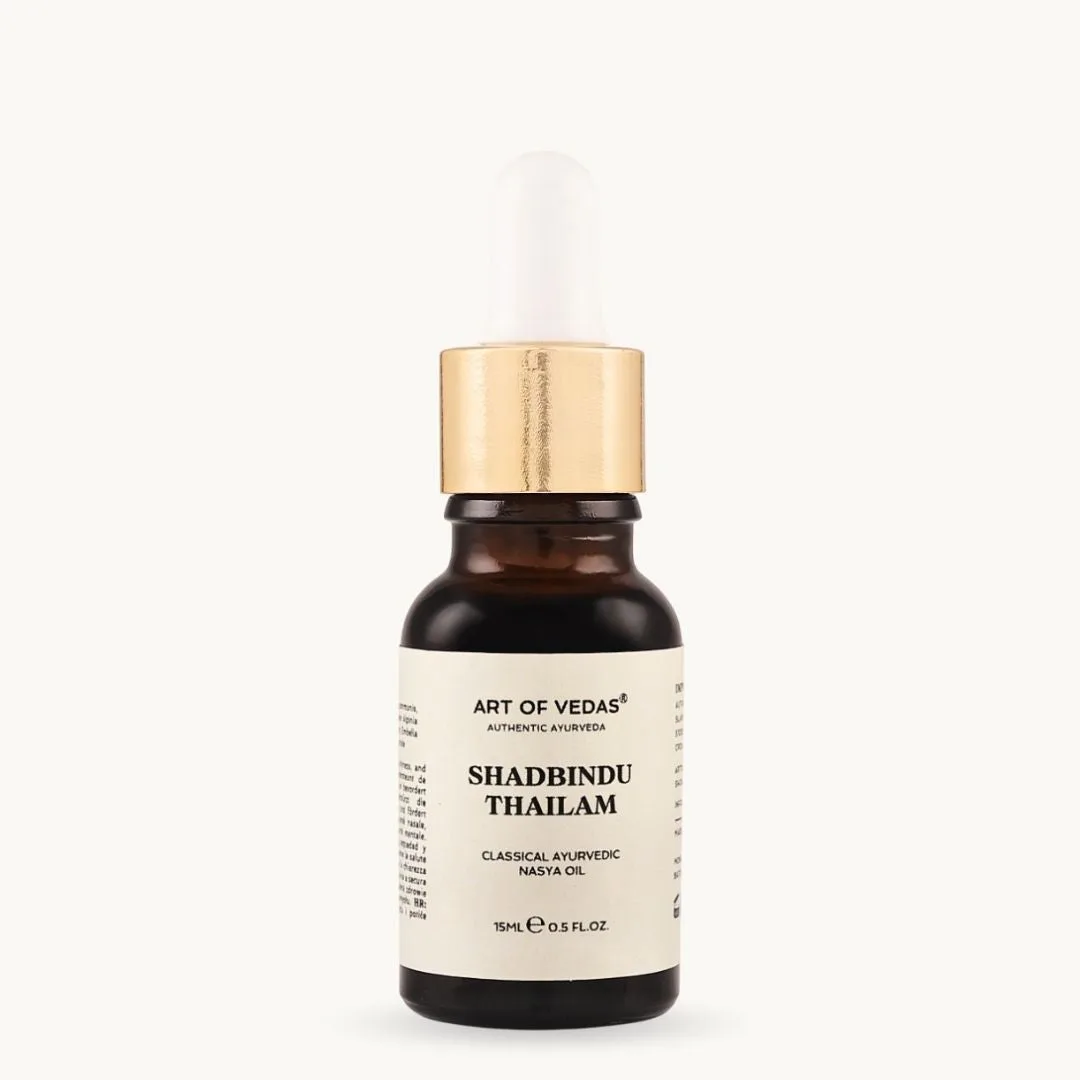
Shadbindu Thailam is traditionally formulated for a feeling of sinus congestion and seasonal change, with warming herbs like turmeric, ginger, and black pepper that are classically valued for a sense of clear, comfortable breathing.
2. Moisturizes Dry Nasal Passages (Especially in Winter)
Do you wake up with a dry nose? Feel uncomfortable breathing in air-conditioned rooms or on airplanes? Central heating in winter, air conditioning in summer, and pressurized airplane cabins all strip moisture from your delicate nasal membranes.
Dryness isn't just uncomfortable, it can leave the nasal passages feeling less than their best. Comfortable, well-moisturized nasal passages are part of feeling at ease day to day.
Unlike saline sprays that provide only temporary surface moisture, Nasya oil settles into the nasal lining. The fatty acid profile of sesame oil (the traditional base) is well suited to mucous membranes, providing a lasting sense of comfort and hydration.
Seasonal tip: Increase your Nasya frequency to twice daily during winter months when indoor heating peaks. Apply once in the morning after your shower and once before bed to maintain a feeling of comfortable moisture throughout the day and night.
3. Traditionally Used to Ease a Heavy Head
When everyday tension leaves your head feeling heavy or your temples feeling tight, Nasya has long been part of soothing self-care. The ritual is traditionally appreciated for several reasons: a sense of relieved sinus pressure as the passages feel clearer, a calming quality through the closeness to the head, a feeling of warmth and circulation in the head region, and a release of tension in the jaw, temples, and neck.
From the Ayurvedic viewpoint, a heavy or tight-feeling head is traditionally associated with imbalances in Vata dosha (creating a sense of tension and constriction) or Pitta dosha (generating a feeling of heat). Nasya oils formulated with nervine herbs were classically chosen to bring these doshas back toward balance.
4. Supports Mental Clarity, Focus, and a Sharp Mind
Do you experience afternoon mental fog? Find it hard to concentrate during important meetings? Feel like your mental sharpness isn't quite what it used to be?
The closeness of the nose to the head is part of why Nasya has long been a cherished ritual for a feeling of mental clarity. As you inhale, the aromatic qualities of the herbs become part of a grounding, focusing moment in your day.
Many people who practice Nasya describe a welcome sense of focus, a calmer mind, and an easier flow to their day after consistent use.
Browse our complete Nervous System & Sleep Support collection to find formulations traditionally associated with mental clarity and a settled mind.
5. A Soothing Ritual for Rest and Calm
If your mind feels busy at bedtime, making it harder to settle, evening Nasya can become your natural wind-down ritual. The calming nervine herbs in traditional formulations are valued for quieting mental chatter and creating a sense of rest-and-restore ease.
From an Ayurvedic perspective, restless evenings are traditionally associated with aggravated Vata dosha (characterized by excess movement, irregularity, and restlessness). Evening Nasya with warming, grounding oils is classically used to pacify this mobile quality, creating the heaviness and stability traditionally favoured for restful nights.
Evening ritual tip: Apply Nasya oil 20-30 minutes before bed, after brushing your teeth but before lying down. Follow with gentle self-massage of the temples, forehead, and back of neck to enhance the calming effect.
6. Supports Resilience and Comfortable Breathing
Your nasal passages are your body's natural gateway, and keeping them comfortable and well cared for is part of overall wellbeing. When these membranes feel dry or irritated, breathing can feel less comfortable.
Nasya oils formulated with traditional herbs leave a soothing layer while delivering classical botanicals to the passages. Traditional formulations include time-honoured herbs like turmeric (Curcuma longa), neem (Azadirachta indica), and tulsi/holy basil (Ocimum sanctum), all long cherished in Ayurveda and woven into daily wellness rituals.
In Ayurvedic tradition, daily Nasya during the cooler seasons has long been part of self-care routines, valued both as a daily ritual for comfortable breathing and as a way to feel one's resilient best as the seasons change.
Explore our full Respiratory & Oral Care Thailams collection for comprehensive support of your breathing passages and daily comfort.
7. Eases a Sense of Jaw Tension
Do you wake up with a tight jaw? Catch yourself clenching during stressful moments? A sense of jaw tension and clenching is common, and many people look for soothing ways to unwind it.
Nasya is valued for jaw comfort through two complementary qualities: first, its soothing effect on the sinus area that sits near the jaw, and second, the calming nervine herbs that help create a sense of ease where everyday tension tends to gather.
The ritual is even more soothing when combined with external jaw massage. After administering Nasya internally, massage a small amount of the oil externally below the cheekbones and along the jawline, using gentle circular motions to release a feeling of tension in the masseter muscles.
8. Supports Voice Comfort and Throat Wellbeing
If you're a singer, teacher, public speaker, or anyone who uses their voice often, you know the discomfort of a tired, dry voice. In Ayurveda, the nasal passages, throat, and vocal cords are all part of Pranavaha Srotas, the channels governing breath and voice.
Regular Nasya keeps these interconnected passages feeling lubricated and comfortable. Practitioners describe a sense of vocal ease, comfortable stamina, and a feeling of warmth and resonance. The ritual is particularly cherished by classical Indian singers who value a comfortable, well-cared-for voice for their art.
9. A Ritual Valued for Inner Balance
Here's something many people don't know: in Ayurvedic thinking, the head region is regarded as a seat of subtle balance, and the nasal passages have long been considered a meaningful pathway to it.
Traditional Ayurvedic texts describe how oils applied through the nose were valued for supporting a sense of inner balance. Ancient physicians used specific Nasya formulations as part of women's traditional wellness routines and as a ritual associated with feeling steady and in tune through life's natural rhythms.
Important note: While Nasya is a cherished wellness ritual, it's not a replacement for medical care. Always work with qualified healthcare providers for any health concerns.
10. Traditionally Linked to Healthy, Vibrant Hair
In Ayurveda, the condition of the hair is traditionally associated with the balance of Pitta dosha in the head region. While this connection may seem surprising, traditional texts consistently link Nasya practice with caring for healthy, vibrant hair.
The traditional thinking is that Nasya supports the subtle energies (Prana) and a sense of vitality in the head, creating welcoming conditions for healthy hair. Nasya works beautifully as a complement to scalp massage with nourishing hair oils.
Complement your Nasya practice:
How to Do Nasya: Step-by-Step Guide for Beginners
Ready to experience the ritual for yourself? Follow this comprehensive beginner-friendly guide to perform Nasya safely and effectively at home.
What You'll Need:
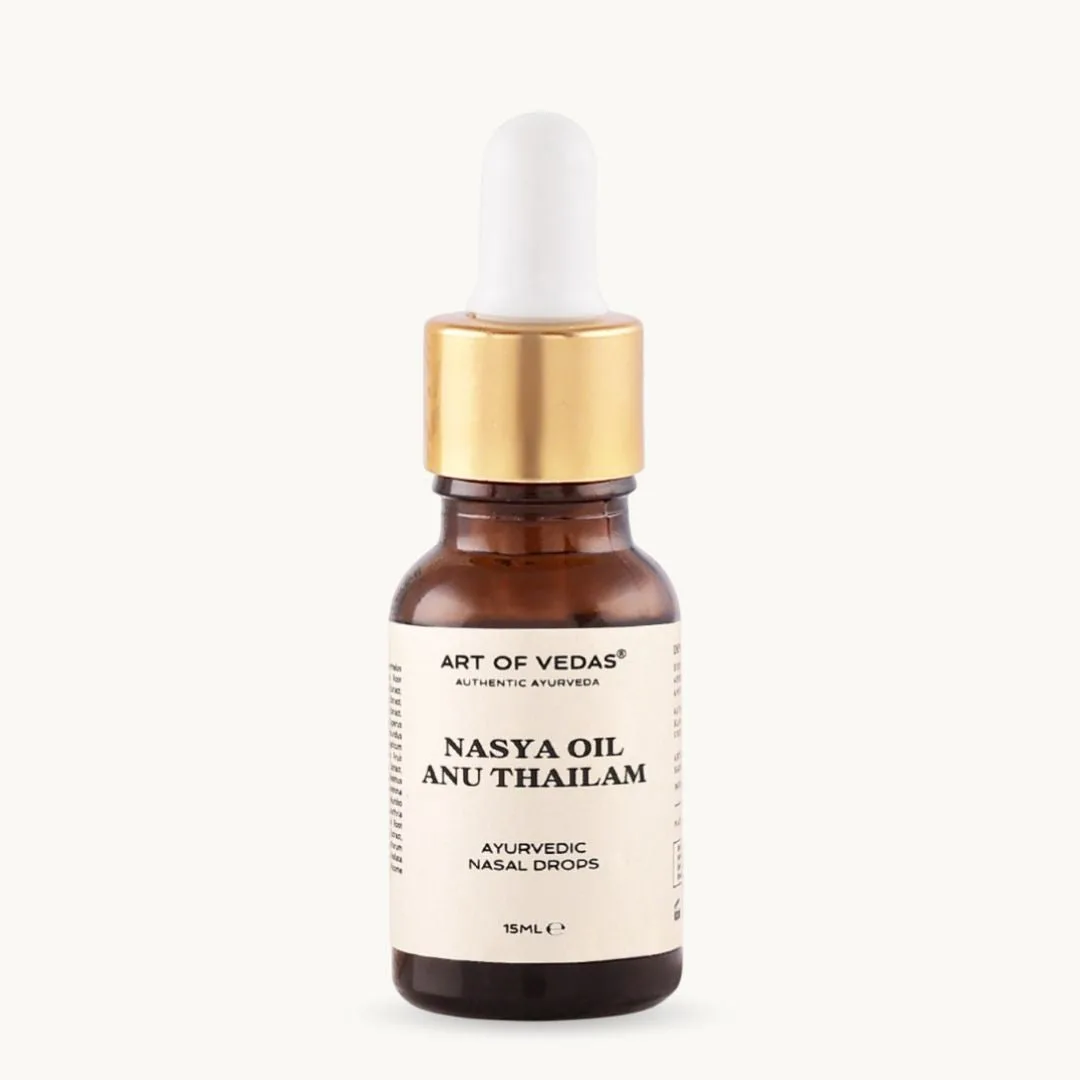
- Nasya oil (Anu Thailam for beginners, Shadbindu for a feeling of congestion)
- Clean dropper (usually included with oil bottle)
- Warm water for gargling
- Tissue or small towel
- 5-10 minutes of uninterrupted time
Step 1: Choose the Right Time
Best times for Nasya: Morning (30-60 minutes after waking, before breakfast - ideal for energy and clarity) or Evening (before bed - ideal for rest and relaxation).
Avoid Nasya: Immediately after eating (wait at least 2 hours), during active fever or acute illness, while pregnant (consult your practitioner first), during menstruation (traditional Ayurvedic guidance, though modern practitioners vary), or after drinking alcohol or within 2 hours of alcohol consumption.
Step 2: Warm the Oil
Cold oil is uncomfortable and less pleasant. Always warm your Nasya oil to body temperature: Place the closed bottle in a bowl of warm (not hot) water, wait 2-3 minutes, and test a small drop on your wrist - it should feel comfortably warm, never hot.
Important: Never microwave Nasya oil as this can damage the natural compounds and create uneven heating.
Step 3: Clear Your Nasal Passages
For the most comfortable experience, start with clear nasal passages: Gently blow your nose to remove any mucus. Optional but recommended: Perform Jala Neti (nasal rinsing with neti pot) 10-15 minutes before Nasya. Alternative: Inhale steam for 5 minutes to loosen a feeling of congestion.
Note: If you're feeling congested and can't clear your passages, Shadbindu Thailam is traditionally chosen to be used even with an existing feeling of congestion.
Step 4: Get into Position
Option A - Traditional Method (Lying Down): Lie on your back on a bed or yoga mat. Place a pillow under your shoulders so your head tilts back slightly. Your nostrils should point toward the ceiling. Relax your jaw and breathe normally through your mouth.
Option B - Quick Method (Sitting): Sit in a chair or cross-legged on the floor. Tilt your head back as far as is comfortable. Support your neck with one hand if needed.
Step 5: Administer the Oil
Fill the dropper with warmed oil. Starting with your RIGHT nostril, insert the dropper tip just inside the opening (don't push deep). Squeeze 2-3 drops into the nostril. Take a gentle inhale through your nose (don't sniff forcefully). Repeat with your LEFT nostril. Stay in the tilted position for 1-2 minutes to allow the oil to settle in.
How much oil? Beginners should start with 2 drops per nostril. You can gradually increase to 3-5 drops as you become comfortable with the practice.
Step 6: Massage and Activate
While remaining in position with your head tilted back: Gently close and release your nostrils 5-10 times using your thumb and finger. Use gentle circular motions to massage around the nostrils, under the cheekbones (sinus area), temples, forehead, and back of neck. Optional sound activation: Chant "Om" or hum to create gentle vibration that helps distribute the oil.
Step 7: Rest and Gargle
Remain lying down (or with head tilted back) for 5 minutes minimum. Slowly sit up or stand. Gargle with warm water to clear any oil that has dripped down your throat. Spit out the water (do not swallow). Avoid cold drinks, cold food, or going outside in cold weather for at least 30 minutes.
Common Mistakes to Avoid: Using cold oil (always warm to body temperature), using too little oil (2-3 drops per nostril is the minimum comfortable amount), not resting afterwards (the 5-minute rest period is when the oil settles in deepest), using the wrong oil for your Dosha, and practicing during contraindicated times (avoid during fever, immediately after meals).
Choose your Nasya oil here or view all Traditional Oils.
Choosing the Right Nasya Oil: Anu Thailam vs. Shadbindu
Not all Nasya oils are the same. The two primary formulations serve different purposes. Here's how to choose:
| Feature |
Anu Thailam |
Shadbindu Thailam |
| Best For |
Daily maintenance, a heavy head, mental clarity, restful evenings |
A feeling of sinus congestion, seasonal change, comfortable breathing |
| Key Herbs |
Brahmi, Ashwagandha, Shatavari |
Turmeric, Ginger, Black Pepper, Camphor |
| Dosha Balance |
Balances Vata + Pitta |
Reduces Kapha |
| Energy Quality |
Calming, nourishing, grounding |
Warming, decongesting, stimulating |
| Best Season |
Year-round, especially fall/winter (Vata season) |
Spring (Kapha season), allergy season |
| Sensation |
Gentle, soothing, mild herbal scent |
Strong, warming, penetrating sensation |
Shop Anu Thailam | Shop Shadbindu Thailam
Nasya for Different Doshas
In Ayurveda, your unique constitution (Dosha) determines which practices and formulations work best for you. Here's how to customize Nasya for your Dosha:
Vata Dosha (Dry, Anxious, Irregular)
Typical qualities: Dry nose and sinuses, a busy mind, restless evenings, a tense-feeling head, variable appetite, cold hands and feet, a tendency to worry
Recommendation: Anu Thailam daily, especially in the evening
Frequency: 1-2 times daily (morning for energy, evening for rest)
Why it works: Vata's dry, mobile, cold qualities are traditionally balanced with grounding, nourishing, warming rituals. Anu Thailam's rich, oily base with calming nervine herbs is traditionally used to pacify excess Vata while moisturizing dry tissues.
Pitta Dosha (Hot, Intense, Sharp)
Typical qualities: A heavy head, a feeling of heat, heat sensitivity, intensity, perfectionism, a competitive nature
Recommendation: Anu Thailam (contains cooling herbs like Shatavari)
Frequency: Once daily, preferably in morning or evening (avoid midday when Pitta is naturally highest)
Timing tip: Avoid Nasya during peak Pitta times (10am-2pm) and peak Pitta season (summer). Evening application is ideal for Pitta types.
Why it works: Pitta's hot, sharp, intense qualities are traditionally balanced with cooling, soothing rituals. While all oils have some heating quality, Anu Thailam is formulated with herbs that balance rather than aggravate Pitta.
Kapha Dosha (Heavy, Congested, Sluggish)
Typical qualities: A feeling of sinus congestion, excess mucus, seasonal sensitivity, a sense of heaviness, low energy, a calm and steady nature, resistance to change
Recommendation: Shadbindu Thailam (warming, stimulating, decongesting)
Frequency: Morning only (avoid evening as it's too stimulating for rest). Increase frequency during spring (peak Kapha season).
Why it works: Kapha's heavy, cold, wet qualities are traditionally balanced with light, warming, stimulating rituals. Shadbindu's pungent herbs like ginger, black pepper, and turmeric are classically valued for a sense of lightness and clear, comfortable breathing.
Not sure of your Dosha? Take our free Dosha Test to discover your unique constitution and get personalized wellness recommendations.
Common Questions About Nasya Oil (FAQ)
Can I do Nasya every day?
Yes, daily Nasya (Pratimarsha Nasya) is a gentle ritual suitable for most people. In fact, consistency is key to enjoying the full experience. Start with once daily and adjust based on your needs and how your body responds. Some practitioners use Nasya twice daily (morning and evening) during seasonal transitions or busy periods.
Is Nasya safe during pregnancy?
Consult your healthcare provider and Ayurvedic practitioner before using Nasya during pregnancy. Some traditional texts contraindicate certain formulations during pregnancy, while gentle formulations may be appropriate. Never self-prescribe during pregnancy - always work with qualified professionals who can assess your individual situation.
Can children use Nasya oil?
Nasya is generally a gentle ritual for children ages 5 and older, but use only 1 drop per nostril (instead of 2-3) and choose gentle formulations like Anu Thailam. Always consult with your child's pediatrician before starting any new wellness practice. Supervise the administration carefully and teach proper technique as children grow older.
How long until I notice a difference?
The experience varies by person: a feeling of comfortable, moisturized passages and easier breathing can be noticed the same day; over 7-14 days many people describe a welcome sense of ease through the seasons, more restful evenings, and a lighter head; over 30-60 days, people often describe deeper feelings of clarity and balance as the ritual settles into routine; and over 90 plus days, the practice becomes a grounding part of daily life. Consistency is more important than duration. Daily practice offers a richer experience than sporadic intensive use.
Can I use Nasya if I have a cold?
Not during active fever. Wait until your fever subsides. Once the acute phase passes and you're in recovery, Nasya is traditionally appreciated for a feeling of clear, comfortable passages. Use Shadbindu Thailam during the recovery phase for its warming, decongesting qualities.
What if oil drips down my throat?
This is completely normal and not harmful. The oil may naturally drain backward through the nasal cavity into the throat. Simply gargle with warm water after your rest period and spit it out. If you experience excessive dripping, you may be using too much oil or not maintaining the head-back position long enough.
Can I use Nasya with other medications?
Nasya is a gentle ritual that works locally in the nasal passages. However, always inform your doctor about all wellness practices you're using, especially if you're taking nasal sprays, allergy medications, or any prescription drugs. Wait at least 30 minutes after using nasal sprays before applying Nasya oil.
Should I do Nasya before or after Jala Neti?
After. The proper sequence is: Neti first (to cleanse), wait 10-15 minutes, then Nasya (to nourish and care for the passages). Neti clears the passages of mucus and debris, creating a clean surface for the traditional oils to settle into. Never do Nasya immediately before Neti, as you'll simply wash away the beneficial oils.
How should I store Nasya oil?
Store in a cool, dark place away from direct sunlight and heat. The bathroom is not ideal due to humidity and temperature fluctuations. A bedroom drawer or kitchen cupboard works well. Properly stored, Nasya oil maintains its quality for 6-12 months after opening. Always close the cap tightly after use to prevent oxidation.
Can I use plain coconut oil or sesame oil instead?
While plain oils provide basic moisture, they lack the traditional herbs that make Nasya a complete ritual. It's like comparing plain water to herbal tea - both hydrate, but only one carries the herbal character. Traditionally prepared traditional Nasya oils are formulated with specific herbs valued for a richer, time-honoured experience that plain oils cannot provide.
What if I have a deviated septum or nasal polyps?
Consult with an ENT doctor before starting Nasya if you have structural concerns. In many cases, a modified technique may be necessary. Your healthcare provider can assess whether Nasya is appropriate for your specific anatomy.
Can I do Nasya while wearing contact lenses?
Yes, but wait 30 minutes after performing Nasya before inserting contact lenses. Some people experience temporary watery eyes after Nasya as the oils stimulate the nasolacrimal ducts. This is normal and typically subsides within 10-15 minutes.
Conclusion: Making Nasya Part of Your Daily Ritual
Nasya oil therapy is one of Ayurveda's most accessible yet cherished practices. In just 5-10 minutes daily, you can welcome a sense of ease through the seasons and clear, comfortable breathing, soothe a heavy head, support mental clarity, focus, and memory, settle into restful evenings, care for comfortable breathing passages, moisturize dry nasal passages, and bring a feeling of calm and balance to your day.
The key to enjoying this ritual is consistency. Start simple: choose one time of day (morning or evening), use 2-3 drops per nostril, and commit to 30 days of daily practice. You'll likely notice a difference within the first week, with the experience deepening over time.
Remember, Nasya isn't just about everyday moments of comfort - it's about creating welcoming conditions for your body's natural intelligence to feel at its best. When your nasal passages are clear, moisturized, and nourished, everything downstream feels better: breathing, rest, a sense of comfort, mental clarity, and overall vitality.
Ready to experience the soothing ritual of Nasya?
Shop Authentic Ayurvedic Nasya Oils:
Browse our complete collection of traditional formulations prepared using classical methods
Deepen Your Knowledge:
Explore our complete guide to Traditional Ayurvedic Thailams and discover other traditional oils for your wellness journey
Get Personalized Guidance:
Contact our Ayurveda experts for personalized recommendations based on your unique needs and constitution
May your practice of Nasya bring you clarity, vitality, and profound wellbeing.