This article is part of our AYURVEDIC SKINCARE FOR BEGINNERS guide series.
Ayurvedic Skin Care: The Classical Approach to Facial Care
Ayurvedic skin care is one of the oldest documented approaches to caring for the face and skin. While modern cosmetics often focus on specific active ingredients and targeted treatments, Ayurveda begins from a different premise: healthy, radiant skin is understood as an expression of internal balance - of the Doshas, of the digestive fire (Agni), and of the overall constitution. The goal of Ayurvedic facial care is therefore not to treat isolated skin concerns in isolation, but to support the skin through nourishment, balance, and regular daily care.
This guide explains the foundational principles of Ayurvedic facial care, describes the classical skin type system, and shows how you can build a simple Ayurvedic facial routine at home.
The Ayurvedic skin type system
In Ayurveda, skin types are not defined primarily by oiliness or moisture levels - as in conventional cosmetics - but by the underlying Dosha constitution. Each Dosha type has characteristic skin properties and specific care needs.
Vata skin type
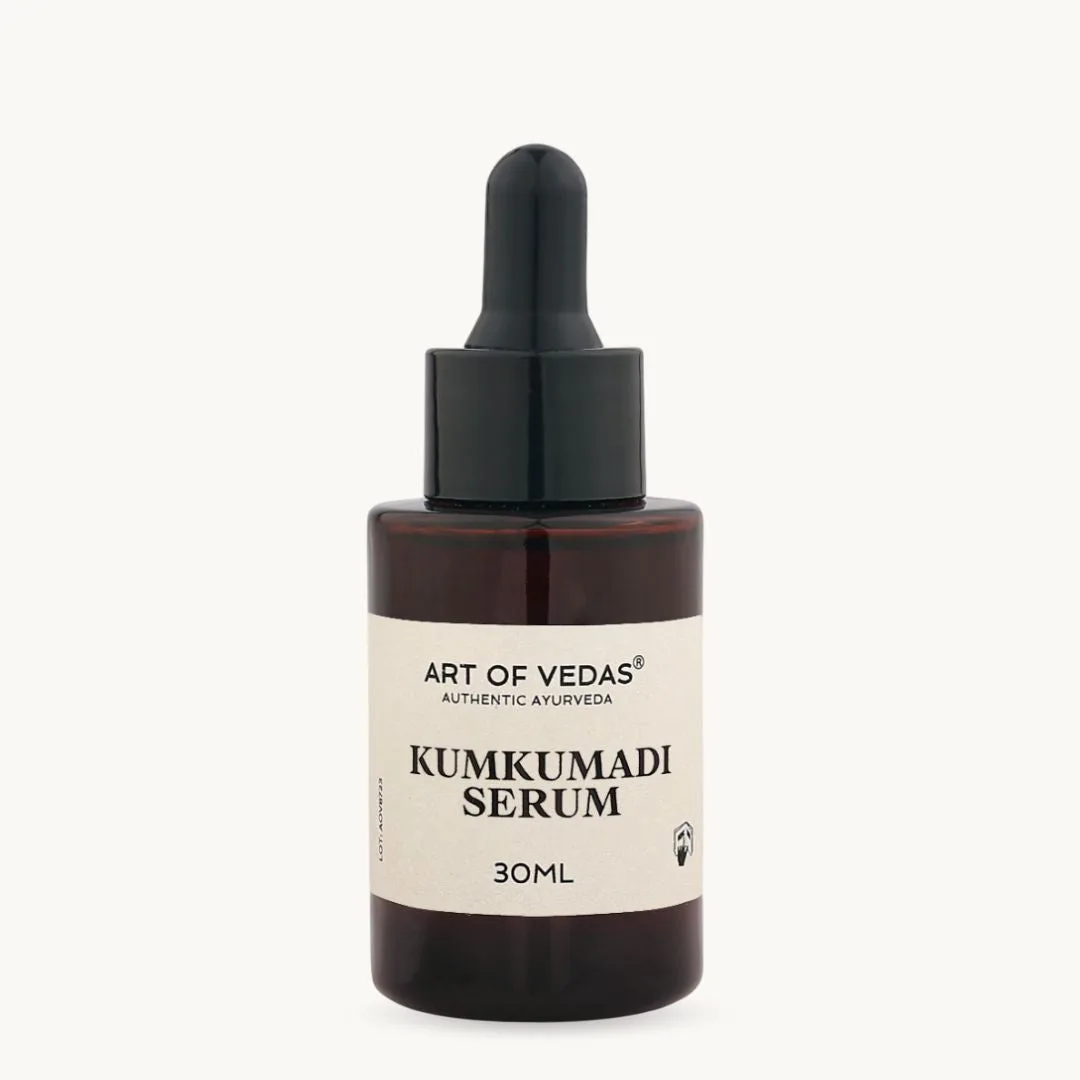
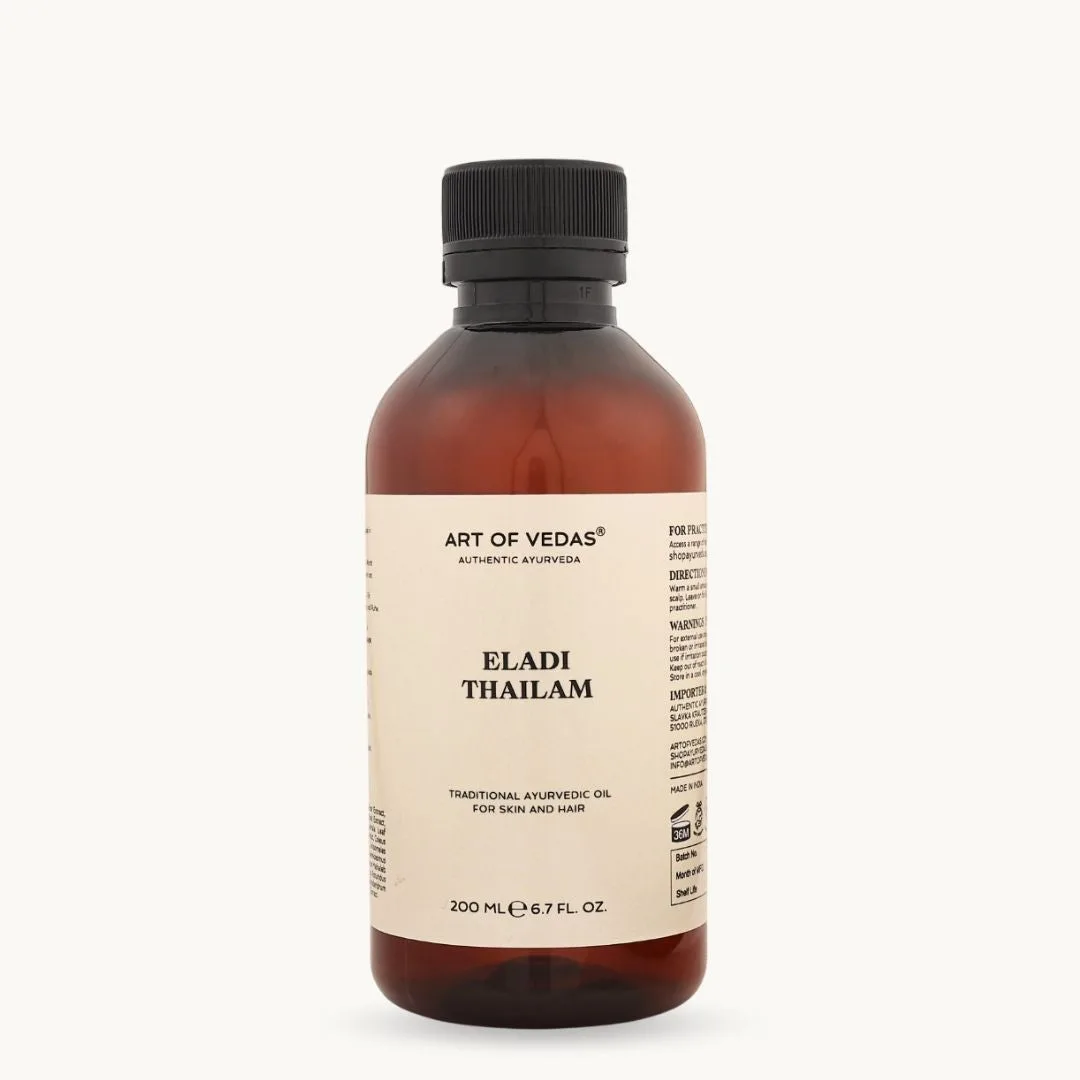
Vata skin tends to be fine, dry, and delicate. It can become dehydrated easily, especially in cooler seasons or in dry environments. Classical Ayurvedic care for Vata skin focuses on deep nourishment and moisturising: warming, nourishing oils such as sesame-based Thailams are traditionally recommended. Kumkumadi Serum and Eladi Thailam are classical facial oils particularly suitable for fine, dry skin types.
Pitta skin type
Pitta skin tends to be sensitive and reactive. It is typically of medium thickness, with a warm undertone. Classical Ayurvedic care for Pitta skin prioritises soothing and cooling: lighter, cooling oils and herbal preparations are traditionally recommended. Nalpamaradi Cream - based on the classical Nalpamaradi Keram formulation - is a classical choice for Pitta skin.
Kapha skin type
Kapha skin tends to be thick, smooth, and well-hydrated, but can have a tendency towards dullness and congestion. Classical Ayurvedic care for Kapha skin focuses on stimulation and detoxification: lighter, mildly warming oils and herbal pastes (Ubtans) are traditionally recommended. Regular cleansing and mild exfoliation are also emphasised for Kapha skin in classical texts.
Mukha Abhyanga - the classical Ayurvedic facial massage
The central practice of Ayurvedic facial care is Mukha Abhyanga (from Sanskrit: Mukha = face, Abhyanga = oil massage). It is a gentle self-massage of the face using a few drops of facial oil, performed with specific circular movements that also incorporate the facial Marma points - energy points recognised in classical Ayurvedic anatomy.
The traditional approach:
- Warm a few drops of facial oil between the palms.
- Apply across the entire face with gentle, upward strokes.
- Massage the cheeks, jaw, forehead, and temples with small circular movements.
- Use gentle pressure at the Marma points: the area between the eyebrows, the temples, and the jaw muscles.
- Allow the oil to absorb for 5, 10 minutes before rinsing if desired.
The Kansa Wand - a massage tool made from the traditional bronze alloy Kansa - is frequently used for Mukha Abhyanga. In Ayurveda, Kansa (a specific alloy of copper and tin) is considered to have harmonising properties that support the skin's natural balance.
Classical Ayurvedic facial oils
Several classical Ayurvedic formulations are specifically described for facial care in classical texts:
-
Kumkumadi Serum: A highly valued classical facial oil formulated with Kumkuma (saffron) as the primary ingredient, alongside a complex blend of traditional herbs. It is described in classical Ayurvedic literature as a Varnya preparation - supporting skin luminosity.
-
Eladi Thailam: A classical medicated oil prepared according to the Ashtanga Hridayam. Traditionally used for facial and body care, particularly suited to sensitive and dry skin types.
-
Nalpamaradi Keram: A classical oil-based preparation featuring four species of Ficus bark. Traditionally used as a brightening and evening skin care oil in classical Ayurvedic practice.
Ayurvedic cleansing: Ubtan
Classical Ayurvedic facial cleansing does not rely on soap-based products. Instead, Ubtan - herbal cleansing powders or pastes - are used. These are prepared from a combination of herbal powders such as Chickpea flour, Turmeric, Sandalwood, or Neem, mixed with water, rose water, or milk to form a paste that is gently applied to the face and rinsed off. Ubtan is described in Ayurvedic texts as both cleansing and nourishing - it removes impurities while conditioning the skin.
A simple Ayurvedic morning facial routine
This routine takes approximately 5, 10 minutes and is suitable for daily practice:
-
Cleanse: Rinse the face with cool or lukewarm water. Optionally use an Ubtan paste for gentle cleansing.
-
Oil application: Apply 3, 5 drops of facial oil (Kumkumadi, Eladi, or Nalpamaradi depending on skin type) and warm between the palms.
-
Mukha Abhyanga: Perform gentle facial massage for 2, 3 minutes as described above.
-
Optional Kansa massage: Continue with 1, 2 minutes of Kansa Wand work across the face.
-
Rest: Allow the oil to absorb for a few minutes before applying further products if needed.
Seasonal adjustments in Ayurvedic skin care
Ayurveda recommends adjusting the skin care routine according to the season (Ritucharya). In dry, cold seasons (Vata season), richer and more nourishing oils are preferred. In warm seasons (Pitta season), lighter and more cooling preparations are recommended. In damp and cool seasons (Kapha season), mildly stimulating and detoxifying preparations are traditionally favoured.
Art of Vedas offers a selection of classical Ayurvedic facial oils and tools for daily Mukha Abhyanga - including Kumkumadi Serum, Eladi Thailam, Nalpamaradi Cream, and Kansa facial tools.
Note: Ayurvedic facial care products from Art of Vedas are cosmetic products intended for external use as part of a daily self-care routine. They are not medicines and do not replace dermatological advice.