
Copper Tool
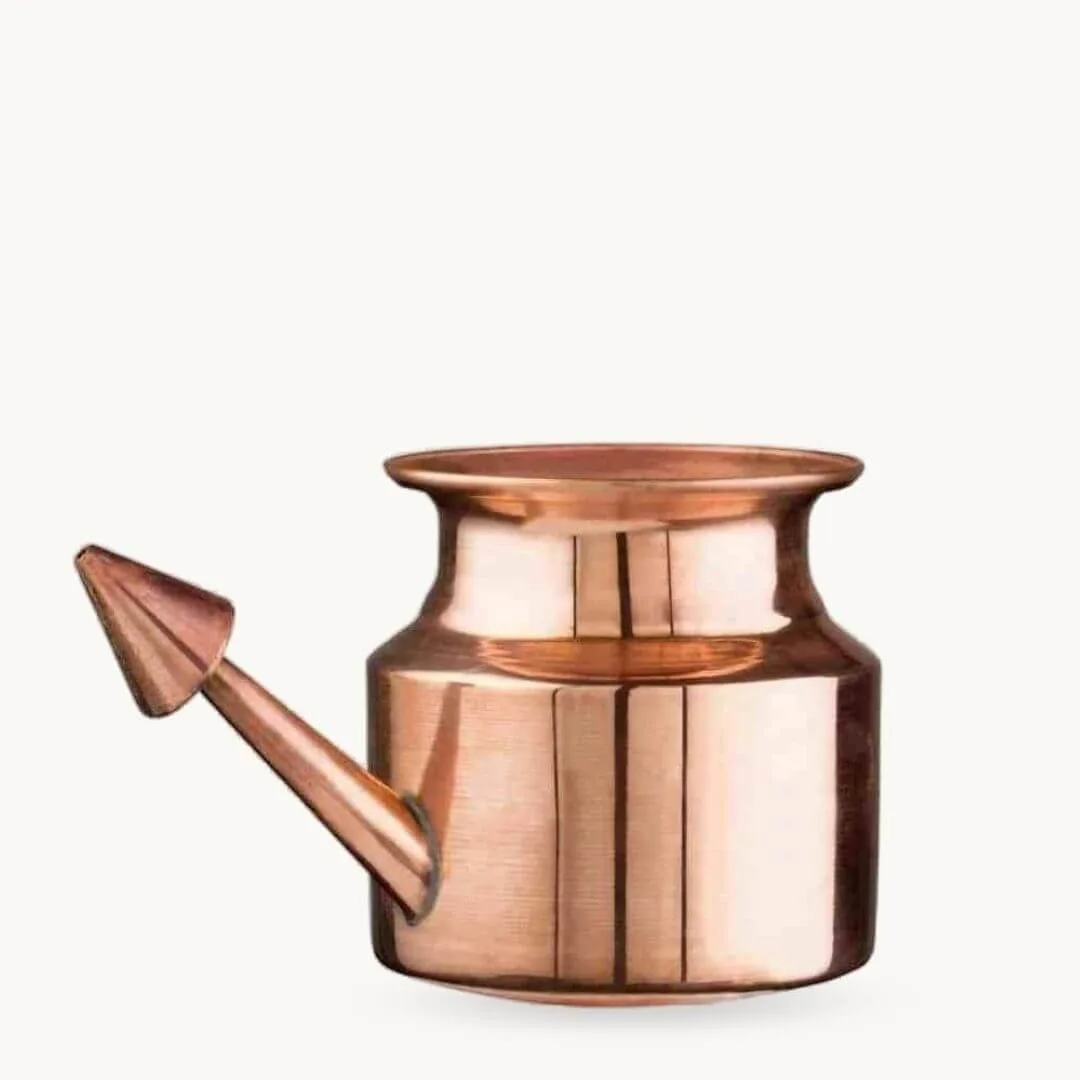
Copper Neti Pot
A pure copper pot for Jala Neti, the Ayurvedic practice of rinsing the nasal passages with warm salt water, one of the Shat Kriyas, the six classical purification techniques. The shaped spout fits gently to the nostril and pours a smooth, steady flow, and copper is the traditional material of choice for the vessel.
How to use
Dissolve a quarter teaspoon of fine, non-iodised salt in warm, body-temperature water and fill the pot. Lean over a basin, tilt your head to one side, place the spout against the upper nostril and let the water flow in and out of the lower nostril while you breathe through the mouth. Repeat on the other side, then clear the nose gently. Rinse the pot after each use and air dry.
Benefits
- Pure copper pot for Jala Neti, nasal rinsing
- Shaped spout fits gently to the nostril
- Smooth, even pour
- Reusable and plastic-free
- Part of the classical Shat Kriyas practice
For professionals
The practice
Jala Neti is the classical Ayurvedic practice of rinsing the nasal passages with lukewarm saline water, traditionally part of the morning Dinacharya. The copper vessel is the traditional choice of the classical texts, valued for its natural purity.
How it is used
- Dissolve a quarter teaspoon of fine salt in comfortably lukewarm water and fill the pot.
- Lean over a basin, tilt the head to one side and breathe calmly through the mouth.
- Rest the spout at the upper nostril and let the water flow gently out through the lower nostril.
- Repeat on the other side, then exhale softly through each nostril until the passages feel clear.
- Classical practice follows with two drops of Nasya oil, such as Anu Thailam, to nourish the cleared passages.
Material & care
- Rinse with warm water after every use and dry completely before storing.
- Copper darkens gracefully with use; restore the shine with half a lemon dipped in fine salt.
- Keep away from dishwashers and abrasive sponges.
Learn more about Copper Neti Pot
How often should Jala Neti be practised?
In classical Dinacharya it is a gentle daily morning practice; many begin with two or three times a week and let comfort guide the rhythm.
What water and salt should I use?
Comfortably lukewarm, previously boiled water with about a quarter teaspoon of fine, additive-free salt, fully dissolved.
Why follow with Nasya oil?
The classical sequence completes the cleanse by nourishing the cleared passages; two drops of Anu Thailam are traditional.
How do I keep the copper bright?
Rub with half a lemon dipped in fine salt, rinse and dry completely; the natural darkening of copper is harmless.
For professionals