Important Disclaimer: Sesame oil is a wellness product for external use only. It does not treat, cure, or prevent any disease or medical condition. All descriptions reflect traditional Ayurvedic indications and general skin wellness observations. Always perform a patch test before full facial application. For any skin condition requiring medical attention, please consult a qualified healthcare professional.
Sesame oil is not a trend. It will not appear in this year's "top skincare ingredients to watch" roundup. It does not have a dramatic origin story written by a marketing team. It is not new.
Sesame oil has been the foundational carrier oil of Ayurvedic medicine for at least 3,000 years. The classical texts - the Charaka Samhita, the Sushruta Samhita, the Ashtanga Hridayam - describe sesame oil in terms that leave no ambiguity about its primacy: it is referred to as the best of all oils, the most therapeutic, the most penetrating, the most appropriate for Abhyanga (medicated oil massage) and for all preparations where an oil is to be applied to the body and face. It is the base in which most classical Ayurvedic medicated oils are prepared - including our Eladi Thailam, our Kumkumadi Serum, and most of the traditional Thailams in our collection.
This article explains what sesame oil actually does on the face, why the classical Ayurvedic framing of it is accurate, how to choose a genuinely therapeutic sesame oil, and why Art of Vedas sesame oil belongs in your Ayurvedic facial care practice as both a standalone product and a companion to our classical medicated oil preparations.
What Sesame Oil Actually Contains
The Unique Lignans: Sesamol, Sesamin, Sesamolin
The most distinctive compounds in sesame oil are its lignans - a class of plant polyphenols with exceptional antioxidant properties rarely found in other plant oils at meaningful concentrations. Sesame oil contains sesamol, sesamin, and sesamolin, collectively described as sesame lignans, in concentrations that contribute directly to both the oil's remarkable oxidative stability (its resistance to going rancid) and its therapeutic properties for skin.
Sesamol in particular has been the subject of considerable research attention. It demonstrates strong free radical scavenging activity - antioxidant protection against the oxidative damage that drives skin aging. It also shows anti-inflammatory properties in laboratory studies, consistent with the classical Ayurvedic description of sesame oil as soothing and protective for the skin.
Fatty Acid Profile
Sesame oil has a balanced fatty acid composition that makes it well suited to most skin types. It contains approximately 40% oleic acid (deeply nourishing and penetrating), 40% linoleic acid (an omega-6 essential fatty acid important for skin barrier function and often deficient in dry or reactive skin), and smaller proportions of palmitic and stearic acids.
This balance is relevant to its skin performance. Sesame oil's roughly equal balance between oleic and linoleic fatty acid families gives it a skin feel and performance profile that works well across a wider range of skin types than either purely oleic or purely linoleic oils - neither too heavy nor too light.
Natural UV-Absorbing Capacity
An intriguing property of sesame oil that modern research has examined is its ability to absorb UV radiation. In vitro studies have found that unrefined sesame oil can absorb approximately 30% of UV rays - not a substitute for SPF sunscreen, but a meaningful additional layer of protection that may partially explain why classical Ayurvedic practice recommended sesame oil application before outdoor activity.
Vitamin E
Sesame oil contains alpha-tocopherol (vitamin E) in moderate concentrations - a fat-soluble antioxidant that provides additional free radical protection and contributes to the oil's skin-nourishing properties and shelf stability.
What the Classical Texts Say About Sesame Oil
The Supreme Therapeutic Oil
The Ashtanga Hridayam states directly in the Sutrasthana: "Tailanam Tila Thailam" - among all oils, sesame oil is the best. This is one of the most unambiguous declarations in the classical Ayurvedic literature, repeated across multiple texts and commentaries.
The classical understanding of why sesame oil is supreme integrates its properties across several Ayurvedic analytical frameworks. Its Virya (potency) is warming - supporting penetration, tissue activation, and the movement of nutrients deep into the skin layers. Its Guna (qualities) include sukshma (subtle, fine-particled - able to penetrate deeply) and vyavayi (rapidly spreading throughout the body) - properties that make it uniquely well suited as a carrier for the herbal compounds in medicated oil preparations.
Perhaps most importantly, sesame oil is described as having yogavahi - a capacity to enhance and carry the properties of whatever it is combined with. This is the classical explanation for why sesame oil is used as the base in virtually all traditional Ayurvedic medicated oil preparations: it does not merely carry the herbs passively but actively enhances their penetration and therapeutic effect. This property aligns with what modern research understands about oleic acid's capacity to temporarily increase skin permeability to co-administered compounds.
Sesame Oil and Vata Dosha
In classical Ayurvedic theory, sesame oil is the premier Vata-pacifying oil. Vata - the dosha governing movement, dryness, and the nervous system - is balanced by warmth, nourishment, and stability. Sesame oil provides all of these qualities directly through its chemistry and through the physical warmth and nourishment of Abhyanga application.
For skin, this means sesame oil is particularly restorative for Vata-type skin characteristics: dryness, dehydration, tightness, fine lines from lack of moisture, dull complexion from sluggish microcirculation. The classical texts describe daily Abhyanga with sesame oil as one of the most powerful interventions available for maintaining skin health and slowing the visible signs of skin aging. For your full dosha skin guide, see our Ayurvedic skincare by dosha article.
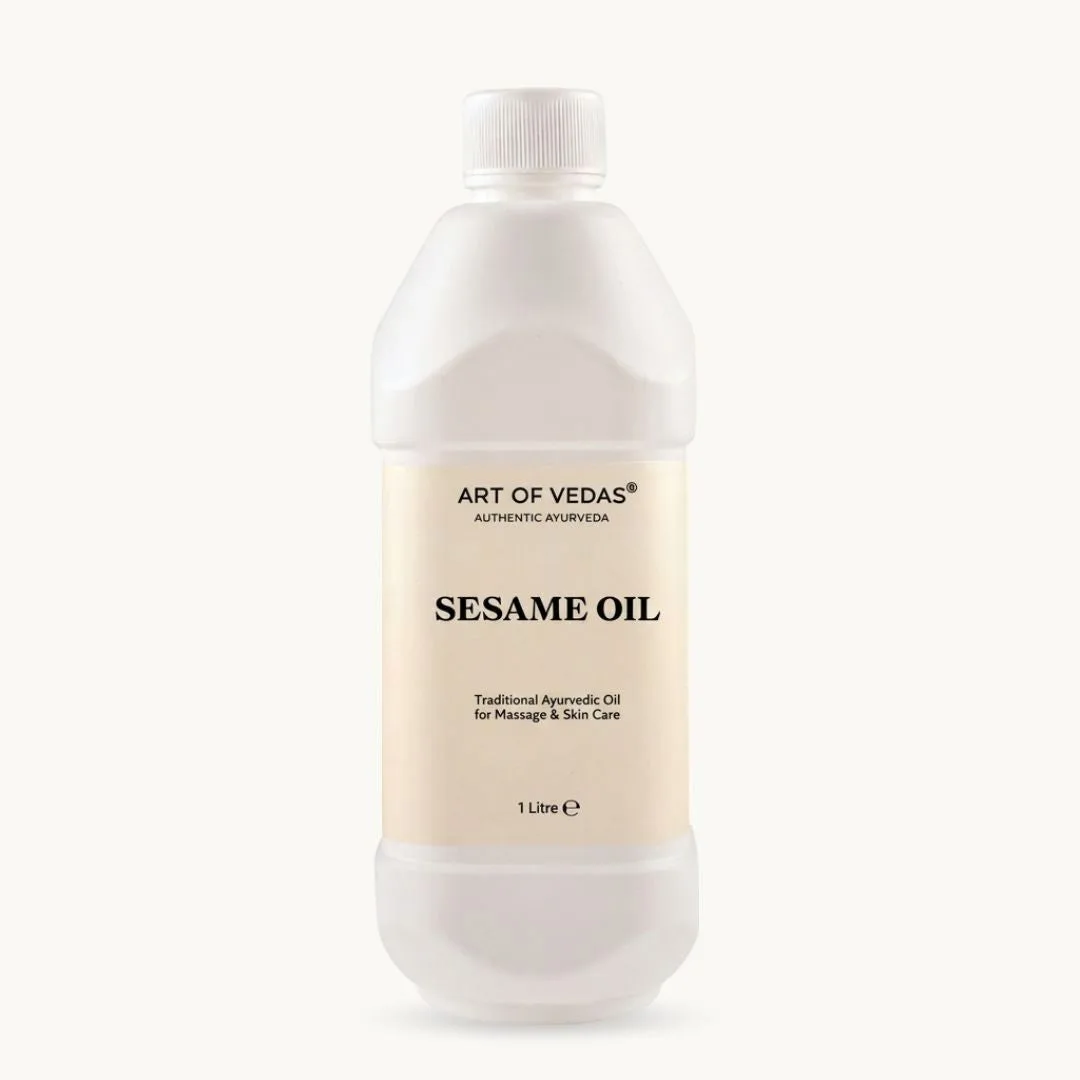
Art of Vedas Sesame Oil: The Foundation of Your Ayurvedic Practice
Our sesame oil is cold-pressed from carefully sourced sesame seeds - unrefined, unbleached, and undeodorised. This is the version of sesame oil that retains its full lignan content, its natural antioxidant compounds, and the characteristic warm, slightly nutty aroma that tells you you are using a genuinely whole, unprocessed product.
Why Unrefined Matters
Most sesame oil commercially available has been refined: heated at high temperatures, bleached, and deodorised to produce a pale, neutral-smelling oil. This process makes the oil more versatile as a food ingredient but strips away a significant portion of the lignans and other antioxidant compounds that give therapeutic sesame oil its skin wellness properties.
Unrefined, cold-pressed sesame oil retains: the full sesame lignan content (sesamol, sesamin, sesamolin) that provides exceptional antioxidant stability and skin-protective properties; the natural tocopherols (vitamin E); the characteristic warm amber colour that indicates an unbleached, natural product; and - critically - the yogavahi quality that classical Ayurveda prized: the capacity to enhance the penetration of co-applied herbal compounds when used as a base for medicated oil preparation.
How to Use Art of Vedas Sesame Oil on Your Face
As a daily facial oil - minimalist approach: For those who want to start a traditional Ayurvedic facial care practice with the most foundational possible product, our unrefined sesame oil provides an excellent starting point. Apply 4 to 6 drops to clean, slightly damp skin, warmed in the palms, and massage in using upward strokes following the mukhabhyanga technique. This is the most basic form of traditional daily facial Abhyanga - establishing the daily sesame oil practice is an entirely legitimate and classically supported starting point.
As a pre-cleanse oil (the Ayurvedic oil cleanse): Apply the oil to dry skin before washing, allow it to sit for 2 to 3 minutes, then remove with a warm damp cloth. The oil binds to and lifts oil-soluble impurities and makeup from the skin surface without stripping the natural lipid barrier the way most surfactant-based cleansers do. Art of Vedas sesame oil is ideal for this practice: unrefined, whole, and gentle enough for daily use even on sensitive skin.
As a body Abhyanga oil: The full traditional Ayurvedic Abhyanga is performed on the whole body, not just the face - and sesame oil is the classical body Abhyanga oil par excellence. Apply warmed sesame oil to the whole body from head to toe before bathing, allow 15 to 20 minutes for absorption, then rinse in a warm shower. This is one of the most deeply restorative traditional Ayurvedic self-care practices available for home use.
As a dilution base for more complex preparations: If you want to extend your Eladi Thailam or Kumkumadi Serum for body application, Art of Vedas sesame oil is the ideal carrier: the same base oil used in the classical preparations, providing compatibility and the yogavahi enhancement of the medicated oil's herbal compounds.
As part of the hair care ritual: Classical Ayurvedic hair care (Shiro Abhyanga - head and scalp massage) is traditionally performed with sesame oil. Massage warmed sesame oil into the scalp and hair length, allow 30 minutes or longer for absorption, then wash out with a gentle cleanser. The scalp-nourishing, circulation-stimulating, and conditioning properties of sesame oil make it one of the most effective traditional hair treatments available.
Sesame Oil vs. Other Popular Facial Oils: An Honest Comparison
Versus rosehip oil: Rosehip oil is high in linoleic acid and contains natural trans-retinoic acid - making it specifically beneficial for skin tone support and anti-aging concerns. It is a genuinely effective oil for these specific applications. Sesame oil has a broader therapeutic base: its lignan content, UV-absorption capacity, yogavahi property, and Vata-balancing profile give it advantages that rosehip cannot match, particularly as a daily all-purpose oil and as a carrier for other therapeutic compounds.
Versus argan oil: Argan oil is high in both oleic and linoleic acids, contains tocopherols, and has a light, dry-feeling texture. It is a good quality facial oil. It lacks the specific lignan content of sesame oil and does not have the yogavahi carrier-enhancement property that classical Ayurveda attributes to sesame specifically. For Ayurvedic practice, sesame is the more contextually appropriate and classically documented choice.
Versus jojoba oil: Jojoba is technically a liquid wax rather than a true oil, and it is non-comedogenic and very stable - making it a popular choice for oily and acne-prone skin. It lacks the antioxidant lignan content of sesame and the classical therapeutic status. For very oily, severely congestion-prone skin that does not tolerate sesame well, jojoba is a reasonable alternative - but for most skin types, sesame oil's more complex composition provides greater depth of benefit.
Sesame Oil as the Foundation of a Complete Practice
The most important insight about sesame oil in the context of Ayurvedic skin care is that it functions best not as a standalone hero ingredient but as the foundation of a practice. Its classical designation as the supreme therapeutic oil reflects not just its own properties but its role as the carrier and enhancer of everything else in the Ayurvedic facial care system.
Art of Vedas sesame oil is the foundation. Build on it with:
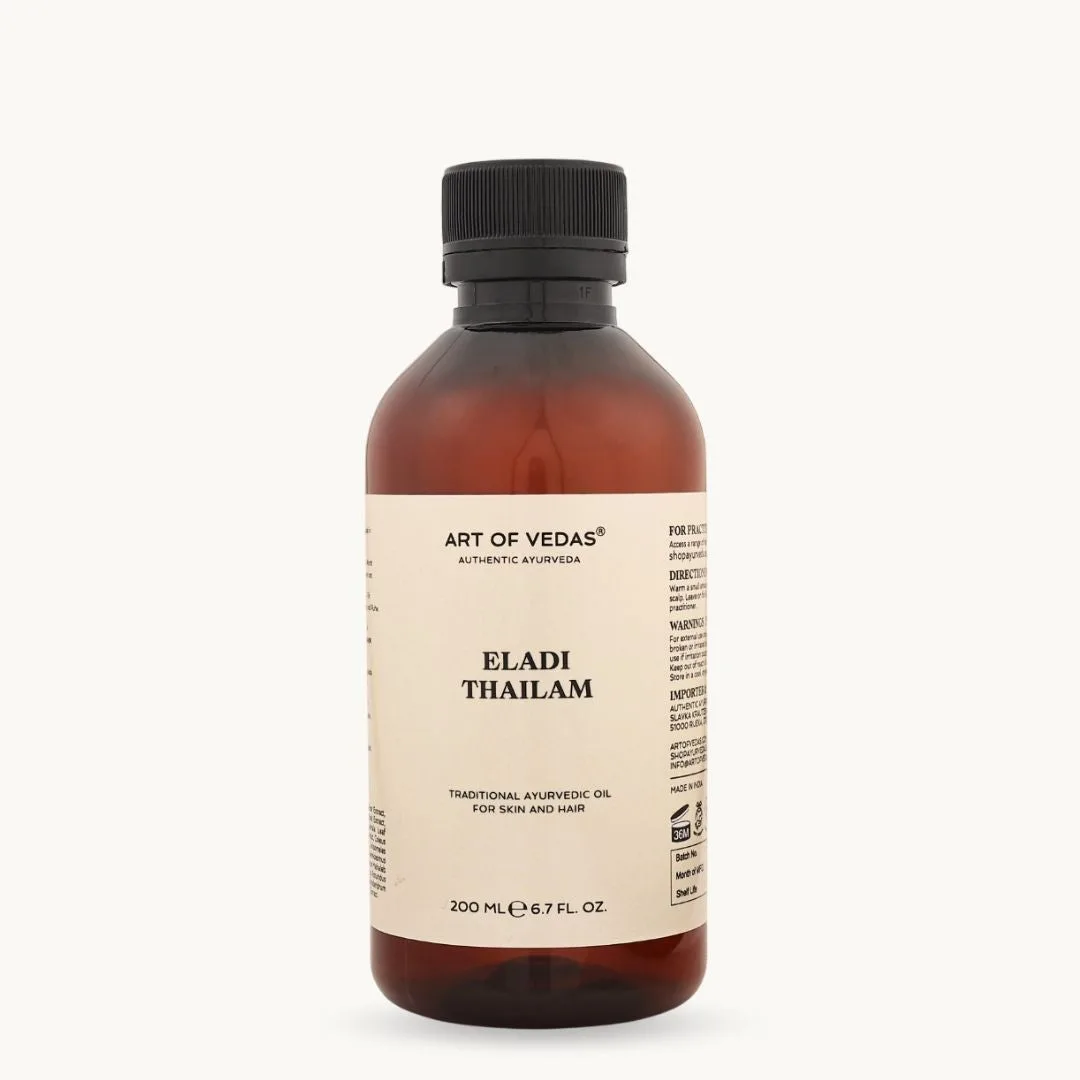
Eladi Thailam - sesame oil medicated with 25+ traditional herbs, the most comprehensive classical daily facial oil in our range, for those who want the full classical medicated preparation for their daily mukhabhyanga practice.
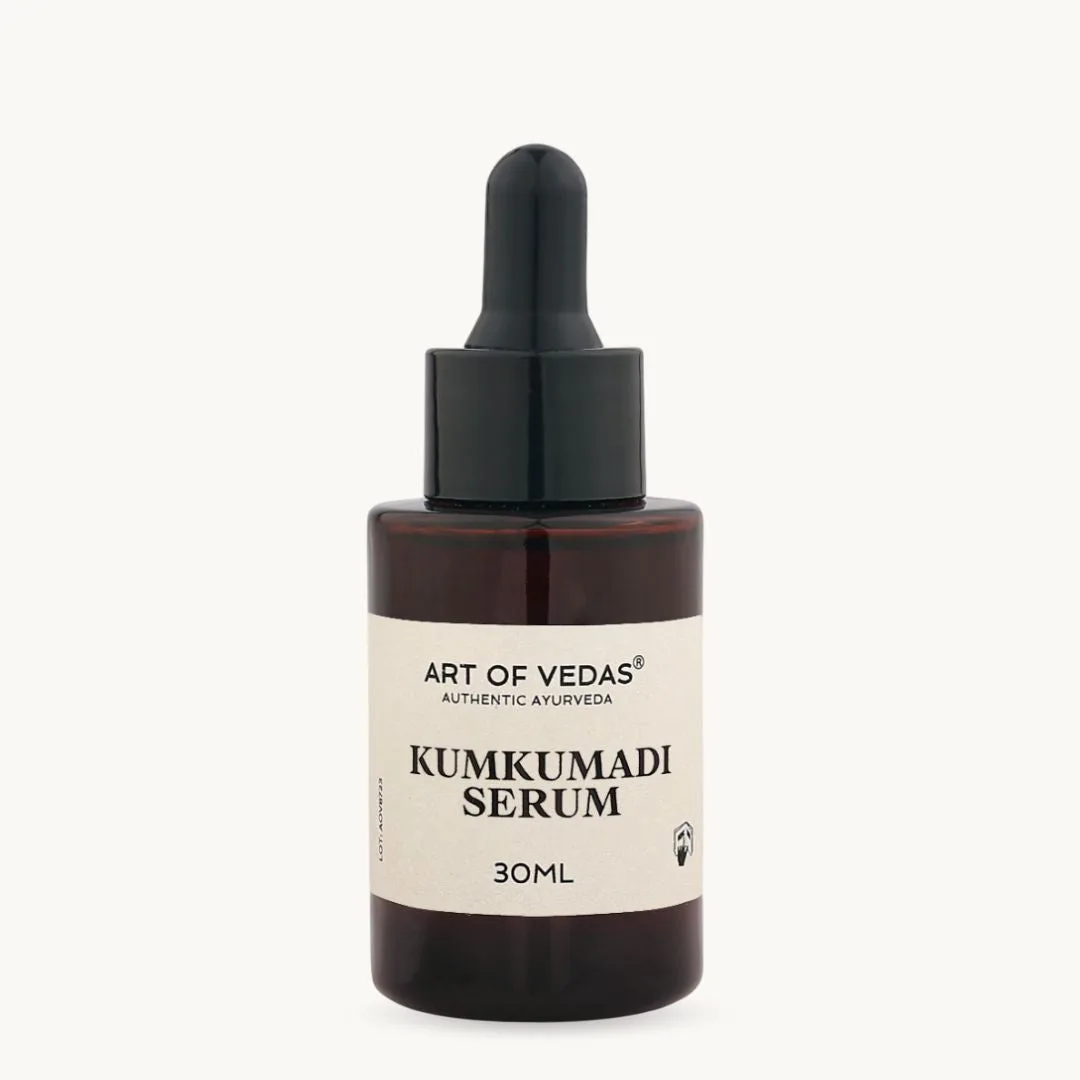
Kumkumadi Serum - sesame oil medicated with saffron and the classical Kumkumadi formula, for targeted complexion brightening and skin tone support 2 to 3 evenings per week.
Kansa wand - the traditional Ayurvedic facial massage tool that glides over sesame-prepared skin with the right resistance and even pressure to deliver the physical benefits of traditional mukhabhyanga most completely.
Nasya oil - the sesame-based nasal oil application that completes the classical Ayurvedic head-care routine alongside facial Abhyanga.
The mukhabhyanga ritual - the complete traditional facial massage practice within which all of these products find their most complete expression.
Sesame oil sits at the root of this entire system. The classical texts knew it. Modern research is confirming it. And the experience of using it - the warmth, the characteristic gentle aroma, the way properly warmed sesame oil feels as it begins to be absorbed by the skin - connects you immediately to one of the oldest and most deeply researched traditions of botanical self-care in human history.
Frequently Asked Questions About Sesame Oil for the Face
Is sesame oil comedogenic? Will it clog pores?
Sesame oil has a comedogenic rating of 1 on a scale of 0 to 5 - considered very low in comedogenic potential and unlikely to clog pores for the vast majority of people. Its linoleic acid content (approximately 40%) actually contributes to pore health - linoleic acid deficiency is associated with thicker, more pore-clogging sebum, and linoleic-rich oils applied topically help normalise this. Always patch test before full facial application. If you have severely congestion-prone skin, start with a very small quantity (2 drops) and monitor your skin's response over 2 to 3 weeks.
Does sesame oil have a strong smell?
Unrefined sesame oil has a characteristic mild, warm, slightly nutty aroma that is pleasant but present. It does not linger strongly on the skin after absorption. When sesame oil is used as the base of a classical medicated preparation like Eladi Thailam or our Kumkumadi Serum, its own aroma is effectively overlaid by the aromatic herb compounds cooked into the oil during preparation - the cardamom, sandalwood, saffron, and other aromatic herbs dominate the final scent profile.
Can I use cooking sesame oil on my face?
Technically yes, but with a significant quality caveat: most supermarket sesame oil is refined (heated, bleached, and deodorised), which removes much of the lignan content and other therapeutic compounds. For the best results, use a cold-pressed, unrefined sesame oil specifically intended for cosmetic or therapeutic use - like Art of Vedas sesame oil. Note that toasted sesame oil (used in East Asian cooking) is not appropriate for facial application - it has been heat-processed at high temperatures that alter its fatty acid structure.
Can sesame oil be used around the eyes?
Yes, carefully. Sesame oil is gentle enough for the delicate under-eye area. Apply the smallest possible amount - 1 drop on the ring finger is typically more than sufficient for both under-eye areas - with the lightest possible touch, ring finger only, no pressure onto the eyelid. Do not get the oil in the eyes themselves.
How long does Art of Vedas sesame oil last once opened?
Properly stored (cool, dark location, cap tightly closed), our cold-pressed sesame oil has a shelf life of 12 to 18 months from production. The natural lignan content of unrefined sesame oil gives it exceptional oxidative stability compared to most other unrefined plant oils - it will not go rancid quickly. If you notice any sour or off smell developing, discontinue use and replace.
Is sesame oil appropriate during pregnancy?
External application of sesame oil on the face and body is generally considered safe during pregnancy, but we recommend consulting your midwife or healthcare provider before beginning any new skincare routine during pregnancy as an abundance of caution.
Continue Exploring