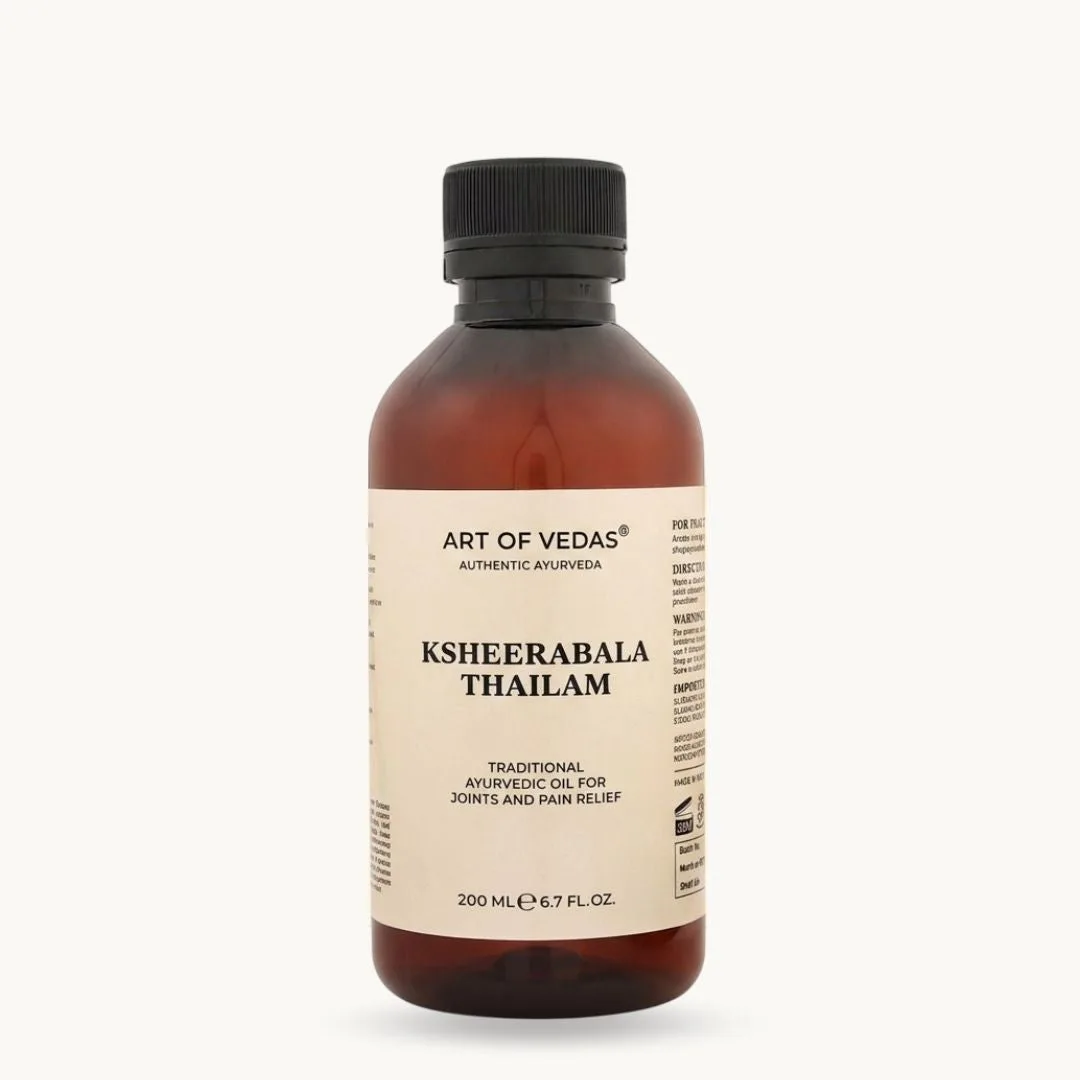
Ksheerabala Thailam for hair and head is one of the quietest and most rewarding uses of this classical oil. Ayurveda regards the head as the seat of the senses and gives it its own oil rituals, and the mild, milk-processed Ksheerabala is traditionally used in Ayurveda to support a calm, comfortable head and a cared-for scalp. This guide describes the tradition, the evening routine, and when a dedicated hair formula is the better choice.
The Cooling Head-Oil Tradition
Classical Ayurveda names the practice Shiro Abhyanga, the oiling of the head, and counts it among the most settling of all daily rituals. Practice favours mild, cooling-natured oils for this work, since the head is treated as a region to be soothed rather than stimulated. Ksheerabala Thailam, with its short recipe of Bala (Sida cordifolia, the classical strengthening root), sesame oil and a milk decoction, fits this instruction precisely. It is the oil the tradition reaches for when the head feels warm after a long day, when the evening mind is busy, and when the scalp itself asks for gentleness. The full portrait of the oil is given in our complete Ksheerabala Thailam guide.
When Ksheerabala, and When a Dedicated Hair Oil
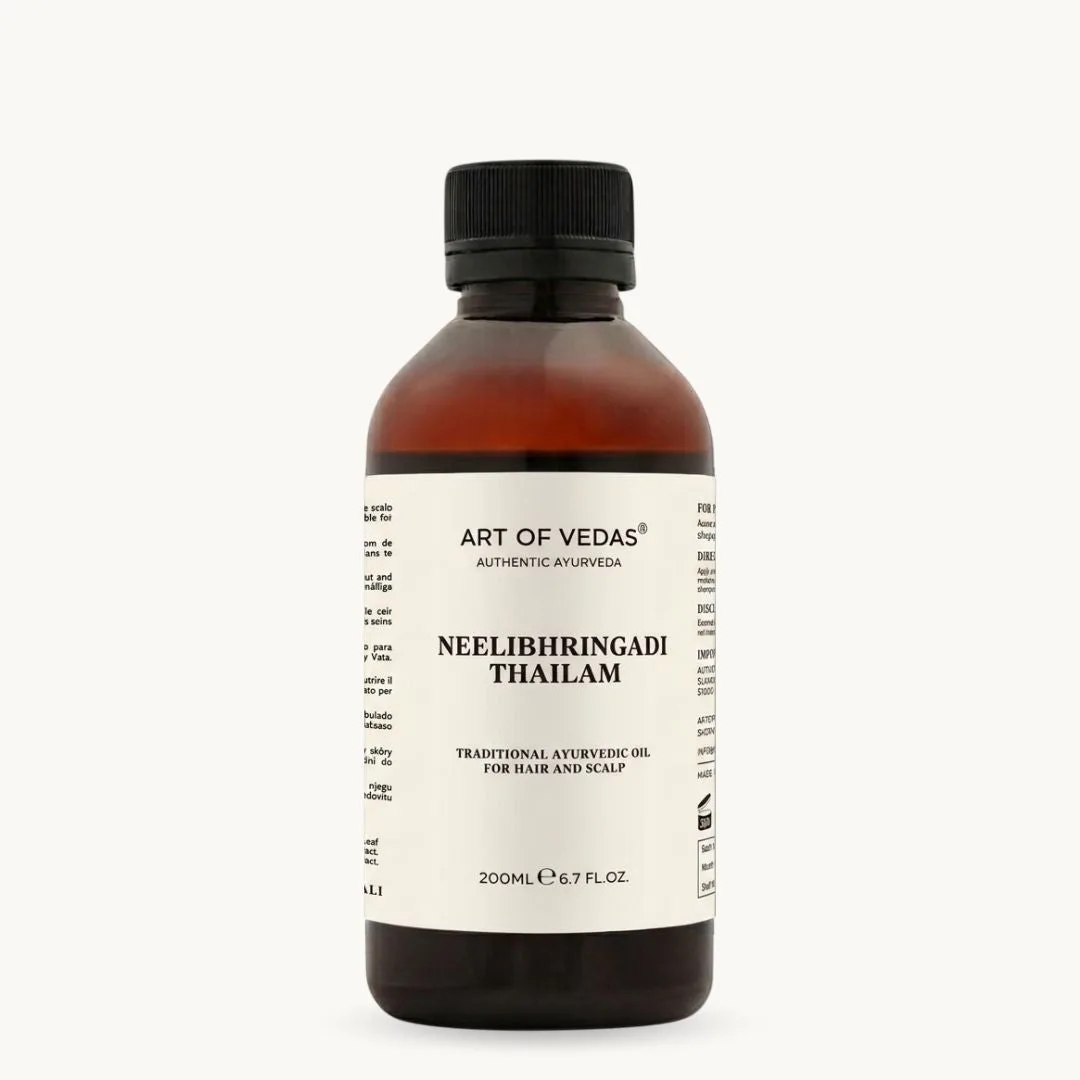
The honest distinction is one of purpose. Ksheerabala Thailam is a head oil: its tradition concerns the comfort of the head and scalp, and the hair benefits as a guest of that ritual, softened and made manageable by the oiling. A dedicated hair formula such as Neelibhringadi Thailam approaches from the other side: composed around indigo leaf and bhringraj, it is the classical choice when hair care itself, root to tip, is the point of the exercise; our Neelibhringadi hair oil guide tells that story in full. Many households keep both, using Ksheerabala on quiet evenings and the hair formula for the weekly ritual.
An Evening Scalp Routine
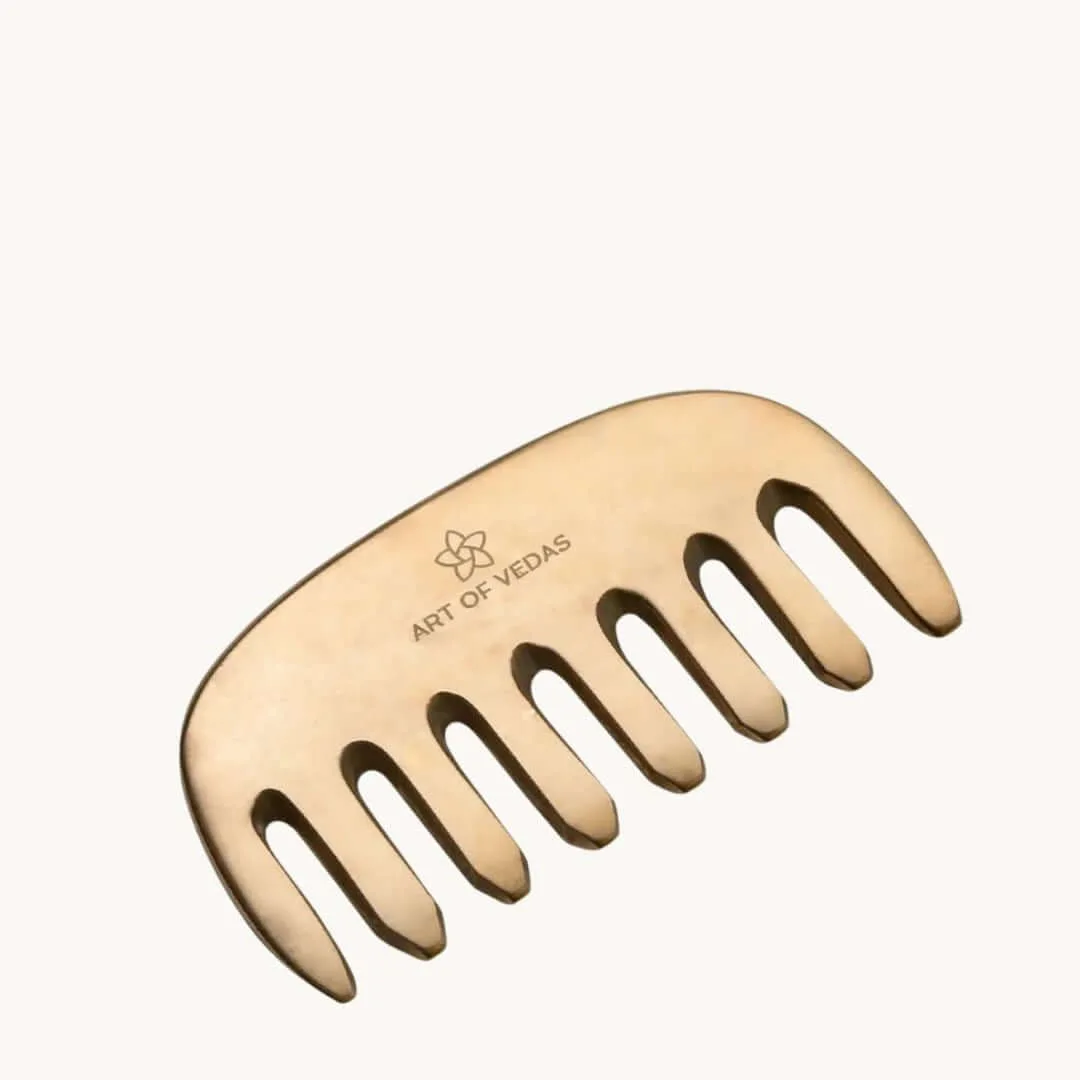
The ritual asks for ten unhurried minutes. Warm a small bowl of oil until it is pleasantly warm to the wrist. Part the hair and apply the oil to the crown first, the classical starting point, then work it over the scalp with the pads of the fingers in small, slow circles: hairline, temples, behind the ears, the base of the skull. Let the movements be light; the intention is calm, not vigour. A kansa comb drawn gently from the hairline to the nape distributes the oil beautifully and extends the ritual. Leave the oil in place for at least half an hour, or overnight with a towel over the pillow, and wash with a mild cleanser. The complete weekly sequence of oil, massage, comb and wash is set out in our kansa hair and scalp ritual.
Kept as a habit, the evening head ritual offers:
- A cool-natured calm that settles the head at the close of the day
- A scalp that feels soft, comfortable and looked after
- Hair left smooth, glossy and easier to manage after washing
- A gentle transition toward rest and an earlier, easier bedtime
Sensible Notes for Practice
Begin with less oil than you think you need; the scalp is a small country. Warm the oil gently, never in a rush of high heat. If your hair is fine or quick to look oiled, keep the application to the scalp and lengths lightly, and plan the ritual for evenings before a wash day. As with any preparation, give new skin a small patch test behind the ear before the first full use, and let comfort be the measure of frequency: once or twice a week contents most households, while the tradition happily allows more in hot months.
Frequently Asked Questions
Can Ksheerabala Thailam stay on overnight?
Yes, and the tradition is fond of exactly this. Apply modestly, protect the pillow with a towel or older linen, and wash in the morning. If you prefer shorter sittings, half an hour before the evening wash still honours the ritual and leaves the hair soft and manageable.
How often should the head be oiled?
Once or twice a week is a comfortable classical rhythm for most people. Those with a dry scalp or a taste for the ritual may practise more often, particularly in summer, while others keep it as a weekly appointment. Regularity matters more than frequency; the head learns to expect its quiet hour.
Is Ksheerabala good for the hair itself?
The hair certainly shares in the ritual: oiling and gentle massage leave it smooth, glossy and easier to comb, and the scalp is the ground from which hair grows. For focused hair care in the classical sense, however, the tradition points to dedicated formulas such as Neelibhringadi Thailam, composed for precisely that purpose.
How is the oil washed out?
A mild shampoo or a traditional herbal wash, applied once or twice as needed, lifts the oil without stripping the scalp. Lukewarm water is kinder than hot. Many find that massaging the cleanser into dry, oiled hair before adding water makes the wash easier and leaves the finish softer.
Does the ritual suit every season?
The oil's cooling nature makes it especially welcome in warm months and after sun. In deep winter, some prefer to shorten the sitting and keep the room and towel warm, so the head never chills while oiled. As always in Ayurveda, the season shapes the ritual rather than cancelling it.
For external use only. This article describes traditional Ayurvedic practice for educational purposes and does not constitute medical advice. Always consult a qualified professional before beginning a new routine, especially during pregnancy, while nursing, or if you have specific concerns.