The information in this article is provided for educational purposes and reflects traditional Ayurvedic knowledge. It is not intended as medical advice and should not replace consultation with a qualified healthcare professional.
In brief: Agni - the classical Ayurvedic concept of digestive fire - is described in the Charaka Samhita as the single most important determinant of health. Every disease, the text states, arises from the impairment of Agni. This guide explains the four classical states of Agni, how Ama (metabolic residue) forms when Agni weakens, and the classical dietary, herbal, and lifestyle protocol for restoring it.
Agni: The Concept of Digestive Fire That Classical Ayurveda Places Above Every Other
The Charaka Samhita contains one of the clearest and most consequential statements in classical medical literature: "Agni eva khalu prana" - Agni alone is the life force. The text goes further: all disease arises from the impairment of Agni, and all health depends on its proper functioning. In the classical Ayurvedic framework, Agni is not simply the capacity to digest food - it is the fundamental transformative intelligence of the body, responsible for converting everything the body receives (food, sensation, experience, information) into what the body can actually use.
Modern biomedical thinking has partial parallels - the microbiome, digestive enzymes, metabolic rate - but none of these captures the full classical scope of Agni. The concept covers not only food digestion but the transformation of nutrients into tissue (Dhatu Agni), the processing of sensory experience into perception (the Agni of the sense organs), and the mental digestion of thoughts and emotions. When classical Ayurveda states that all disease begins with impaired Agni, it means impaired transformation at any of these levels, not only in the gastrointestinal tract.
The Four Classical States of Agni
The Charaka Samhita and Ashtanga Hridayam describe four states of Agni, each with distinct characteristics and implications for health management.
Sama Agni - balanced, regular digestive fire - is the ideal state. It produces comfortable, complete digestion of a wide range of foods without excessive discomfort, gas, or residue. Bowel movements are regular and complete. The body's tissues are well-nourished. Mental clarity is good. Classical texts describe Sama Agni as the sign of a healthy person whose dosha balance is close to their Prakriti.
Vishama Agni - irregular, variable digestive fire - is associated with Vata imbalance. It is the most variable state: the person may have a strong appetite one day and no appetite the next; may digest certain foods well and react poorly to similar foods without apparent reason; experiences unpredictable digestion with gas, bloating, and variable bowel habits. The irregularity mirrors Vata's own variable, mobile nature. Vishama Agni is particularly common in autumn and early winter (Vata season) and in Vata Prakriti individuals.
Tikshna Agni - sharp, intense digestive fire - is associated with Pitta imbalance. The appetite is strong, sometimes compulsive, and the person becomes irritable if meals are delayed. Digestion is fast, sometimes too fast - food moves through quickly and the person may experience burning sensations, reflux, and inflammatory digestive symptoms. Despite fast digestion, absorption may be incomplete because the excessive heat damages the intestinal environment. Tikshna Agni is most prevalent in summer (Pitta season) and in Pitta Prakriti individuals.
Manda Agni - slow, dull digestive fire - is associated with Kapha imbalance. The appetite is reduced or absent in the mornings; digestion is slow and heavy; the person feels full for extended periods after eating; food seems to sit in the stomach rather than transform. Weight accumulates easily. Mental heaviness accompanies the physical slowness. Manda Agni is most pronounced in late winter and early spring (Kapha season) and in Kapha Prakriti individuals.
Ama: What Forms When Agni Weakens
When Agni is impaired - in any of the three imbalanced states - food that enters the digestive system is not fully transformed. The partially digested material that results is called Ama in classical Ayurveda. The Charaka Samhita describes Ama (literally meaning "unripe" or "uncooked") as sticky, heavy, cold, and foul-smelling - the opposite of properly transformed Agni products. It accumulates in the digestive channels, where it blocks the normal flow of nutrients to the tissues and the normal movement of the doshas through the body's channels.
The classical understanding of Ama is that it is the primary intermediate step between weakened Agni and disease. The Ama that accumulates in the digestive system begins to overflow into the channels (Srotas) and lodge in the weakest or most susceptible tissue or system - where it creates the conditions for localised imbalance and, eventually, disease. This is the classical mechanism through which a problem that begins in the gut becomes a systemic issue.
Clinically, classical texts describe Ama by its signs: a coated tongue (particularly in the morning), loss of taste and appetite, heaviness of the body, fatigue without exertion, dullness of the sense organs, and an overall sense of sluggishness that does not clear with rest. These signs are worth noting because they are common experiences that Western medicine frequently cannot attribute to a specific pathological cause - the classical framework provides a coherent explanation.
The Classical Protocol for Restoring Agni
The Charaka Samhita's approach to Agni restoration follows a specific sequence: first, clear the accumulated Ama; then strengthen the Agni; then nourish the depleted tissues.
Langhana (lightening) is the first classical step - reducing the digestive burden to allow Agni to recover. Practically, this means eating lighter meals, reducing heavy and cold foods, avoiding raw foods and excessive quantities, and potentially fasting for a short period. The classical texts describe even a single day of light eating or fasting as having significant Agni-restoring effects when Ama is present.
Dipana (Agni-kindling) herbs are the next step - pungent, warming herbs that directly stimulate Agni. Trikatu - the combination of dry ginger, black pepper, and long pepper - is the primary classical formula for this purpose, described in multiple classical texts as the most effective Dipana combination available. Ginger alone (as fresh ginger tea before meals) is the most accessible daily Agni-supporting practice described in classical texts. See our guide to digestion and Agni for detailed herbal guidance.
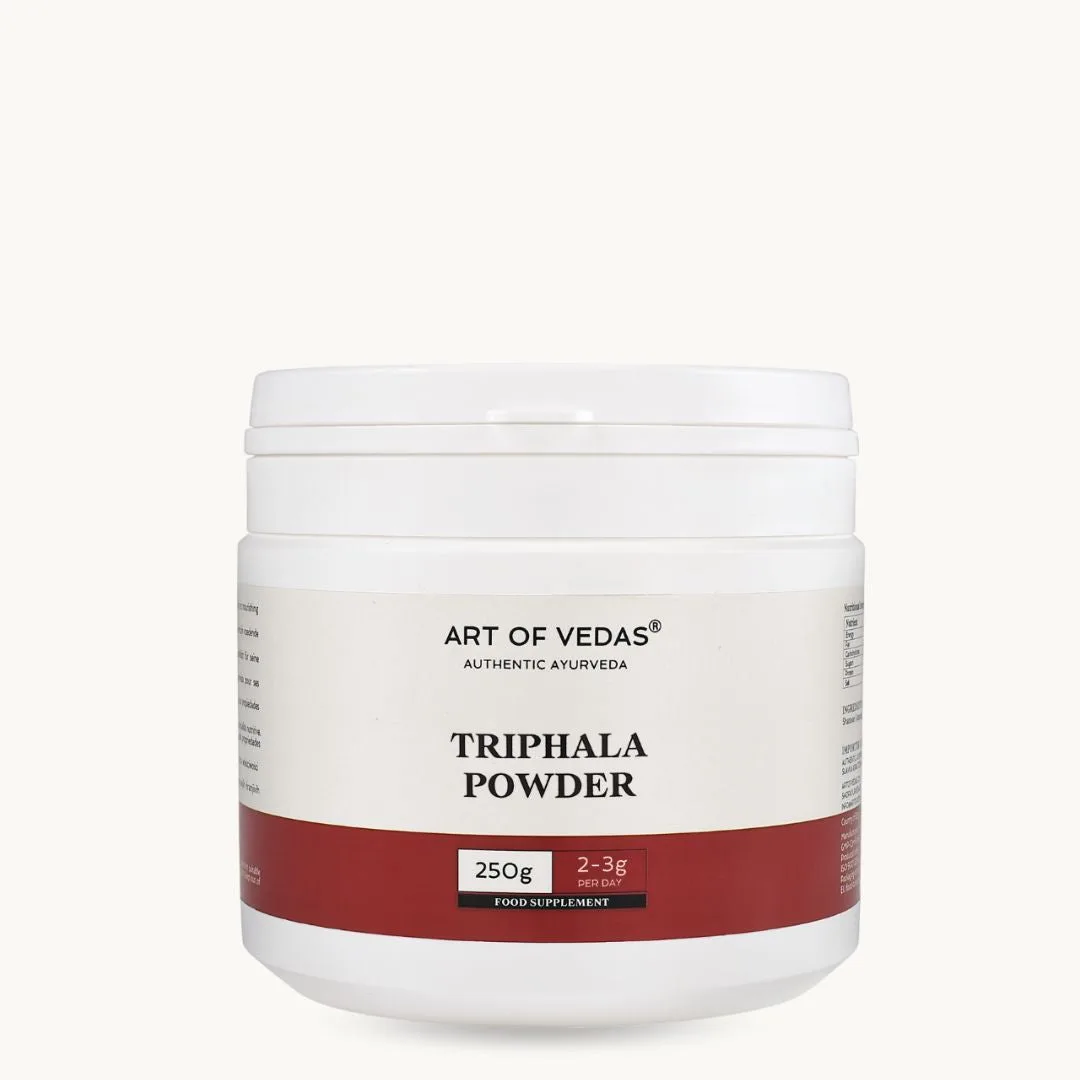
Pachana herbs follow - preparations with the specific property of digesting accumulated Ama in the channels. Triphala is the most broadly applicable classical Pachana preparation, combining the three fruits' different properties to address Ama across multiple channel systems and tissue layers. See our complete guide to Triphala. Browse the Art of Vedas supplements collection for Triphala, Trikatu, and digestive support preparations.
Agni and the Dhatus: Tissue-Level Digestion
The Charaka Samhita's framework extends the Agni concept beyond the gastrointestinal system to describe a separate Agni for each of the seven body tissues (Dhatus). Rasa Agni transforms plasma; Rakta Agni transforms blood tissue; Mamsa Agni transforms muscle tissue - and so on through the seven tissue layers, each with its own transformative intelligence that can be impaired independently of the main digestive Agni.
This Dhatu Agni framework explains classical Ayurveda's understanding of how disease can be localised to specific tissue layers - a concept with no direct parallel in Western anatomy but with significant clinical implications in classical practice. Restoring the main Agni (Jatharagni) is described as the foundation, but the tissue-level Agnis may require additional specific support through Rasayana herbs and tissue-specific preparations. See our guide to classical Rasayana.
Frequently Asked Questions
What is Agni in Ayurveda?
Agni is the transformative intelligence responsible for converting food into nourishment, nutrients into tissue, and sensory experience into perception. The Charaka Samhita describes it as the single most important determinant of health - all disease arises from impaired Agni. Four states: Sama (balanced), Vishama (irregular, Vata-associated), Tikshna (sharp, Pitta-associated), and Manda (slow, Kapha-associated). Sama Agni is the classical ideal.
What is Ama in Ayurveda?
Ama is the partially digested material that forms when Agni is impaired - described in classical texts as sticky, heavy, cold, and foul-smelling. It accumulates in the digestive channels and overflows into the body's tissue channels, blocking nutrient flow. Classical signs: coated tongue (especially mornings), loss of taste and appetite, body heaviness, fatigue without exertion, dull sense organs.
How do you strengthen Agni according to classical Ayurveda?
Three classical steps. Langhana (lightening) - lighter meals, less quantity, avoiding heavy and cold foods. Dipana (kindling) - Agni-stimulating herbs: Trikatu (dry ginger, black pepper, long pepper) as the primary formula, or fresh ginger tea before meals daily. Pachana - Triphala as the most broadly applicable formula. Regular warm meals at consistent times, eating the largest meal at midday when Agni is naturally strongest, are the foundational daily practices.
What foods weaken Agni according to Ayurveda?
The Charaka Samhita identifies: eating before the previous meal is digested; cold, raw, or refrigerated foods; excessive quantities at a single meal; incompatible food combinations; irregular meal timing; heavy, oily, or excessively sweet preparations; and eating the heaviest meal in the evening when Agni is naturally lowest. Distracted or emotionally disturbed eating is also described as impairing Agni.
Explore Digestive Support at Art of Vedas
Browse our supplements collection for Triphala, Trikatu, and classical digestive preparations. Related reading: digestion and Agni guide, Triphala complete guide, spring Kapha cleanse, and Prakriti constitution guide.
This product is a food supplement and not intended to diagnose, treat, cure or prevent any disease.
Explore more in this series