The information in this article is provided for educational purposes and reflects traditional Ayurvedic knowledge. It is not intended as medical advice and should not replace consultation with a qualified healthcare professional.
In brief: Classical Ayurveda does not frame metabolism and weight in caloric terms. It works with Kapha accumulation, sluggish Agni, and the accumulation of Ama in the channels - three distinct but interconnected conditions, each requiring specific interventions. Understanding the distinction between them produces a more targeted approach than generic dietary restriction, and one that the classical texts have described in detail for over two thousand years.
Ayurveda for Weight and Metabolism: The Kapha Framework That Changes the Conversation
The modern framework for weight and metabolism is built primarily around energy balance: calories in versus calories out, with hormonal factors (insulin resistance, thyroid function) as secondary considerations. The clinical interventions follow from this model: dietary restriction, increased physical activity, and pharmaceutical or surgical intervention for those in whom the other approaches are insufficient.
This framework is accurate as far as it goes, and the physics of energy balance are not disputed. What the caloric model does not explain is why, for the same caloric input and output, some people's metabolisms produce very different outcomes - why some people accumulate weight easily and lose it with difficulty, while others do not. The model provides a measurement tool without fully explaining the underlying mechanism.
Classical Ayurveda's framework for metabolism does not work with calories at all. It works with three interconnected concepts: Kapha dosha's accumulation in the body's channels and tissues, the state of Agni (digestive and metabolic fire), and the accumulation of Ama (metabolic residue from impaired digestion). Each of these produces a different quality of heaviness or metabolic sluggishness, each has different causes, and each responds to different interventions. Identifying which is the primary factor - and it is usually more than one - produces a much more targeted approach than generic restriction.
Kapha Accumulation: The Primary Framework
In classical Ayurveda, Kapha is the dosha associated with the qualities of heavy, slow, cold, smooth, dense, and stable. Its positive expression creates strength, endurance, and stable health. Its excess creates the accumulation of weight, sluggish circulation, the tendency toward congestion in the channels, and a general slowing of metabolic processes.
The Charaka Samhita describes Sthoulya - the classical term for excess body weight - as primarily a condition of excess Kapha and Meda dhatu (fat tissue). Meda dhatu in excess is described as accumulating in the channels and displacing other tissues, and as creating a specific set of secondary conditions: breathlessness on exertion, fatigue, excessive sleep and drowsiness, and reduced physical capacity. Importantly, the classical texts describe excess Meda as interfering with the proper formation of the deeper tissues - Asthi (bone), Majja (marrow and nervous tissue), and Shukra (reproductive tissue) - because the accumulated fat blocks the channels through which these deeper tissues receive their nourishment.
The factors that increase Kapha and Meda dhatu are described clearly in the Charaka Samhita: excessive consumption of sweet, heavy, cold, oily, and dairy-rich foods; a sedentary lifestyle; excessive sleep, particularly during the day; and a constitutional Kapha tendency that means the same inputs produce greater accumulation in some people than in others. The classical approach to reducing excess Kapha begins with reducing these inputs while introducing their opposites: light, warm, stimulating, and activating factors in food, herbs, and lifestyle.
Manda Agni: The Metabolic Fire Problem
The second key factor in the classical framework is Manda Agni - sluggish or weak digestive fire. The Charaka Samhita describes Agni as the basis of all metabolic transformation in the body: when Agni is strong, food is efficiently transformed into tissue nourishment; when it is weak, transformation is incomplete and Ama forms instead. Manda Agni is specifically associated with Kapha excess - the heavy, cold qualities of elevated Kapha suppress the warm, sharp, transformative quality of healthy Agni.
The practical consequence is that even moderate food intake in a person with Manda Agni produces disproportionate Ama and fat accumulation compared to someone with strong Agni eating the same diet. This is the classical Ayurvedic explanation for the variability in metabolic outcomes that the caloric model acknowledges but struggles to explain: Agni strength differs between individuals and over time in the same individual, and this difference in digestive capacity produces different metabolic outcomes from the same food.
The classical approach to strengthening Manda Agni focuses on warming and stimulating interventions: Trikatu (the classical formula of dry ginger, black pepper, and long pepper) is the most widely referenced preparation for Agni stimulation in the context of Kapha-Manda Agni patterns. Warm ginger tea before meals is a classical Agni-stimulating practice. The Charaka Samhita also emphasises physical activity, particularly vigorous morning exercise, as one of the most effective practices for strengthening Agni - the heat generated by exercise directly stimulates metabolic fire. See our guide to digestion and Agni.
Ama and Metabolic Residue
The third factor - Ama accumulation - interacts with both Kapha and Manda Agni to create what the classical texts describe as Sama Kapha or Sama Meda: a combination of excess fat tissue and metabolic residue that is specifically heavier and more obstructive in the channels than Kapha accumulation alone. The classical signs of significant Ama alongside Kapha include a heavy, coated tongue in the morning, a dull and foggy quality to the mind, general fatigue disproportionate to activity levels, and the specific quality of heaviness in the body that feels different from simply carrying excess weight - a congested, blocked quality rather than a merely heavy one.
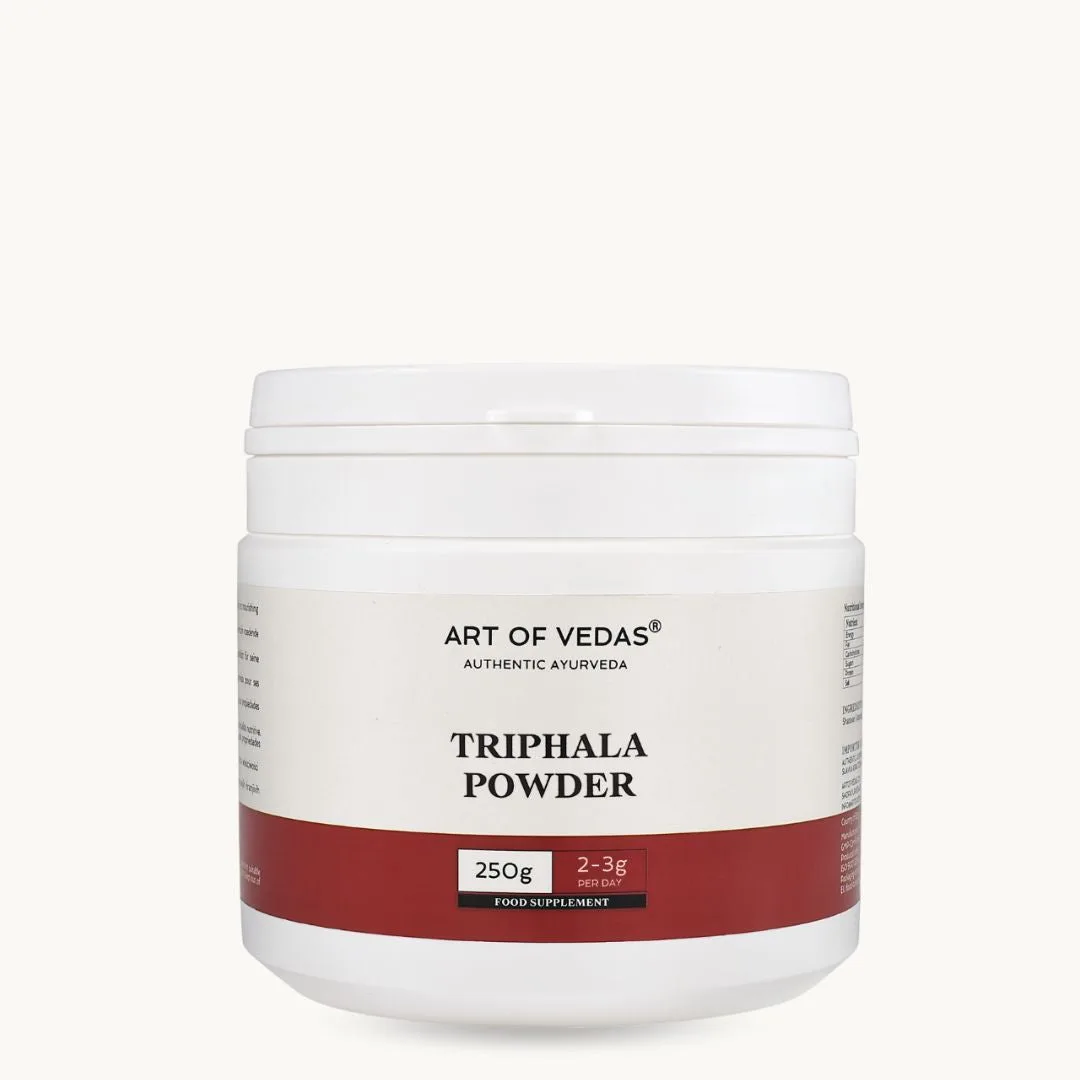
The classical approach to Ama in the context of Kapha begins with gentle Ama pacana (clearing) before more actively stimulating Agni, because aggressively stimulating Agni before Ama is cleared can drive the residue deeper into the tissues rather than clearing it through the digestive system. Triphala - the classical compound of three fruits described throughout the Charaka Samhita and Ashtanga Hridayam - is the most broadly referenced preparation for gradual Ama clearance alongside supporting Agni, appropriate across constitution types. See our complete guide to Triphala.
Classical Herbs for Kapha and Healthy Metabolism
The classical herbs for Kapha reduction and metabolic support operate through Agni stimulation, Ama clearance, and direct Kapha-reducing action in the channels.
Guggulu (Commiphora mukul) is the classical herb most specifically referenced in the context of Meda dhatu and metabolic support. The Charaka Samhita and Ashtanga Hridayam both describe its specific affinity for Meda dhatu and its Lekhana (scraping) action in the channels - reducing the accumulation of fat and metabolic residue over sustained use. The Sahasrayogam and Bhaishajya Ratnavali contain multiple classical compound preparations based on Guggulu for Kapha-Meda conditions, including Triphala Guggulu and Kanchanara Guggulu. See our complete guide to Guggulu.
Trikatu is the primary Agni-stimulating classical formula, directly targeting Manda Agni and Ama production. Its three components - dry ginger, black pepper, and Pippali (long pepper) - have warming, penetrating potency that directly counters the cold, heavy qualities of Kapha and Manda Agni. The Charaka Samhita describes it as kindling digestive fire and clearing channels.
Triphala provides foundational digestive and elimination support, clearing Ama from the channels and supporting the downward movement of Vata (Apana Vata) that facilitates elimination. Its gradual, broad-spectrum action across all constitution types makes it the appropriate foundational supplement for metabolic support regardless of the specific combination of Kapha, Manda Agni, and Ama involved. Browse our supplements collection for Triphala, Trikatu, and Guggulu preparations.
Lifestyle Practices: The Classical Priority
The classical texts give lifestyle practices at least equal weight to herbs in the context of Kapha and Meda reduction - and in some passages, greater weight. The Charaka Samhita is explicit that herbs cannot compensate for the Kapha-increasing effect of persistent sedentary habits, excessive sleep, and cold, heavy food.
Physical activity is described as the single most effective Kapha-reducing practice. The classical texts emphasise vigorous, regular morning exercise as directly stimulating Agni, reducing excess Kapha and Meda, and clearing Ama from the channels. The quality of activity recommended - vigorous and warming - contrasts with gentle Vata-calming practices and reflects the need to directly oppose Kapha's heavy, slow qualities.
Food timing is emphasised in classical guidance for Kapha-Meda conditions: eating the main meal at midday when Agni is strongest, keeping the evening meal light and warm, avoiding eating when not genuinely hungry, and allowing complete digestion between meals. The classical guideline is more aligned with modern time-restricted eating approaches than with frequent small meals, which the classical framework would describe as continually burdening a weak Agni before it has completed the previous meal's transformation.
Frequently Asked Questions
What does Ayurveda say about weight gain?
The Charaka Samhita describes Sthoulya (excess weight) as primarily excess Kapha and Meda dhatu accumulation, with three interconnected contributing factors: Kapha accumulation in the channels, Manda Agni (sluggish digestive fire producing Ama), and Ama itself blocking the channels. Each has different causes and requires different interventions. The constitutional Kapha tendency is recognised - the same inputs produce different outcomes in different constitutions.
Which Ayurvedic herb is best for metabolism?
Three are most consistently referenced for the Kapha-Manda Agni-Ama pattern. Guggulu is most specific for Meda dhatu - its Lekhana (scraping) action directly targets fat tissue accumulation. Trikatu targets Manda Agni directly through its warming, penetrating potency. Triphala provides foundational Ama clearance and digestive support across constitution types. Classical preparations typically combine these in compound formulas.
What foods does Ayurveda recommend reducing for Kapha constitution?
The Charaka Samhita identifies the dietary inputs most increasing Kapha and Meda dhatu: sweet, heavy, cold, oily, and dairy-rich foods in excess; cold beverages; eating beyond true hunger; and eating before the previous meal is digested. The classical guidance involves reducing these and replacing them with lighter, warmer, more digestible preparations, bitter and astringent tastes, and warming spices that stimulate Agni.
Does Ayurveda recommend fasting for weight loss?
The classical approach is nuanced. Laghu Ahara (light eating) and short Upavasa (reduced eating) are appropriate for reducing Kapha and stimulating Agni - but extended restriction that depletes Ojas is explicitly cautioned against in the Charaka Samhita, which notes that excessive fasting ultimately reduces Agni rather than strengthening it. Intermittent lighter eating, allowing complete digestion between meals, and avoiding heavy evening food are the sustainable classical practices.
Explore Metabolic Support at Art of Vedas
Browse our supplements collection for Guggulu, Trikatu, and Triphala. Related reading: digestion and Agni, Guggulu complete guide, Triphala guide, and Kapha imbalance guide.
This product is a food supplement and not intended to diagnose, treat, cure or prevent any disease.